
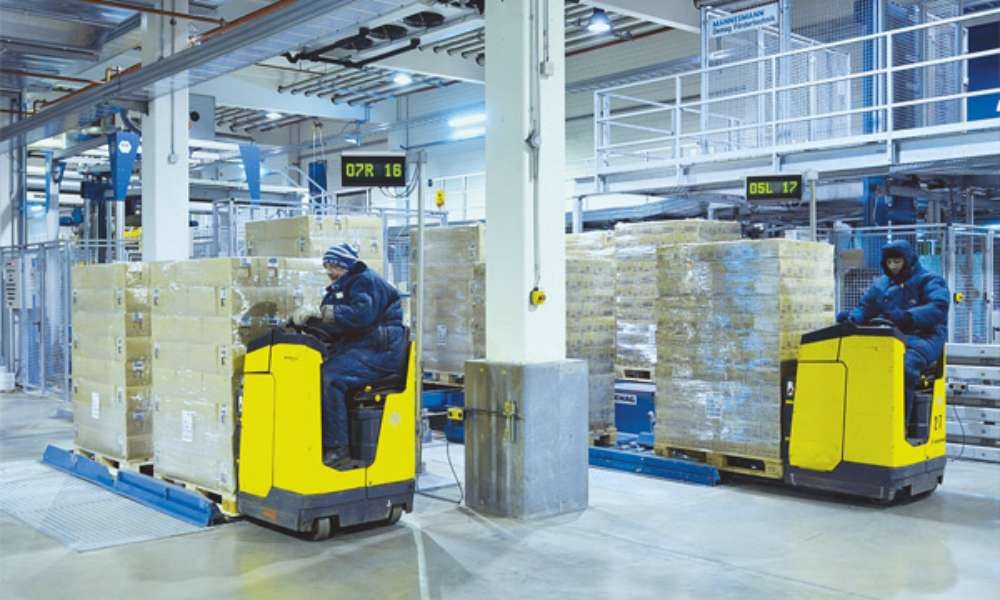
Which Forklifts Are Suited for Cold Storage Warehouses?
Why Cold Storage Warehouses Need Specialized Forklifts
Cold storage warehouses are more demanding than standard indoor warehouses. Freezer rooms, refrigerated docks, temperature-controlled food facilities, and pharmaceutical storage areas create special challenges for material handling equipment.
Low temperatures can affect battery performance, hydraulic response, electronics, tire grip, operator comfort, and condensation control. A forklift that works perfectly in a normal warehouse may struggle in a freezer environment if it is not properly configured.
That is why cold storage operations usually require electric forklifts with specific cold-storage features. These features may include sealed electronics, cold-rated hydraulic oil, anti-corrosion protection, moisture-resistant wiring, insulated components, heated displays, and lithium-ion battery systems.
What Makes a Forklift Suitable for Cold Storage?
A cold storage forklift must handle temperature swings, condensation, frost, and reduced battery efficiency. The equipment should be designed to operate reliably in refrigerated or freezing environments without frequent electrical failures or hydraulic performance problems.
| Cold Storage Feature | Why It Matters | Benefit |
|---|---|---|
| Sealed electronics | Protects controllers, sensors, and wiring from condensation | Reduces electrical faults |
| Cold-rated hydraulic oil | Standard oil may thicken in low temperatures | Improves lifting and steering response |
| Anti-corrosion treatment | Moisture and temperature changes can increase corrosion | Extends equipment life |
| Heated components | Displays, controls, and operator areas may freeze or fog | Improves usability |
| Lithium-ion battery option | Cold temperatures reduce battery performance | Improves runtime and charging efficiency |
Top Forklift Types for Cold Storage Warehouses
The best equipment depends on your warehouse layout, racking height, aisle width, pallet weight, temperature zone, and daily throughput. Below are the most common forklift types used in cold storage operations.
1. Electric Reach Trucks
Electric reach trucks are ideal for cold storage warehouses with tall racks and narrow aisles. They are designed to lift pallets high while operating in tight spaces. This makes them useful in freezer environments where maximizing cubic storage is essential.
Reach trucks are commonly selected for high-density storage, food distribution centers, frozen product warehouses, and refrigerated logistics facilities.
2. 3-Wheel Electric Forklifts
A 3-wheel electric forklift can be useful in cold storage areas that require tighter turning than a standard 4-wheel counterbalance forklift. These machines are suitable for indoor pallet movement, loading, unloading, and compact aisle work.
Their tighter turning radius can help reduce congestion in smaller refrigerated zones.
3. Very Narrow Aisle Forklifts
Very narrow aisle forklifts, also called VNA forklifts, are suitable for facilities that need extremely dense storage. Cold storage space is expensive, so many warehouses try to maximize vertical and horizontal storage capacity.
A VNA forklift can help increase pallet positions while keeping traffic organized in tight freezer aisles.
4. Electric Pallet Jacks
Electric pallet jacks are one of the most practical choices for cold storage receiving, staging, dock movement, and short-distance pallet transport. They are compact, efficient, and easier to maneuver in crowded refrigerated areas.
For cold storage applications, Liftron Material Handling offers electric pallet jack options such as the CBD20 Standing Pallet Jack, CBD20D Stand Up Pallet Jack, and CBD30D Rider Pallet Jack.
Cold Storage Forklift Type Comparison
| Equipment Type | Best Application | Cold Storage Advantage |
|---|---|---|
| Electric Reach Truck | High racks and narrow aisles | Maximizes vertical storage space |
| 3-Wheel Electric Forklift | Compact indoor pallet movement | Better turning in tight areas |
| Very Narrow Aisle Forklift | High-density freezer storage | Uses warehouse space efficiently |
| Electric Pallet Jack | Dock, staging, and short pallet movement | Compact and efficient in tight zones |
| Rider Pallet Jack | Longer freezer travel routes | Reduces operator fatigue |
Why Lithium-Ion Batteries Are Recommended
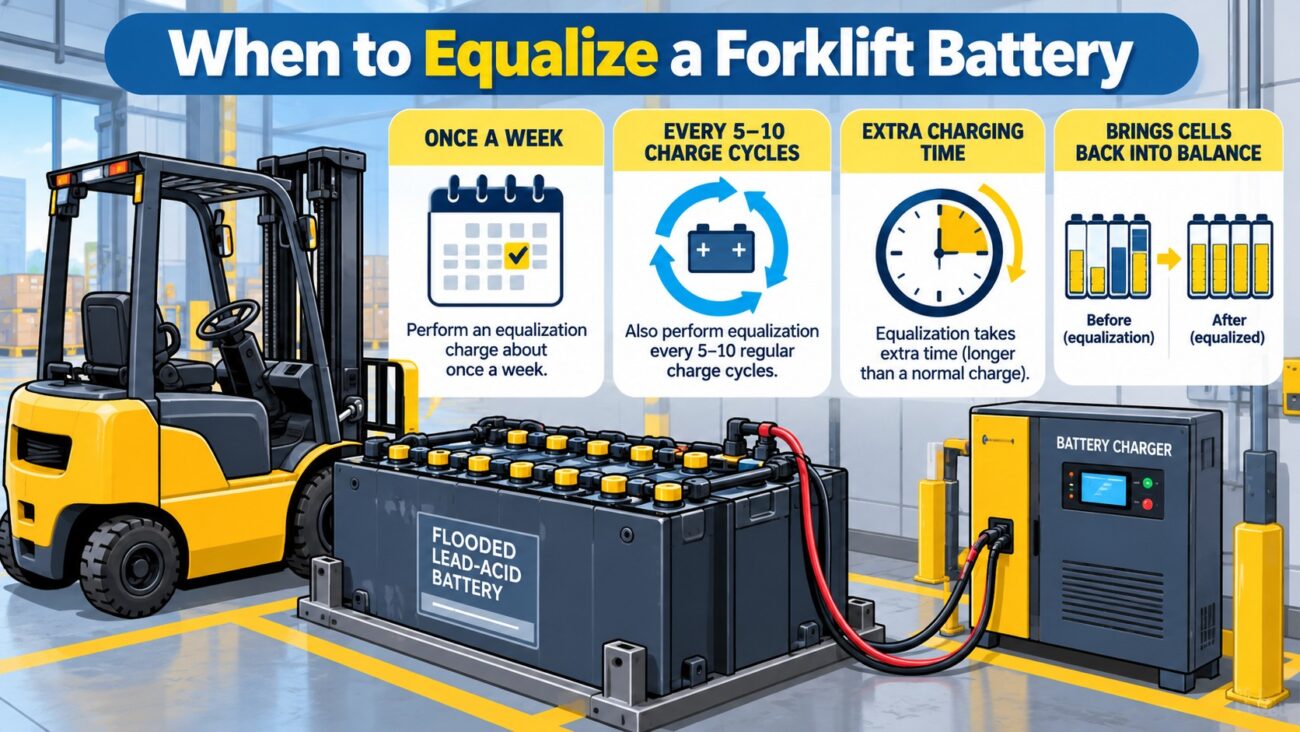
Battery choice is one of the most important decisions in cold storage equipment planning. Lead-acid batteries can lose a significant amount of usable capacity in cold environments. In very low temperatures, they may charge more slowly, deliver weaker performance, and require additional maintenance routines.
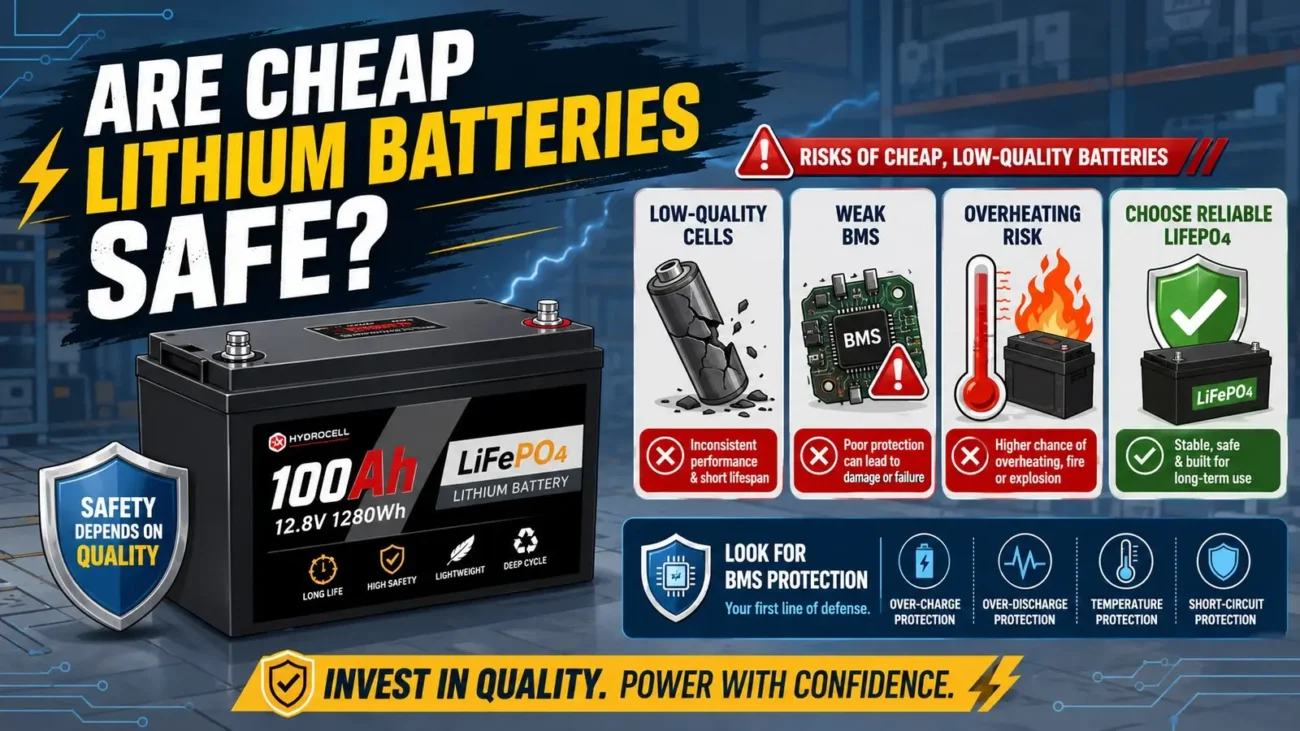
Lithium-ion batteries are often preferred because they provide more stable power, faster charging, and better energy efficiency. They also eliminate watering and reduce the need for battery maintenance in warm battery rooms.
For cold storage warehouses, lithium-ion batteries can support better uptime, fewer battery swaps, and smoother equipment availability across long shifts.
Are Liftron Forklifts Suitable for Cold Storage?
Yes, selected equipment from Liftron Material Handling can be suitable for cold storage warehouse operations, especially electric pallet jack applications where compact movement, controlled handling, and indoor electric performance are important.
The Liftron models designed for this type of warehouse use include the CBD20 Standing Pallet Jack, CBD20D Stand-Up Pallet Jack, and CBD30D Rider Pallet Jack. These models can support pallet movement in receiving zones, staging areas, shipping lanes, refrigerated rooms, and controlled indoor environments.
| Liftron Equipment | Best Use in Cold Storage | Why It Helps |
|---|---|---|
| CBD20 Standing Pallet Jack | Short-distance pallet movement | Compact handling for tight cold-room spaces |
| CBD20D Stand Up Pallet Jack | Dock staging and refrigerated warehouse movement | Operator platform helps improve movement efficiency |
| CBD30D Rider Pallet Jack | Longer travel routes in warehouse zones | Rider design reduces operator fatigue |
How to Choose the Right Cold Storage Forklift
Cold storage equipment selection should be based on temperature range, shift length, pallet volume, racking height, floor condition, and operator workflow. A freezer with high racks may need reach trucks, while a refrigerated dock may only need electric pallet jacks and rider pallet jacks.
- Measure the operating temperature in each warehouse zone
- Identify whether the equipment will work in chill, freezer, or mixed-temperature areas
- Check pallet weight, pallet size, and daily movement volume
- Measure aisle width, turning clearance, and rack height
- Select electric equipment suitable for indoor cold storage operation
- Ask whether cold-storage conditioning is available
- Choose lithium-ion batteries when runtime and charging efficiency matter
- Verify condensation protection for electronics and wiring
- Plan operator break areas and battery charging areas outside extreme cold zones
- Set a maintenance schedule for hydraulics, tires, controls, and battery systems
Operational Tips for Freezer Warehouse Forklifts
- Use cold-rated hydraulic fluids and lubricants
- Inspect brakes, tires, forks, and controls before each shift
- Keep charging zones properly ventilated and temperature-controlled
- Reduce speed on frosty or wet floors
- Train operators on cold-storage visibility and traction risks
- Limit unnecessary warm-to-cold transitions when possible
- Use proper PPE for operators working in freezing zones
- Keep aisle markings and warning signs visible despite condensation or frost
Common Mistakes to Avoid
- Using standard warehouse forklifts without cold-storage conditioning
- Ignoring battery capacity loss in low temperatures
- Forgetting to protect electronics from condensation
- Choosing equipment that is too large for tight freezer aisles
- Using poor floor maintenance in wet or frosty areas
- Not training operators for reduced traction and visibility
- Failing to inspect hydraulic performance in low temperatures
Conclusion
The best forklifts for cold storage warehouses are electric models equipped with cold-storage conditioning packages. Electric reach trucks, VNA forklifts, 3-wheel electric forklifts, and electric pallet jacks can all be useful depending on layout and workflow.
For compact cold storage movement, electric pallet jacks from Liftron Material Handling, including the CBD20, CBD20D, and CBD30D models, can support efficient pallet handling in refrigerated warehouse operations. Choose lithium-ion power, sealed electronics, cold-rated fluids, and the right equipment size to keep cold storage operations safe and productive.

Add a review
Your email address will not be published. Required fields are marked *