
When Is It Appropriate to Turn a Forklift on an Incline?
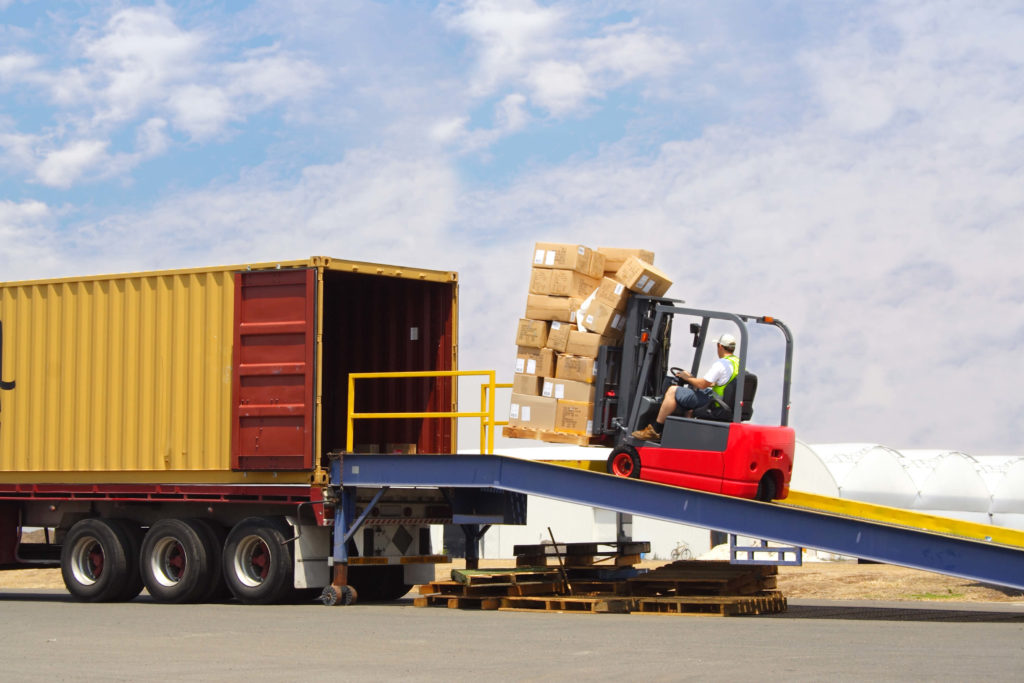
A forklift should never turn while traveling on an incline. Operators must complete all turns before entering the ramp and keep the forklift traveling straight when moving up or down a grade.
Safe operation of a forklift requires careful planning before entering ramps, grades, or inclined surfaces. Operators should always complete turns on level ground, align the forklift correctly, and then travel straight up or down the incline.
Why Should You Never Turn a Forklift on an Incline?
Forklifts are designed with a stability triangle that helps maintain balance during normal operation. When a forklift travels on flat ground, the center of gravity remains within this stability zone.
However, turning on an incline causes the combined center of gravity of the forklift and load to shift sideways. This creates a dangerous condition where the forklift may tip over laterally, especially when carrying heavy or elevated loads.
The risk becomes higher when operators:
- Turn too quickly on a ramp.
- Carry loads too high.
- Travel across a slope instead of straight up or down.
- Operate beyond the forklift manufacturer’s recommended grade limits.
Is It Allowed to Turn the Forklift on a Ramp or Incline?
No. Forklift operators should not turn on ramps or inclines. OSHA-powered industrial truck safety practices require operators to maintain control of the forklift and avoid movements that can create instability.
Before entering a ramp, the operator should position the forklift in the correct direction of travel. Once on the incline, the forklift should move straight without sudden steering changes.
| Situation | Correct Action | Reason |
|---|---|---|
| Approaching an incline | Complete turns before entering the ramp | Keeps forklift stable |
| Traveling uphill | Drive straight and avoid steering changes | Prevents lateral tipping |
| Traveling downhill | Maintain controlled speed | Improves braking control |
| Need to change direction | Exit the incline first | Allows safer turning on level ground |
How Should a Loaded Forklift Travel on an Incline?
When carrying a load on a ramp, the load should always face uphill. This keeps the heavier part of the forklift combination positioned toward the higher side of the slope.
| Load Condition | Direction on Incline | Fork Position |
|---|---|---|
| Loaded Forklift Going Up | Drive forward uphill | Load faces uphill |
| Loaded Forklift Going Down | Travel in reverse downhill | Load remains uphill |
How Should an Empty Forklift Travel on an Incline?
An empty forklift has a different center of gravity because there is no heavy load on the forks. For this reason, empty forklifts should position the forks downgrade when traveling on slopes.
| Condition | Travel Direction | Fork Direction |
|---|---|---|
| Empty Forklift Going Up | Reverse uphill | Forks point downgrade |
| Empty Forklift Going Down | Drive forward downhill | Forks point downgrade |
Keep forks tilted back and raised only high enough to clear the surface. Carrying forks too high increases the center of gravity and reduces forklift stability.
Correct Steps for Driving a Forklift on an Incline
- Inspect the Ramp: Check the surface condition, slope angle, and possible hazards before entering.
- Complete Turning Before the Ramp: Align the forklift straight before reaching the incline.
- Determine Load Direction: Make sure the load or forks face the correct direction based on whether the forklift is loaded or empty.
- Travel Slowly: Maintain a controlled speed and avoid sudden acceleration or braking.
- Keep the Forks Low: Maintain a safe travel height and keep the mast tilted correctly.
- Use a Spotter When Needed: If the load blocks visibility, use another trained worker for guidance.
Common Mistakes When Operating Forklifts on Inclines
Many forklift accidents on ramps happen because operators underestimate the effect of gravity and changing weight distribution.
- Turning while climbing or descending a ramp.
- Driving diagonally across an incline.
- Stopping suddenly on a steep grade.
- Carrying loads too high while traveling.
- Ignoring manufacturer slope limitations.
Forklift Safety Equipment for Incline Operations
Modern electric forklifts, including advanced models from companies such as Liftron, include features designed to improve stability and operator control. However, technology does not replace safe operating practices.
Operators should still follow proper procedures when handling materials on ramps, whether using warehouse forklifts, electric models, or heavy-duty industrial equipment.
| Safety Feature | Purpose |
|---|---|
| Speed Control Systems | Reduce unsafe travel speeds |
| Load Stability Design | Improve balance during operation |
| Warning Alarms | Improve awareness around workers |
| Operator Training | Ensure correct ramp procedures |
Conclusion
A forklift should never turn while traveling on an incline. Operators must complete all steering changes before entering the ramp and keep the forklift moving straight during uphill or downhill travel.
Following correct incline procedures protects operators, prevents tip-over accidents, and improves workplace safety. Whether operating a traditional truck or a modern electric forklift, proper ramp handling remains one of the most important skills every operator must understand.
Add a review
Your email address will not be published. Required fields are marked *