
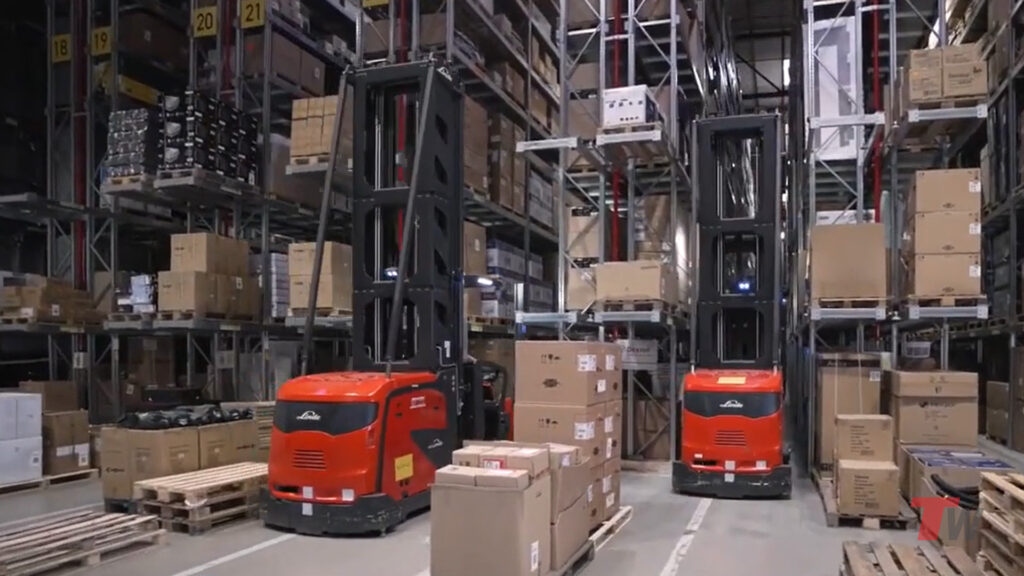
What is a turret truck forklift
A turret truck forklift, also known as a VNA (Very Narrow Aisle) truck, is a specialized industrial vehicle designed to operate in extremely tight warehouse spaces. Unlike traditional counterbalance forklifts, these machines feature a rotating mast or articulated fork carriage that allows the operator to pick up and deposit loads from either side of the aisle without turning the entire truck. This unique capability doubles storage density by eliminating the need for wide turning radii, making turret trucks indispensable for high-rack, high-density warehousing operations.
Core Design and Operational Mechanics
The defining characteristic of a turret truck forklift is its ability to handle pallets at heights exceeding 40 feet while maintaining stability in aisles as narrow as 5 to 6 feet. The operator sits sideways, typically in an enclosed cabin that rotates with the mast, providing an unobstructed view of the forks at various heights. The mast assembly usually includes a reach mechanism that extends the forks into rack openings, plus a 180-degree rotational range for servicing both sides of the aisle without repositioning the entire vehicle. This design eliminates the traditional “right-angle stacking” requirement, which can waste up to 40% of warehouse floor space.
Key Components of Turret Trucks
- Rotating Mast or Fork Carriage: Allows 180-degree fork rotation for side-load retrieval and storage.
- Wire or Rail Guidance System: Many models utilize floor-mounted rails or wire guidance to maintain precise alignment within narrow aisles.
- Enclosed Operator Cabin: Elevates with the mast, giving the operator direct visibility at any lifting height.
- Side-Stance Seating: The operator faces the rack instead of the direction of travel, improving load control.
- Reach Mechanism: Hydraulic or electric extenders push forks into deep rack storage bays.
Versus Other Forklift Types
| Feature | Turret Truck | Reach Truck | Counterbalance Forklift |
|---|---|---|---|
| Aisle Width Required | 5–6 feet | 8–10 feet | 12–15 feet |
| Max Lifting Height | 40+ feet | 30 feet | 20–25 feet |
| Side-Load Capability | Yes (180° rotation) | No | No |
| Operator Orientation | Side-facing | Forward-facing | Forward-facing |
Advantages for Modern Warehousing
Maximized Storage Density
Warehouses equipped with turret trucks can store up to 50% more pallet positions within the same footprint compared to conventional layouts. Because the truck does not need to turn perpendicular to the aisle, racks can be placed at tighter intervals with no wasted space for turning circles. This is particularly beneficial for cold storage and automated distribution centers where square footage costs are premium.
Enhanced Safety and Ergonomics
The enclosed, elevating operator cab provides a consistent viewing angle for the forks at all heights, significantly reducing blind spots and mis-picks. Crash sensors and wire guidance systems help prevent rack and truck damage. Many modern turret trucks also feature anti-collision lasers and load stability sensors, making them safer than operator-down VNA vehicles.
Improved Throughput in High-Rack Systems
In high-velocity facilities, a single turret truck can handle up to 35 pallet moves per hour when working with an optimized WMS. The ability to pick from both sides without rotating the chassis eliminates unnecessary travel time, creating a leaner workflow for order picking and replenishment.
Application Scenarios and Industry Verticals
3PL and Cold Storage Warehouses
Third-party logistics providers and refrigerated facilities use turret trucks to stack frozen goods on narrow, deep racking systems. The operator cab can be heated for cold environments, ensuring comfort and productivity during long shifts. Wire guidance systems are especially useful in tight, dimly lit cold rooms where manual steering is challenging.
Automotive and Heavy Component Storage
Manufacturers of heavy parts like engines or transmissions use turret trucks to store bulky, heavy pallets on elevated racks. The reach mechanism allows precise placement of large metal containers without interference from adjacent rack frames. This reduces product damage and allows for denser storage of expensive parts.
E-commerce and Distribution Centers
Although turret trucks are more commonly associated with pallet storage, certain models can handle order picking at multiple height levels. Hybrid turret trucks combine both functions: they can retrieve full pallets from upper levels and handle case picking at lower heights. This dual capability reduces the need for separate pick carts in large DCs.
Real-World Performance Case Study
One major logistics firm in the Midwest replaced 12 conventional reach trucks with 8 turret trucks in a 150,000-square-foot facility. The result was a 35% increase in pallet positions without expanding the building footprint. Additionally, operator injury rates dropped by 22% due to the enclosed cab and advanced stability controls. The facility manager reported that while turret trucks require more skilled operators, the ROI was achieved within 18 months of deployment due to labor savings and higher throughput.
For facilities considering a transition to VNA systems, Liftron Material Handling offers comprehensive turret truck solutions designed for long-duration high-cycle operations. Their industrial-grade equipment features reinforced steel masts and programmable logic controllers that adapt to various rack profiles. For lithium-powered applications that require zero emissions and overnight opportunity charging, the Liftron DL SERIES provides a power-dense alternative that eliminates battery change-outs and reduces facility ventilation requirements.
Conclusion: Is a Turret Truck Right for Your Fleet?
Turret trucks are not general-purpose machines. They excel in specific environments where every square inch of vertical space must be utilized and aisle widths are kept to a minimum. Businesses planning to invest in a turret truck system must also budget for floor rail installation or guidance wire embedding, operator certification, and warehouse rack modifications. However, for high-density storage operations with stable SKU volumes, the turret truck forklift remains the gold standard for achieving the highest possible storage density without moving to fully automated shuttle systems. A consultation with a VNA equipment specialist can verify your facility’s ceiling height, floor flatness, and aisle dimensions to determine compatibility with this powerful technology.
Add a review
Your email address will not be published. Required fields are marked *