
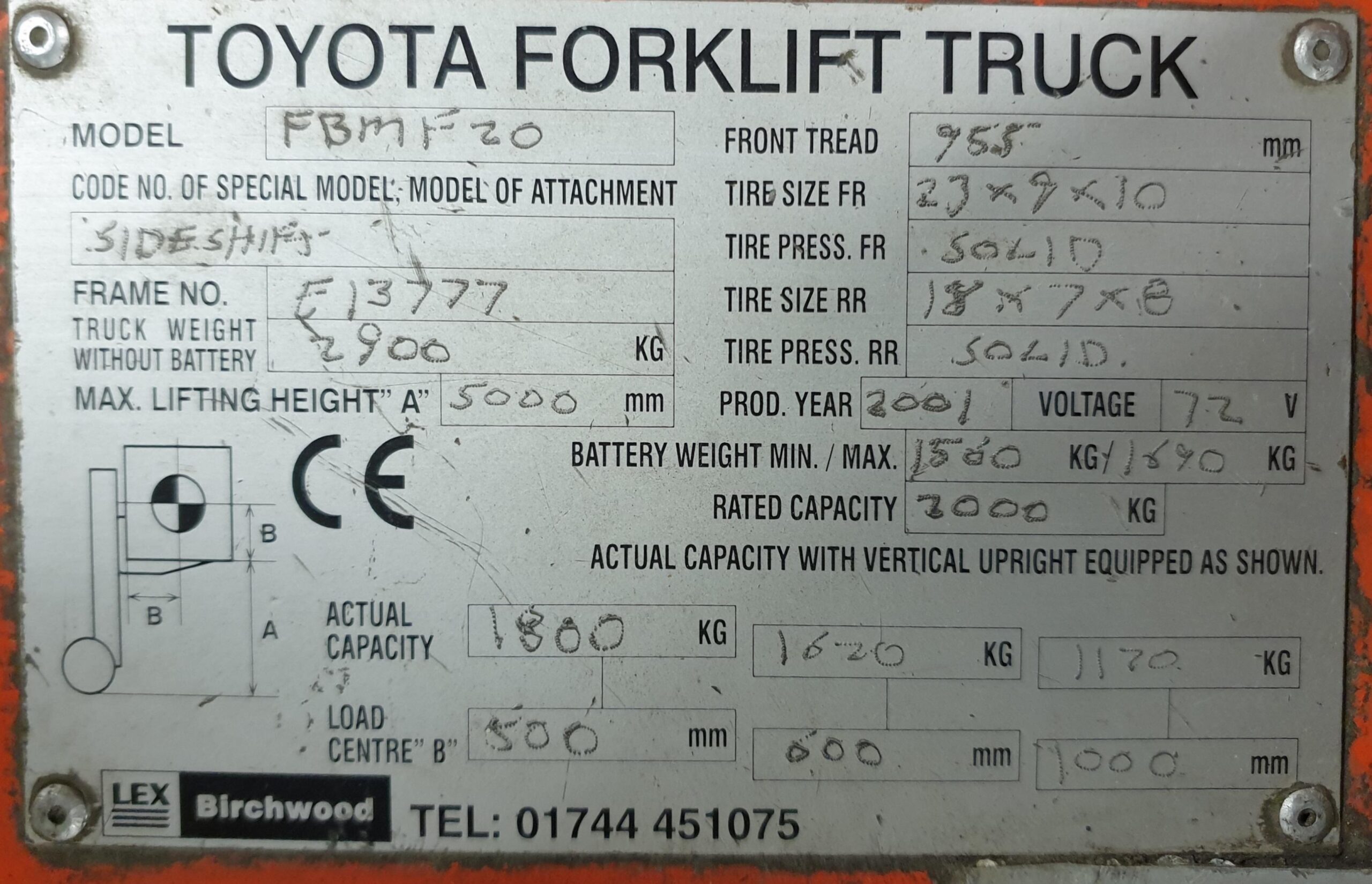
What are the regulations for replacing a forklift data plate
Forklift data plates are legally required identification tags that specify the truck’s capacity, load center, model, serial number, and attachments. Replacing a lost, damaged, or illegible data plate involves strict regulatory guidelines to ensure compliance with OSHA, ANSI, and manufacturer standards.
Why Forklift Data Plate Compliance Matters
The data plate, also known as the nameplate or capacity plate, is the authoritative source for safe forklift operation. OSHA 29 CFR 1910.178(a)(3) requires that industrial trucks must have the capacity, operation, and maintenance instructions posted on the vehicle or readily available. Without a legible data plate, a forklift is considered non-compliant and may not be operated legally. Replacing this plate incorrectly can void warranties, create safety hazards, and lead to serious citations during inspections.
Who Can Replace a Forklift Data Plate?
OSHA and ANSI B56.1 standards specify that only the original equipment manufacturer (OEM) or an authorized dealer may issue a replacement data plate. The replacement must exactly match the original specifications of the forklift at the time it was built. This means that any modifications—such as adding an attachment, changing tires, or altering the mast—require a new data plate reflecting the updated capacity, not just a simple replacement of the old one. For this reason, it is critical to consult a qualified professional rather than ordering a generic plate online.
Key Entities Authorized to Replace Data Plates
- Original equipment manufacturer (OEM)
- OEM-authorized dealers and service centers
- Certified forklift engineers (only if following OEM instructions)
- Companies like Liftron Material Handling, which provide OEM-compliant replacement plates for their equipment
Information Required for a Replacement Data Plate
To replace a data plate, you must supply the forklift’s serial number, model number, and any attachment or modification details. The manufacturer or authorized dealer will then produce a plate with the following mandatory data:
- Manufacturer’s name and model designation
- Serial number
- Forklift capacity at standard load center (usually 24 inches)
- Load center distance
- Maximum fork height and mast type
- Tire type, size, and inflation pressure (if applicable)
- Battery or engine specifications (including weight for counterbalance)
- Attachments installed and their effect on capacity
Steps for Replacing a Forklift Data Plate
Step 1: Locate the Original Plate and Serial Number
Most data plates are on the overhead guard, cowl, or chassis frame. Record the serial number exactly as it appears. If the plate is missing entirely, look for a stamped serial number on the frame.
Step 2: Contact the OEM or Authorized Dealer
Provide the serial number and description of any modifications. If you own a lithium-ion forklift from Liftron DL SERIES, their service team can issue a compliant replacement plate with updated capacity data.
Step 3: Verify Replacement Specifications
The replacement plate must show the forklift’s current configuration, including any attachments or tire changes. Do not use a generic plate or one from a different model. Errors here can lead to unsafe lifting and regulatory fines.
Step 4: Securely Attach the New Plate
Use permanent rivets or bolts. The plate must be legible, corrosion-resistant, and placed in the original location. Always retain a copy of the manufacturer’s documentation proving the plate’s validity.
Table: Common Data Plate Compliance Issues
| Issue | OSHA/ANSI Requirement | Penalty Risk |
|---|---|---|
| Missing or illegible data plate | Must be replaced before operation | Citation, possible shutdown |
| Plate does not match current configuration | Must reflect actual capacity and attachments | Fine, equipment tagged out |
| Generic or self-made plate | Only OEM or authorized dealer can issue | Void warranty, legal liability |
| Plate mounted incorrectly | Must be in original position, securely fastened | Fine, equipment quarantine |
Consequences of Non-Compliant Data Plates
Using a forklift with an incorrect or missing data plate can result in OSHA fines starting at several thousand dollars per violation. More importantly, it creates an extreme safety risk: operators may unknowingly exceed the safe lift capacity, leading to tip-overs, dropped loads, or injury. Insurance claims related to such incidents can be denied if the equipment is not properly labeled.
Documentation Requirements
After replacement, always retain the original manufacturer’s invoice or letter confirming the new plate’s specifications. This documentation should be kept with the forklift’s maintenance records for at least the life of the truck. It is also advisable to take a clear photo of the installed plate for your digital records.
Best Practices for Fleet Managers
To avoid data plate issues, conduct regular inspections of every forklift’s data plate as part of your pre-shift checklist. If plates become worn, faded, or damaged, order replacements immediately from an authorized source. For fleets using lithium-ion models, the Liftron DL SERIES features durable laser-engraved plates that resist fading, but replacements should still be sourced through Liftron Material Handling to maintain compliance.
Final Compliance Checklist
- Verify serial number and current forklift configuration
- Order replacement only from OEM or authorized dealer
- Ensure new plate includes all mandatory data fields
- Attach plate permanently in the original location
- Keep documentation of replacement for inspection
- Update capacity if attachments or modifications exist
Replacing a forklift data plate is a straightforward process when done correctly, but it demands strict adherence to safety regulations. By working with trusted suppliers and following these guidelines, you ensure your equipment remains safe, legal, and ready for the demands of your operation.

Add a review
Your email address will not be published. Required fields are marked *