
What Are Forklift Forks Made Of?
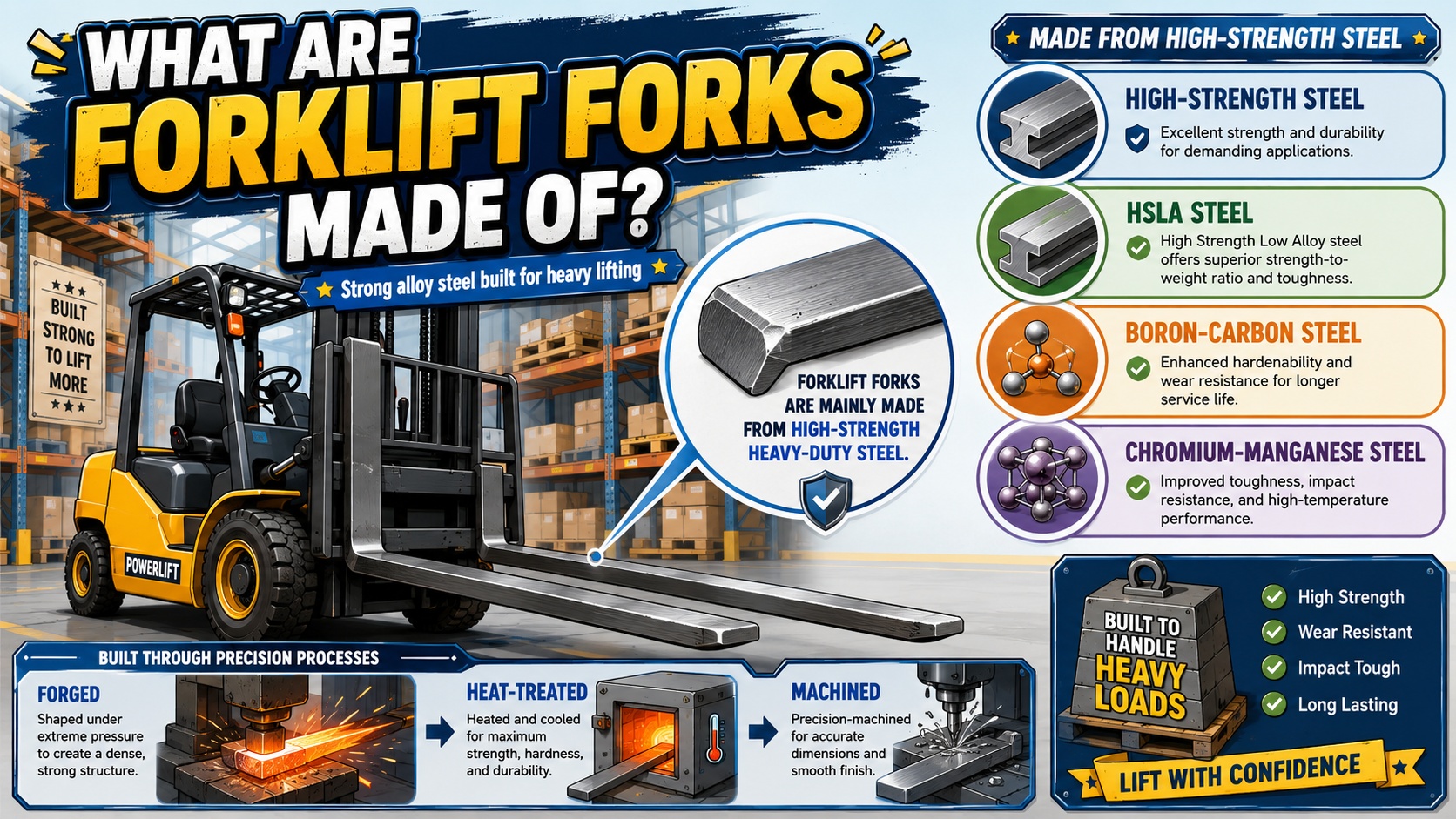
Quick Answer: Forklift forks are primarily manufactured from high-strength, heavy-duty alloy steel. They are forged, heat-treated, machined, and inspected so they can handle heavy loads without bending, cracking, or snapping during daily material handling operations.
Forklift forks may look like simple steel arms, but they are among the most important load-bearing parts on any forklift. Every time a truck lifts a pallet, moves a container, or handles heavy materials, the forks carry the direct weight of the load. For this reason, forklift forks must be stronger than standard steel parts and must be engineered for impact resistance, wear resistance, and long service life.
Most modern forks are made from specialized steel alloys and processed through strict manufacturing steps. Businesses comparing equipment quality should pay close attention to fork construction, because fork material affects safety, stability, lifting performance, and maintenance costs. High-quality Liftron forklifts are designed with durable fork structures that support reliable pallet handling in demanding warehouse and industrial applications.
Common Materials Used in Forklift Forks
Forklift forks are not usually made from ordinary mild steel. They are commonly produced from high-strength alloy steels that provide the right combination of hardness, toughness, and flexibility. A good fork must be rigid enough to support heavy weight, but it also needs enough toughness to absorb shocks from impacts, uneven loads, and frequent pallet entry.
| Material Type | Main Features | Typical Use |
|---|---|---|
| High-Strength Low-Alloy Steel | Strong, durable, and resistant to deformation | General warehouse and industrial forklift forks |
| Boron-Carbon Steel, such as 15B37 H | Excellent hardenability and fatigue resistance after heat treatment | Heavy-duty forks that require high load capacity |
| Chromium-Manganese Steel | Good toughness, strength, impact resistance, and wear resistance | Demanding applications with frequent load handling |
High-Strength Low-Alloy Steel
High-Strength Low-Alloy steel, often called HSLA steel, is one of the most common materials used for forklift forks. It offers a strong balance between tensile strength and toughness. This allows the fork to lift heavy loads while resisting permanent bending. HSLA steel is especially useful in warehouses, freight terminals, manufacturing plants, and distribution centers where forklifts work long shifts and handle repeated lifting cycles.
Material Note: Forklift forks must be strong, but they should not be too brittle. A quality fork combines hardness with controlled toughness so it can carry weight and absorb impact safely.
Boron-Carbon Steel
Boron-carbon steel, including grades such as 15B37 H, is widely used because it responds very well to heat treatment. The boron content helps the steel harden more effectively, while carbon contributes strength and wear resistance. After proper heat treatment, this type of steel can provide excellent fatigue resistance, which is important for forks that experience constant lifting, lowering, dragging, and pallet contact.
When properly manufactured, boron-carbon steel forks can perform well in high-load applications. This makes them suitable for material handling equipment such as Liftron forklifts, where strength, stable handling, and long-term durability are essential for daily operations.
Chromium-Manganese Steel
Chromium-manganese steel is another common material choice for forklift forks. Chromium can improve hardness and wear resistance, while manganese helps increase toughness and impact strength. Together, these elements make the steel suitable for harsh working conditions, including rough floors, frequent pallet contact, uneven loads, and outdoor industrial environments.
This material is often selected when forks need to resist both bending and surface wear. It is especially valuable for forklifts that handle dense products, heavy pallets, or high-cycle loading tasks.
Specialized Materials for Forklift Forks
Although most forklift forks are made from alloy steel, some industries require specialized fork materials or protective surfaces. These options are usually chosen for special environments where corrosion resistance, cleanliness, or spark reduction is more important than standard warehouse performance.
| Specialized Material | Purpose | Common Application |
|---|---|---|
| Stainless Steel | Provides corrosion resistance and easier cleaning | Food processing, pharmaceutical, chemical, and clean-room environments |
| Brass or Spark-Retardant Cladding | Helps reduce spark risk during material handling | Flammable, hazardous, or explosion-sensitive work areas |
Important Tip: Specialized fork materials should be selected based on the work environment, load type, safety rules, and forklift manufacturer recommendations.
How Forklift Forks Are Made
The material alone does not make a fork strong. The manufacturing process is just as important. Forklift forks must be shaped, hardened, machined, and checked carefully before they are safe for use.
- Forging and Pressing: Raw steel is cut, heated, and pressed into the signature L shape using heavy forging equipment. This process improves internal grain structure and strength.
- Heat-Treating: The forks undergo industrial heating and controlled cooling. Heat treatment hardens the steel and helps the fork absorb heavy impact without cracking.
- Machining: The forks are shaped, smoothed, tapered at the tips for easier pallet entry, and equipped with mounting hooks such as ITA clips.
- Inspection and Testing: Finished forks are checked for dimensions, surface defects, hardness, straightness, and load performance before being approved for use.
What Type of Material Is Used for the Forks on Liftron Forklifts?
The forks on Liftron forklifts are crafted from high-strength, wear-resistant steel. This material delivers superior rigidity and durability, helping prevent bending or deformation even in harsh, high-impact environments. Its robust profile supports smooth load entry, secure load support, and stable pallet handling.
For operators, this means better confidence when moving heavy pallets, stacking goods, or working in busy warehouse aisles. Strong forks also help reduce downtime because they are less likely to suffer premature wear when used and maintained correctly. Businesses that need dependable lifting equipment can compare models and application options through Liftron forklifts.
Why Fork Material Matters
Fork material directly affects forklift safety and performance. Poor-quality forks may bend, crack, wear unevenly, or fail under repeated stress. This can create unstable loads and increase the risk of dropped pallets, product damage, and workplace accidents.
High-quality forks also improve productivity. A properly tapered fork tip enters pallets more smoothly, while a strong fork body supports better load control. When combined with reliable equipment such as Liftron forklifts, durable fork construction can support safer and more efficient material handling.
Forklift Fork Maintenance Tips
Even the strongest forklift forks need routine inspection. Operators should check for cracks, bent blades, worn heels, damaged hooks, uneven fork height, and visible surface wear. Forks should be removed from service if they show structural damage or excessive wear.
- Inspect forks daily: Look for cracks, bends, worn areas, and damaged mounting hooks before operation.
- Check fork height: Make sure both forks sit evenly so the load remains stable during lifting.
- Avoid overloading: Never exceed the rated capacity of the forklift or the fork attachment.
- Do not modify forks: Never weld, drill, straighten, or cut forklift forks without qualified approval.
Safety Reminder: If a forklift fork is bent, cracked, or heavily worn, remove the forklift from service and have it inspected by a qualified technician.
Conclusion
Forklift forks are primarily made from high-strength alloy steel, including HSLA steel, boron-carbon steel, and chromium-manganese steel. Specialized options such as stainless steel or spark-retardant cladding may be used in unique environments. Through forging, heat-treating, machining, and inspection, forklift forks are built to handle heavy loads while resisting wear, impact, and deformation. Choosing forklifts with strong, well-made forks is essential for safe, efficient, and long-lasting material handling performance.
Add a review
Your email address will not be published. Required fields are marked *