
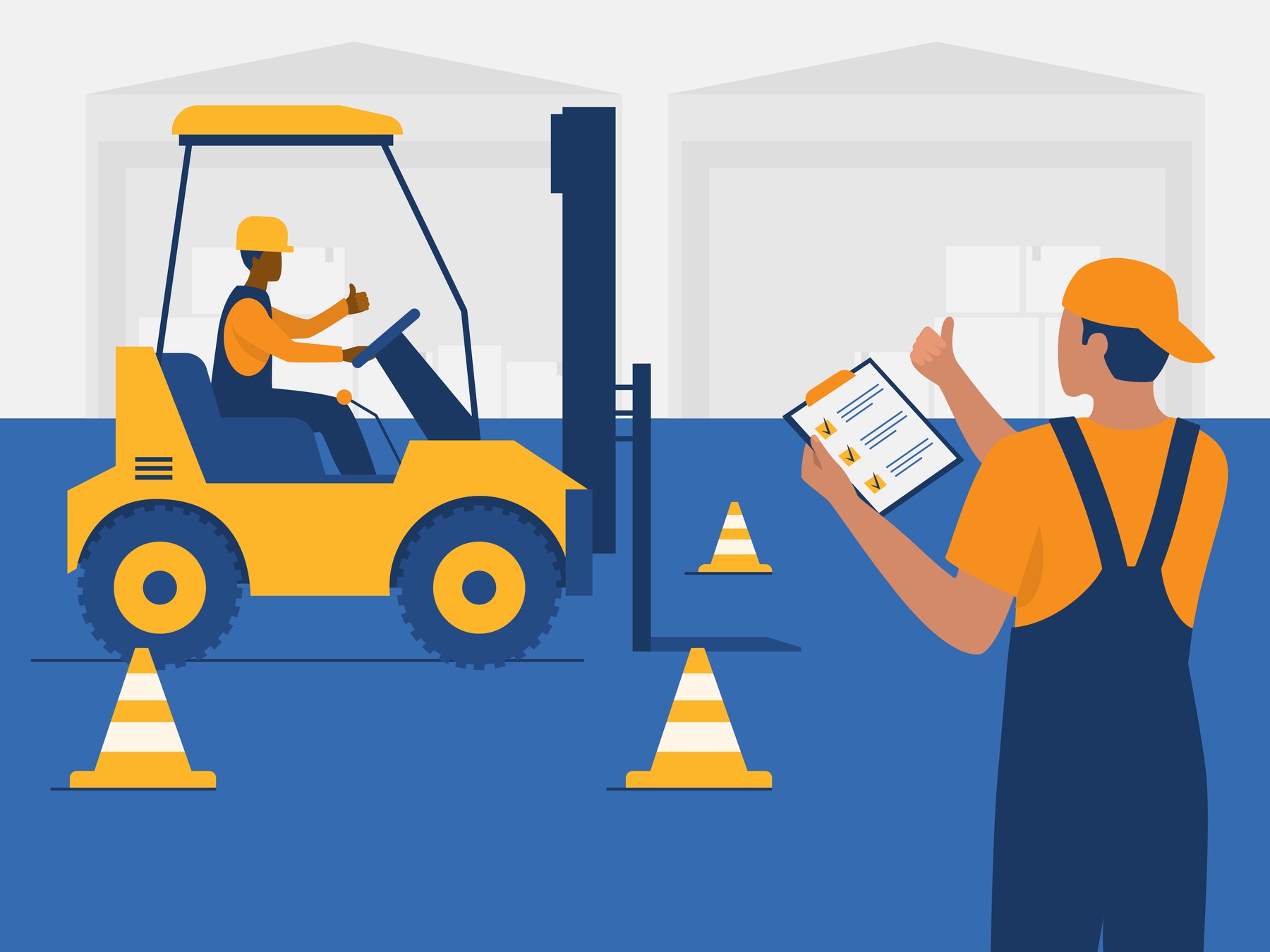
How Many People Are Permitted to Ride on a Forklift?
Forklifts are powerful material handling machines designed to lift, move, stack, and transport loads safely in warehouses, distribution centers, manufacturing plants, construction sites, and outdoor yards. However, one of the most common safety questions employers and workers ask is: how many people are permitted to ride on a forklift? The general answer is simple: only one person, the designated forklift operator, is permitted to ride on a standard forklift.
Under standard Occupational Safety and Health Administration (OSHA) and National Institute for Occupational Safety and Health (NIOSH) guidance, passengers are not allowed to ride on a forklift unless the truck has been specifically engineered and approved to carry an additional person. In practical workplace terms, this means a typical sit-down counterbalance forklift, warehouse lift truck, reach truck, pallet truck, or narrow aisle forklift is intended for one trained operator only.
This rule exists because a forklift is not a passenger vehicle. It does not handle, brake, turn, or balance like a car or utility cart. A forklift is built around load capacity, stability, mast movement, rear-wheel steering, and a carefully controlled center of gravity. Adding an unauthorized passenger may seem harmless during a short ride across a warehouse, but it can quickly create a dangerous situation for the operator, the rider, pedestrians, nearby products, and the facility.
How Many People Are Permitted to Ride on a Forklift in OSHA?
OSHA’s powered industrial truck rules make it clear that unauthorized personnel are prohibited from riding on forklifts. If riders are authorized, the vehicle must provide a safe place for them to ride. In everyday operations, this means the standard OSHA-compliant practice is to allow only the forklift operator on the truck unless the forklift was designed by the manufacturer to safely accommodate another person.
For most forklifts, the operator seat is the only approved riding position. The seat, seat belt, pedals, steering wheel, overhead guard, and control layout are designed for one trained operator. A second person standing on the step, sitting on the counterweight, riding on the forks, holding onto the mast, or standing beside the operator is not using an approved safe riding position.
For employers, the safest policy is straightforward: one forklift, one operator, no passengers. This policy should be included in written forklift safety rules, operator training programs, refresher training, warehouse signage, and supervisor enforcement procedures. A clear no-passenger policy helps reduce confusion and makes it easier to correct unsafe behavior before an incident occurs.
Core Forklift Passenger Rules
1. Single Operator Rule
The single operator rule means that a forklift should be operated by one trained, authorized employee. The operator must have full control of the steering, brakes, hydraulic controls, travel direction, horn, and emergency response decisions. A passenger can distract the operator, interfere with movement, block visibility, or shift unexpectedly during turns, stops, ramps, or uneven surfaces.
Training should emphasize that forklifts are work vehicles, not transport vehicles. Employees should never use a forklift to give someone a ride to another part of the building, move a coworker between work areas, or carry a helper for convenience. Even if the trip is short, the risk is still present.
2. No Riding on Forks
No one should ride on the forks of a forklift. Forks are designed to support approved loads, pallets, containers, and attachments, not people. Riding on forks can lead to falls, crushing injuries, or contact with the mast, load backrest, or nearby objects. A worker standing or sitting on bare forks has no proper fall protection, no safe platform, and no protection from sudden movement.
Employees should also avoid standing under raised forks or elevated loads. Forklift forks, pallets, and loads can move unexpectedly if the hydraulic system shifts, the load becomes unstable, or the operator loses control. A safe worksite keeps people away from elevated forks unless an approved work platform and proper procedures are being used.
3. Manufacturer Exceptions
Some specialized powered industrial trucks may be engineered with more than one approved seat or an approved rider position. In those cases, the employer should follow the manufacturer’s instructions, capacity plate, operator manual, and all applicable safety rules. The key point is that the exception must come from the equipment design, not from workplace convenience.
If a forklift has only one seat, it should be treated as a one-person vehicle. Adding a homemade seat, allowing someone to stand on the side, or letting a worker sit on the counterweight is not an acceptable substitute for manufacturer-approved design. Any modification that affects safe operation, capacity, or configuration should be handled according to applicable safety requirements and manufacturer approval procedures.
4. Approved Work Platforms
There is an important difference between riding on a forklift and being elevated by a forklift using an approved work platform. A properly designed forklift work platform may be used for certain elevated tasks when it is securely attached to the forks or lifting carriage and when the employer follows required safety procedures. However, a work platform is not for transporting employees around the facility.
When a forklift is used with an approved personnel platform, the operator must remain at the controls, the platform must be properly secured, and workers should be protected from falls according to the platform design and job requirements. The forklift should not be driven from one location to another while workers are elevated on the platform. The purpose is controlled vertical lifting, not passenger transportation.
Risks of Extra Passengers on a Forklift
Allowing unauthorized riders changes the way a forklift behaves. Forklifts operate with a stability triangle and a strict center of gravity. Extra weight in the wrong location may reduce stability, especially during turns, braking, lifting, lowering, or traveling on ramps. If the center of gravity moves outside the stability zone, the forklift can tip over.
Tip-overs are among the most severe forklift hazards. A passenger who is not seated, belted, and protected can be thrown from the truck, crushed by the overhead guard, pinned between the forklift and a fixed object, or struck by falling material. Unlike the operator, an unauthorized rider usually has no designed protection system.
Extra passengers can also block the operator’s visibility. Forklift operators must keep a clear view of the travel path and surrounding pedestrians. A person standing near the operator, leaning on the mast, or riding on the side of the truck can create blind spots. Poor visibility increases the risk of collisions with racks, dock edges, doors, pedestrians, trailers, and stored products.
Another major risk is accidental contact with controls. Forklifts often have hydraulic levers, pedals, directional controls, steering components, and emergency switches within a compact operator area. A passenger can bump a control, distract the operator, or cause sudden movement of the mast, forks, or truck. Even a small unexpected movement can lead to property damage or injury.
Why Seat Design Matters
Forklift seat design is a major clue to how many people may ride on the truck. Most forklifts are built with a single operator seat because they are intended for one trained person. The seat position is designed to give the operator access to all controls, visibility through the mast, access to mirrors or displays, and protection from the overhead guard and restraint system.
A Liftron forklift is designed with a single-operator seating layout that supports safe, efficient use across many material handling scenarios. For warehouses, logistics centers, loading docks, factories, and outdoor handling tasks, this single-seat design reinforces the standard safety principle: the forklift is for the operator, not for passengers.
When choosing a forklift for a business, employers should consider not only load capacity and lift height, but also operator ergonomics, visibility, controls, maneuverability, and safety features. A comfortable operator position helps reduce fatigue and supports better control during long shifts. However, comfort does not change the passenger rule. A standard forklift seat is still intended for one authorized operator.
Best Practices for Employers
Employers should build forklift passenger rules into their powered industrial truck safety program. The policy should state that only trained and authorized operators may ride on or operate forklifts. It should also clearly prohibit riding on forks, pallets, attachments, steps, counterweights, side rails, or any area not specifically designed as a safe riding position.
Supervisors should enforce the rule consistently. If one employee is allowed to ride as a passenger “just once,” others may assume it is acceptable. Consistent enforcement prevents unsafe habits from becoming part of daily operations. Safety signs near forklift charging areas, warehouse aisles, loading docks, and staging zones can also remind employees that forklifts are not passenger vehicles.
Operator training should include real examples of unsafe passenger behavior. Workers should understand why the rule exists, not just that it exists. Explaining tip-over risks, visibility problems, control interference, and fall hazards helps employees take the rule seriously. Refresher training should be provided when unsafe operation is observed, after incidents or near misses, or when workplace conditions change.
Conclusion: One Forklift, One Operator
Following the single operator rule helps protect employees, reduce tip-over risks, improve visibility, prevent accidental control contact, and support OSHA-aligned forklift safety practices. Whether a company uses forklifts in a warehouse, factory, construction site, or distribution center, the safest rule is simple and easy to remember: forklifts move materials, not passengers.
Add a review
Your email address will not be published. Required fields are marked *