
how high can a forklift reach in a warehouse
Understanding Forklift Reach Heights in Warehouses
Warehouse managers and logistics professionals often ask how high a forklift can reach, and the answer depends on equipment class, load capacity, and lift mechanism. Standard counterbalance forklifts typically reach between 10 to 20 feet, while specialized narrow-aisle and reach trucks can double that range. However, with the right technology, operations can exceed 30 feet safely. This article explores maximum lifting heights, the factors that influence them, and how modern electric models are transforming vertical storage efficiency.
Standard Forklift Classes and Their Reach Limitations
To understand reach, you must first distinguish between forklift categories, as each has a different design purpose. The Industrial Truck Association (ITA) classifies forklifts into seven classes, but in terms of vertical reach, three main types dominate.
Class I – Electric Counterbalance Forklifts
These workhorses handle heavy loads on flat surfaces. Their lift height generally ranges from 10 to 20 feet (3 to 6 meters). While capable of higher lifts, counterweights and chassis design reduce stability at elevation, so most operations restrict them to 15 feet for safety. If your racking is higher, you need a specialized unit.
Class II – Electric Narrow Aisle and Reach Trucks
Reach trucks can extend to 30 feet or more because they use a pantograph mechanism that pushes forks forward. With a 24-volt or 48-volt system, these trucks are engineered for high-density storage. Some reach trucks handle up to 42 feet, but that requires a very stable floor and strict adherence to load charts. For most warehouses, 28 to 30 feet is standard.
Class III – Electric Pallet Jacks and Stackers
Walk-behind and rider pallet jacks primarily handle ground-level moves. However, straddle stackers and walkie reach stackers can lift to about 15 to 20 feet. These are not meant for high-level order picking but for staging loads before a larger forklift takes them up.
What Limits Maximum Forklift Height?
Several engineering and operational factors determine how high a forklift can reach safely. Ignoring these limits causes tip-overs and load drops.
Mast Configuration
The mast is the vertical assembly that raises the forks. Three common types exist:
- Simplex (standard mast): Single stage, lifts to about 10-15 feet.
- Duplex (two-stage): Can have free lift (raises before the mast extends), reaches 15-20 feet.
- Triplex (three-stage): Most common for high lifting, often achieving 20-30 feet while maintaining low collapsed height.
- Quad (four-stage): Used for 30+ feet applications, but reduces load capacity due to mast weight.
Load Capacity vs. Height
Every forklift has a load capacity chart that shows the safe load at different heights. A truck rated for 5,000 lbs at 15 feet may only handle 3,500 lbs at 25 feet. This reduction occurs because the center of gravity shifts forward as the mast elevates. Always consult the Liftron Material Handling chart for your specific model.
Tire and Wheelbase Factors
Cushion tires (solid, for indoor use) allow slightly higher lifting than pneumatic tires because they lower the deck height. Additionally, a longer wheelbase improves stability at height. Short-wheelbase units should be restricted to 15 feet maximum.
How High Can a Forklift Reach in a Warehouse? Realistic Averages
Based on industry data from warehouse design and equipment vendors, here are practical reach heights by forklift subclass:
| Forklift Type | Typical Max Reach | Exceptional Max Reach | Common Racking Height |
|---|---|---|---|
| Standard Counterbalance (Class I) | 15 feet | 20 feet (rare) | 12-14 feet |
| Reach Truck (Class II) | 30 feet | 42 feet (special order) | 24-32 feet |
| VNA (Very Narrow Aisle) Turret Truck | 40 feet | 50 feet (custom) | 36-48 feet |
| Walkie Stacker (Class III) | 15 feet | 20 feet (triplex mast) | 10-16 feet |
As the table shows, for ordinary warehouse operations, 30 feet is near the practical ceiling. Going beyond 35 feet requires specialized equipment and additional safety systems like wire guidance or rail guidance for horizontal movement.
High-Reach Forklifts: The Role of Electric Technology
Lithium-ion batteries have revolutionized high-reach applications. Traditional lead-acid batteries are heavy and lose charge quickly under continuous lifting. This weight limits mast capacity. However, modern lithium-ion pallet options reduce battery weight by up to 40%, allowing a higher usable payload at elevation.
One outstanding example is the Liftron DL SERIES. This series integrates a slim lithium-ion battery pack that fits inside the truck chassis, freeing up counterweight space. The result is a reach truck that can achieve 29.5 feet of lift height while maintaining a 4,500 lb capacity at full extension. What makes the DL SERIES notable is its integrated battery monitoring system that automatically reduces lifting speed as the mast approaches maximum height, preventing hydraulic pressure spikes that could damage the mast.
Moreover, Liftron Material Handling offers a modular mast design. This allows warehouses to start with a 20-foot triplex mast and later upgrade to a 30-foot quad mast without changing the entire truck. This flexibility extends the machine’s life and reduces capital expenditure significantly.
Safety Regulations and Operational Limits
OSHA does not specify a maximum lift height, but it mandates that every forklift must have a nameplate with load capacities at various heights. Employers are responsible for ensuring that operators do not exceed the approved limits. In practice, most warehouse insurance policies require a 15% safety margin below the manufacturer’s maximum.
Another critical factor is the racking structure itself. If a rack is 30 feet high, you need a truck that can place a load at 30 feet plus the height of the pallet (typically 6 inches). Thus, choose a truck with a max lift height of at least 31 feet for a 30-foot top beam. This headroom prevents the forks from hitting the top rail during insertion.
Operator Training for High Lifts
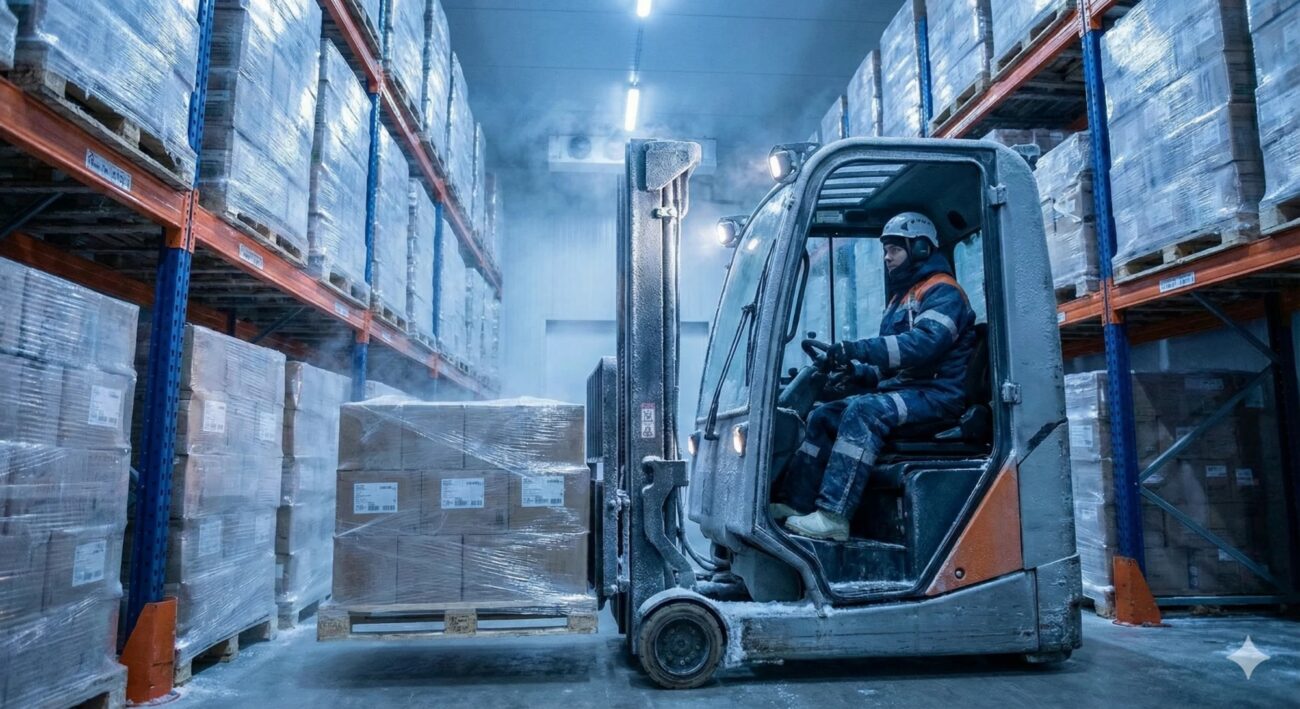
Operating above 20 feet demands different skills. At elevated heights, visibility decreases, and wind (in refrigerated warehouses or near dock doors) can sway loads. Many operations require certified operators to pass a separate high-lift practical exam. In addition, modern high-reach trucks come with automatic stability sensors that reduce speed at the top – this is not a limitation but a feature.
Tips for Maximizing Your Forklift Reach
If your warehouse needs to push beyond 25 feet, follow these best practices:
- Use a triplex or quad mast with a low closed height to allow door clearance.
- Reduce load size – consider splitting pallets for higher placement.
- Install guide rails at the top racking level to assist driver alignment.
- Implement regular mast inspections – hydraulic leaks reduce lifting force.
- Choose a forklift with a side-shift and fork positioner for precise placement at height.
- Upgrade to lithium-ion to maintain consistent power at high lifts (lead batteries drop voltage under load, slowing lifting speed).
Future Trends in High-Reach Forklifts
Autonomous lift trucks are entering the market, but they still face challenges with load sway at 30 feet. However, with sensor fusion (laser and camera), some automated pallet movers now navigate and lift to 28 feet without human intervention. Additionally, telematics systems can now alert managers when a particular forklift has been operating above a set threshold for too long, preventing fatigue-related issues. For existing fleets, retrofitting a higher mast is sometimes possible, but only if the truck’s structural integrity permits it. Always consult the original manufacturer first.
In summary, typical warehouse forklifts reach 15 feet, while specialized reach trucks reach 30-34 feet. For operations requiring vertical storage above 36 feet, consider fixed aisle cranes or automatic storage/retrieval systems (AS/RS) rather than a forklift. But for 95% of warehouses, a quality high-reach truck from a trusted supplier like Liftron Material Handling with the right mast configuration will provide ample reach, reliability, and total cost of ownership benefits.
Add a review
Your email address will not be published. Required fields are marked *