
how to prevent forklift damage to pallet racks
Forklift impacts are the leading cause of warehouse rack damage, costing businesses thousands in repairs, inventory loss, and downtime. Understanding how to prevent these collisions is not just about maintenance—it’s a core operational safety strategy that protects your workforce and profitability.
Why Rack Damage Keeps Happening
Most rack damage doesn’t come from a single dramatic crash, but from repeated, low-speed impacts that go unreported. These knocks bend uprights, misalign beams, and weaken the structural integrity of your storage system over time. When racks fail, the consequences can be catastrophic, including collapsed aisles, falling pallets, and severe injuries. To break this cycle, you need a layered approach that addresses equipment, environment, and human behavior.
1. Engineered Physical Barriers
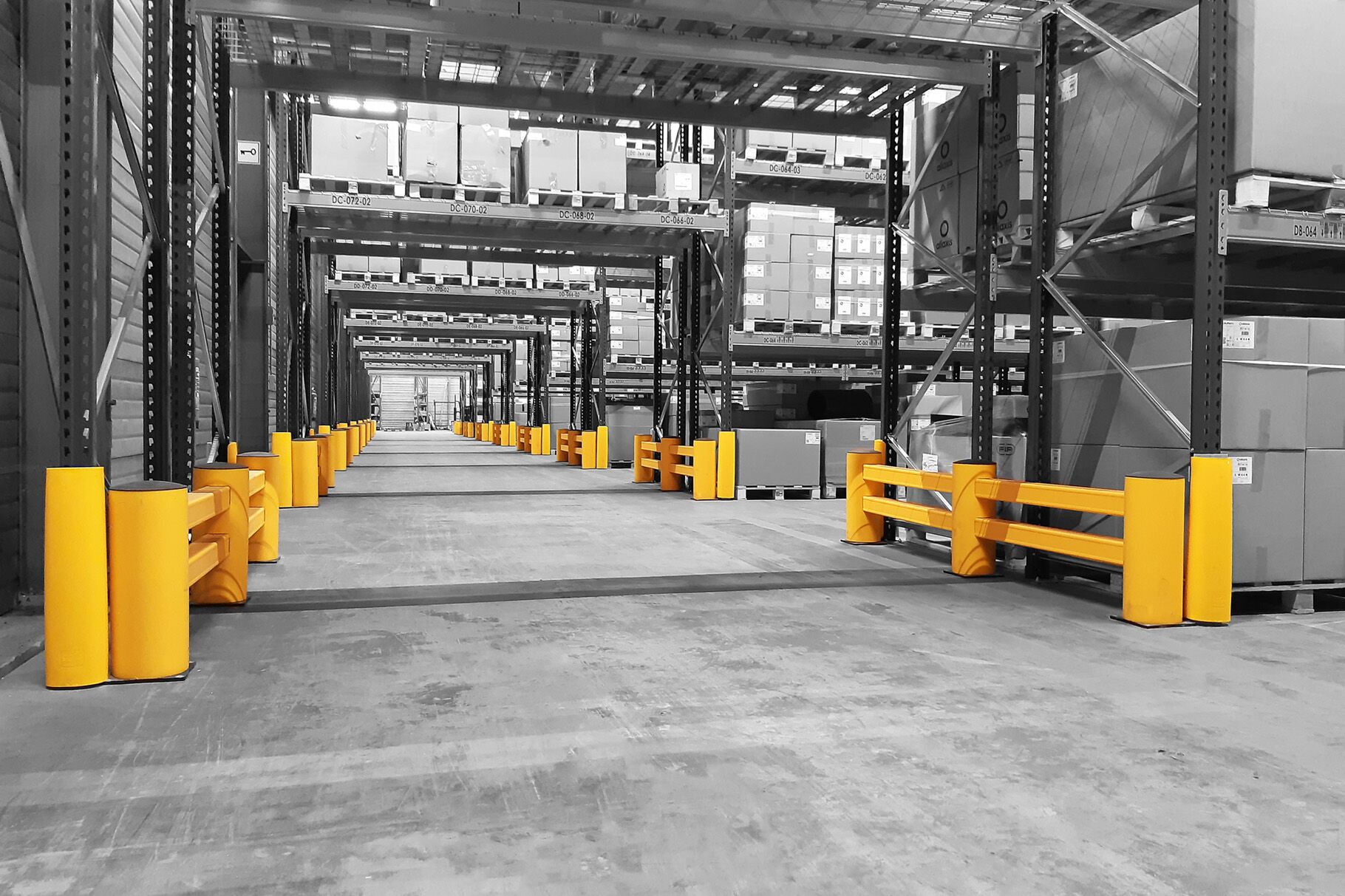
Install Column Guards and Rack Protectors
One of the most effective first lines of defense is placing robust steel bollards or column guards around every rack upright, especially those adjacent to forklift travel paths. These guards absorb the kinetic energy of an impact before it reaches the structural racking. Look for guards that are at least 400mm high and secured with heavy-duty anchors. For double-deep racks or high-traffic zones, consider adding corner guards with a spring-mounted design that deflects and bounces back.
Add Aisle End and Row-End Protectors
End-of-aisle uprights are the most vulnerable points because forklifts must make sharp turns nearby. Install tall, reinforced end-row protectors that extend up to handle the mast height. Also, use flexible aisle guidance cones or rails that visually channel drivers away from critical edges without becoming a tripping hazard.
2. Advanced Forklift Technology and Equipment Selection
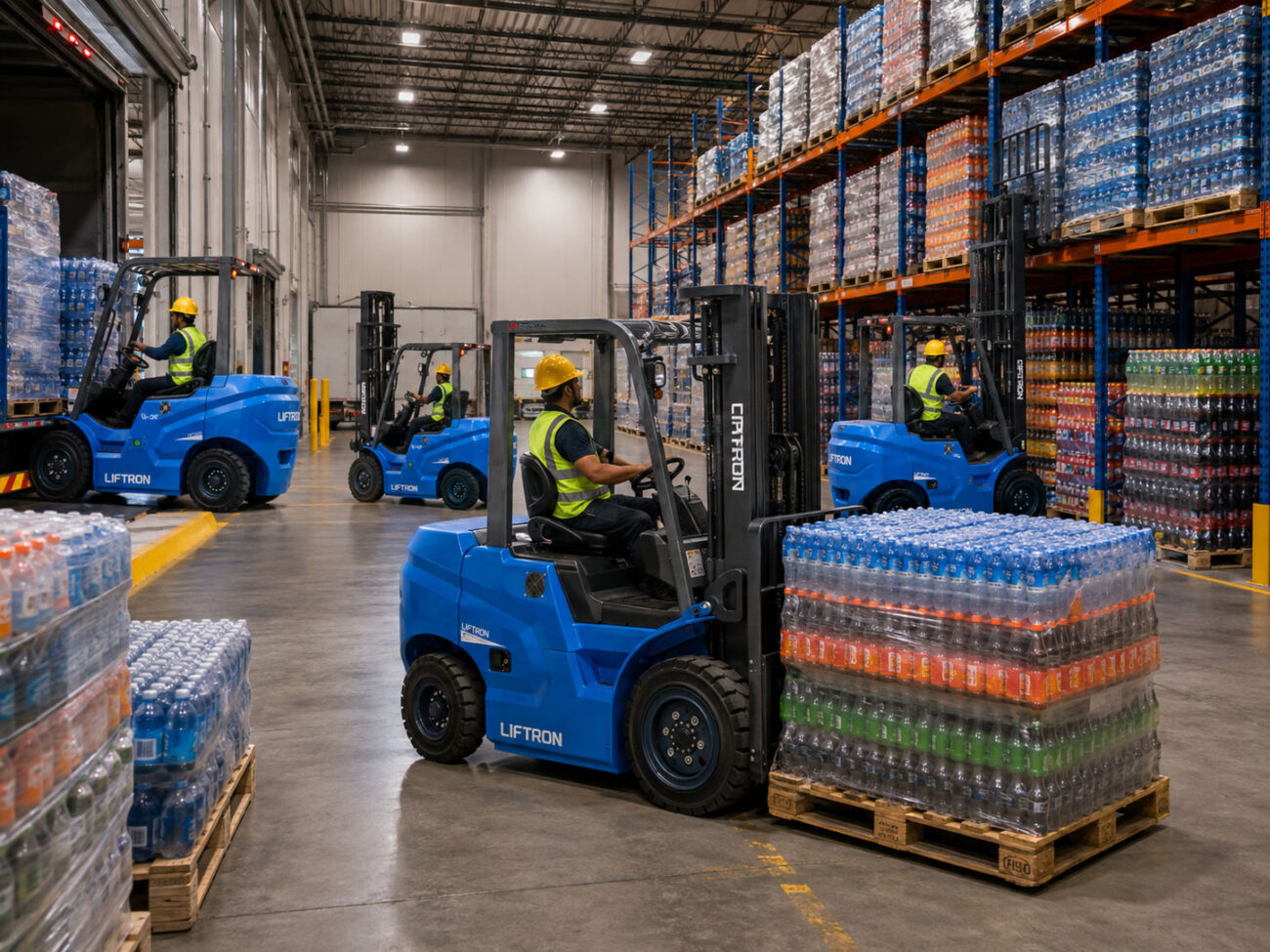
Your choice of forklift directly impacts your damage prevention capability. Modern trucks offer features that reduce human error and improve situational awareness. If you’re looking to upgrade or expand your fleet, consider the benefits of Liftron Material Handling, a provider known for integrating smart safety tech into their equipment.
Utilize Load Backrests and Side Shifters
A load backrest prevents pallets from sliding backward into the rack, while a sideshifter allows the driver to position forks without moving the entire truck, reducing unnecessary lateral movement near uprights. These simple attachments dramatically minimize scraping and misalignment damage.
Consider the Liftron DL SERIES
This specific series stands out because it combines precise electronic steering with a compact turning radius. The DL SERIES trucks are designed with proportional speed control that is sensitive at low speeds, which is crucial for fine maneuvering inside tight racks. Additionally, they feature a lifting system with integrated shock absorption, reducing load swing that often leads to side impacts on beams. Lithium-ion batteries also mean zero emissions, allowing for cleaner, more focused operation in enclosed storage areas.
Mandate Speed Limiters and Zone Controls
Fleet management systems can be programmed to automatically slow forklifts within 5 to 10 feet of a racking system. This geofencing technology forces drivers to approach pallet positions at a creep speed, giving them more reaction time. Some vehicles also offer “teach-in” modes that slow lift speed when the forks are elevated above a certain height, preventing top-beam collisions.
3. Comprehensive Driver Training and Culture
Focus on “Smooth Operation” Drills
Train operators to avoid abrupt stops and starts. Incorporate specific drills that require them to place a pallet into a rack without touching the beam or upright. Emphasize the “3-point contact” rule (two hands and one foot) when entering/exiting, but more importantly, teach them to look at the rack level indicator, not just the forks. Use spotters during training to correct bad habits immediately.
Zero-Tolerance Reporting Policy
Many workers hide damage because they fear reprimand. Establish a clear policy where any contact with a rack, no matter how minor, must be reported to a supervisor on the same shift. Use a color-coded paint system—if an area is scraped, the paint chip identifies the exact forklift that hit it via a pre-assigned color. This increases accountability and allows for faster rack inspections.
4. Optimize Warehouse Layout and Lighting
Widen Aisles Where Possible
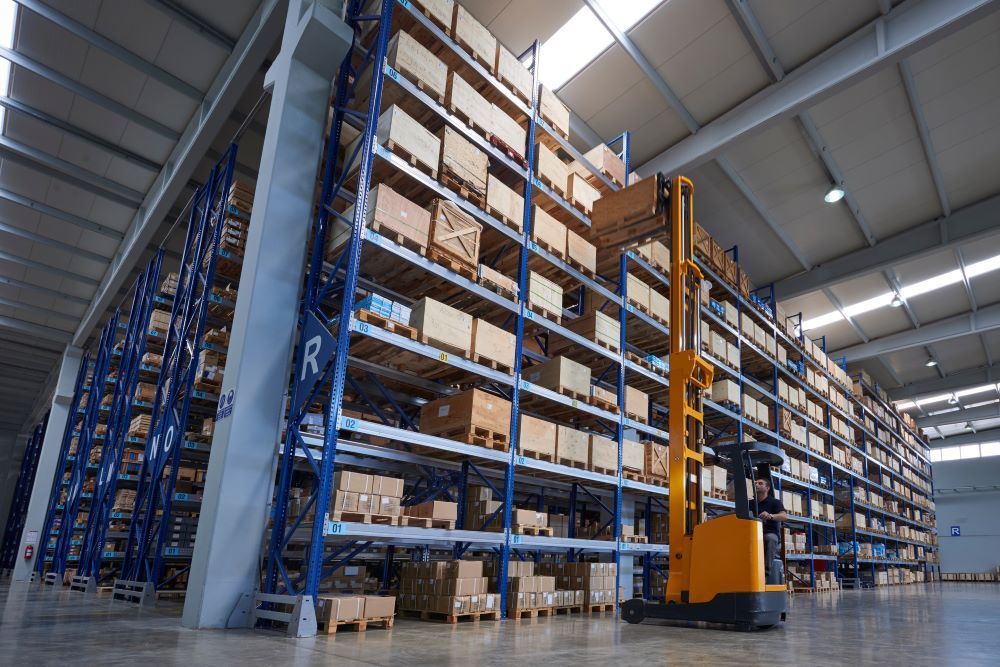
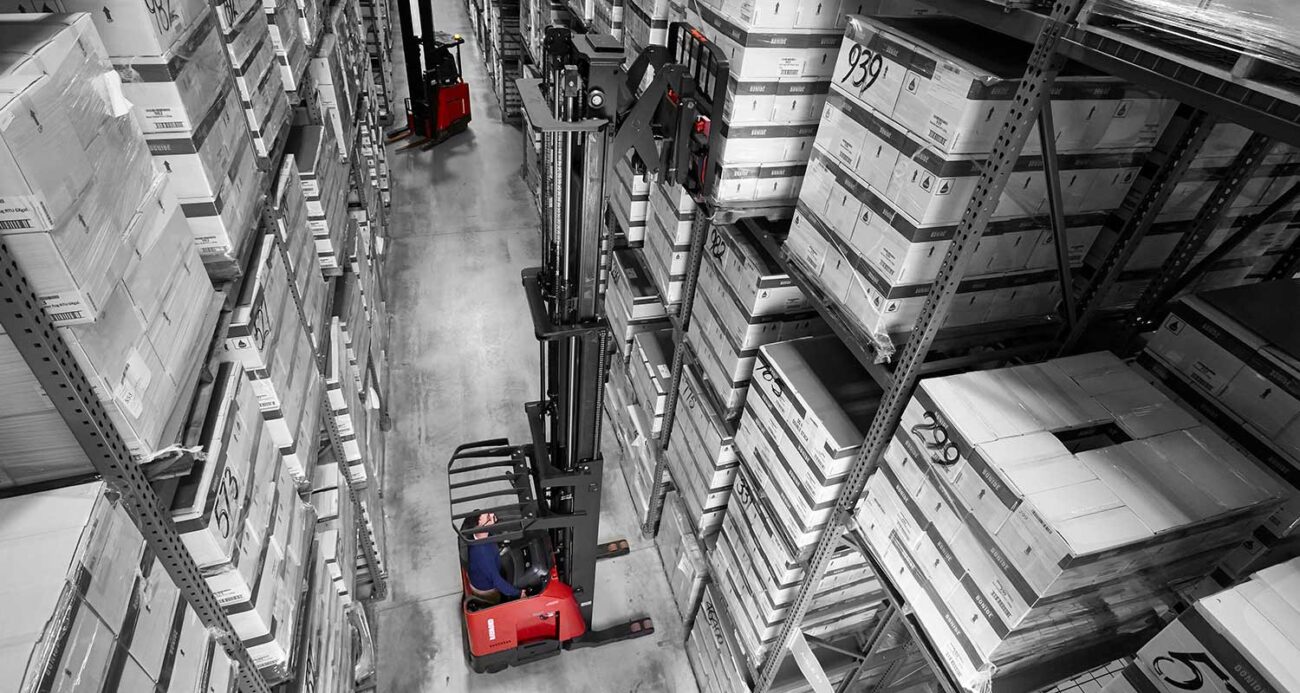
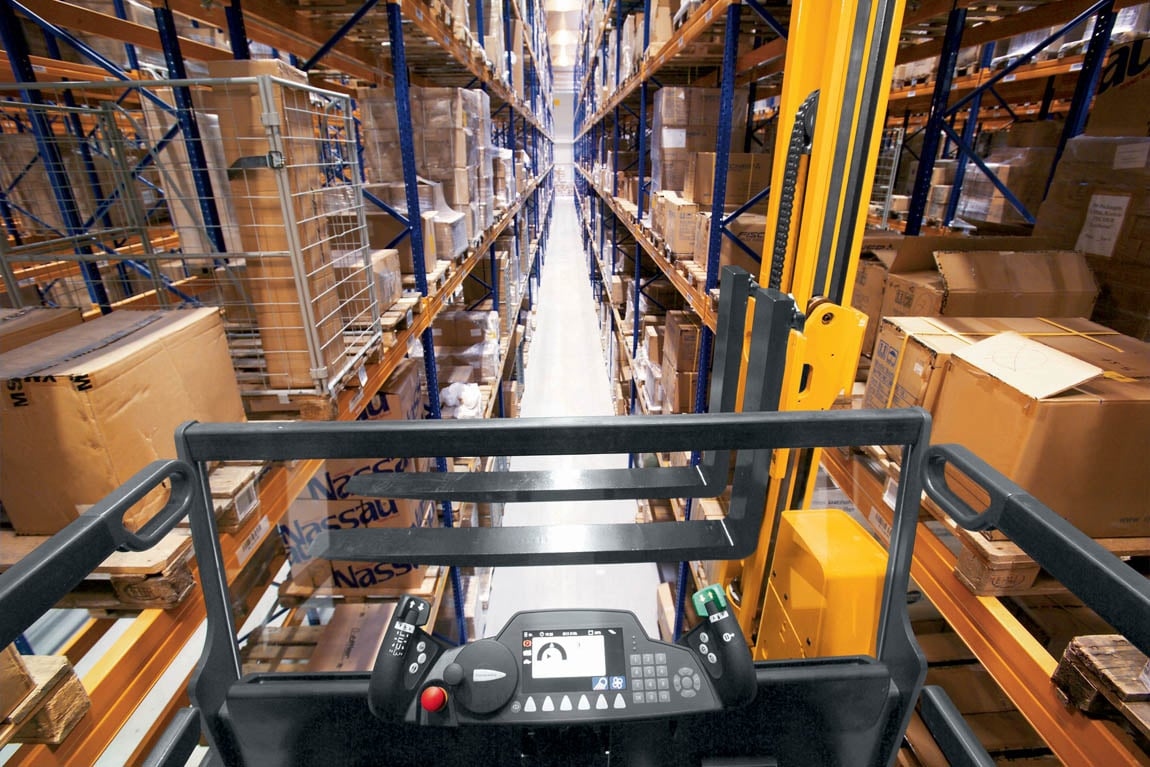
If you have a narrow-aisle warehouse, evaluate if your forklifts actually have the clearance they need. Standard counterbalance trucks need a minimum of 3.5 meters of aisle width. If you can’t widen the aisle, consider switching to reach trucks or very narrow aisle equipment that have guided rail systems, eliminating guesswork entirely.
Improve Visibility with Reflective Markings
Ensure that all uprights and beam ends have high-visibility retroreflective tape. This helps drivers judge distances better, particularly at dawn, dusk, or in dimly lit storage zones. Use floor paint to clearly delineate pedestrian walkways and truck lanes, keeping personnel away from the danger zone where most collisions occur.
5. Regular Maintenance and Rack Audits
Inspect Racks Every Week
Schedule a formal rack inspection at least once a week. Look for signs of twisting, buckling, or cracked welds near the base plates. Use a laser level to check that uprights are still perfectly vertical—a lean of more than 1.5 degrees is a red flag. Replace or repair damaged components using the rack manufacturer’s approved parts only, as mixing steel grades can weaken the system.
Align Racking with Floor Conditions
Uneven floors cause racks to flex, which creates awkward impacts with forklifts. Regularly check that anchor bolts are tightened and that floor shims are in place. If you notice forklift wheels vibrating excessively near racks, inspect the floor surface for potholes—these can cause the mast to lurch sideways into a beam.
6. Use of Visual and Audio Warning Systems
Install Blue Spot Lights and Motion Alarms
Blue LED spotlights projected on the floor ahead of the forklift warn pedestrians and operators of the truck’s path. Simultaneously, use a reversing alarm that is not overly loud but clearly audible over warehouse machinery noise. For rack aisles, consider installing photocell sensors that trigger a red flashing strobe when a forklift gets too close to a protected bay.
Signal Stacking with Lighted Pick Modules
In high-throughput operations, integrate a pick-to-light system on the rack beams. This directs the driver to the exact slot, reducing their need to search for positions, which often causes them to drift sideways and clip an upright. When the correct bay is lit, the driver can focus solely on forward alignment.
7. Measuring Your Success: Key Metrics to Track
To truly prevent damage, you must measure it. Track the following performance indicators on a monthly basis:
| Metric | Target | Action if Exceeded |
|---|---|---|
| Rack impacts per 1,000 working hours | < 1.5 | Retrain drivers & perform route analysis |
| Reported near misses | > 10 per month | Reward reporting to improve data |
| Downtime from rack repairs | < 2 hours/month | Invest in stronger guards |
Finally, schedule a yearly audit with a rack safety specialist. They will use specialized tools like torque wrenches and digital levels to verify the system’s integrity beyond visual checks. By integrating barriers, smart machinery like the Liftron DL SERIES, rigorous training, and continuous monitoring, you will drastically cut damage rates. Remember that prevention is a continuous process—not a one-time fix. A proactive stance on rack protection today ensures safer operations tomorrow and avoids costly disruptions.
Add a review
Your email address will not be published. Required fields are marked *