
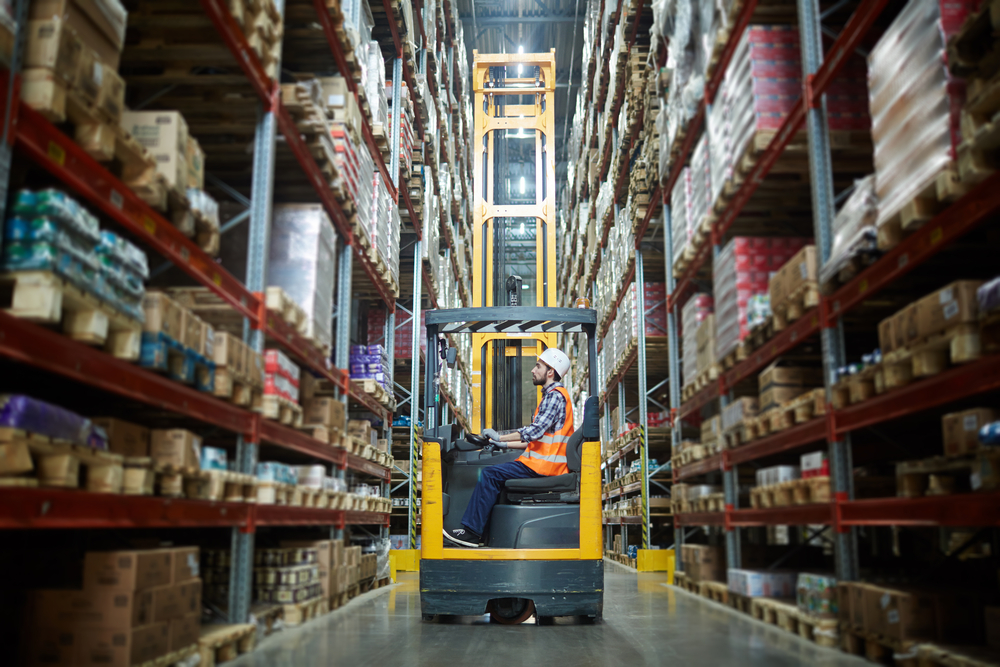
which forklift is best for narrow aisles
Choosing the right forklift for narrow aisles can dramatically increase your warehouse storage density, but the wrong choice can lead to bottlenecks and safety hazards. This guide breaks down the best forklift types for tight spaces, comparing their turning radii, lift heights, and operational costs to help you make an informed decision.
Why Standard Forklifts Fail in Narrow Aisles
Conventional counterbalance forklifts require wide turning areas—typically 10 to 12 feet—to maneuver perpendicularly into racking. In a narrow aisle layout (often 6 to 8 feet wide), these machines simply cannot operate. Their rear-wheel steering and long wheelbase make them inefficient and dangerous when space is constrained. Instead, you need a truck designed specifically for high-density storage, where the mast and carriage must rotate the load rather than the entire machine.
The Top Forklift Types for Narrow Aisles
1. Reach Trucks (Stand-Up or Sit-Down)
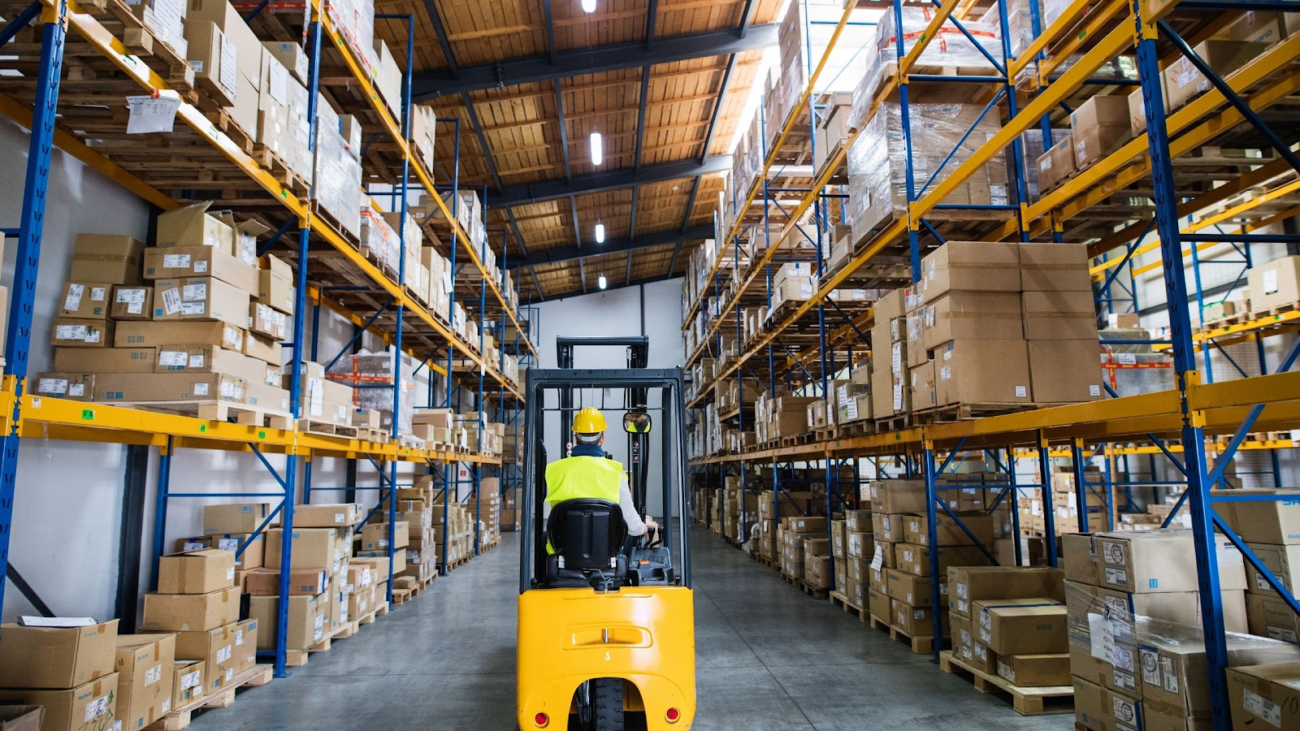
Reach trucks are the most common solution for narrow aisles between 8 and 10 feet. They use a pantograph mechanism that extends the forks forward to retrieve pallets, eliminating the need for the truck to drive into the rack. Their compact chassis and rear-wheel drive allow for a tighter turning radius—often under 7 feet. For most warehousing operations, a reach truck offers the best balance of cost, lift height (up to 40 feet), and aisle width requirement.
However, reach trucks are not ideal for very narrow aisles (below 7 feet). If your racking is more compact, you must look at a man-up or turret truck.
2. Turret Trucks (VNA – Very Narrow Aisle)
Turret trucks, also known as swing-reach trucks, operate in aisles as narrow as 5 to 6 feet. The key innovation is that the forks rotate 180 degrees, allowing the truck to pick from both sides of the aisle without turning the chassis. This system works best with wire-guided or rail-guided technology, ensuring the truck stays perfectly straight. These machines are often “man-up,” meaning the operator is lifted with the load, providing excellent visibility for high-level picking.
While turret trucks maximize storage density, they are significantly more expensive and require a perfectly flat floor. They are best suited for large distribution centers with high pallet throughput and strict inventory rotation.
3. Narrow Aisle Order Pickers
If your operation involves picking individual items rather than full pallets, a narrow aisle order picker is ideal. These trucks allow the operator to be raised to the shelf level, reducing picking errors and improving productivity. They work in aisles of roughly 6 to 7 feet. Unlike turret trucks, they don’t require guidance systems, which makes them a lower-cost entry point into VNA operations.
Key Specifications to Compare
When selecting a narrow aisle forklift, focus on these critical metrics:
- Aisle Width Requirement: The minimum turning aisle needed to operate efficiently. Reach trucks need 8-10 feet, turret trucks need 5-6 feet.
- Maximum Lift Height: Higher capacity often means a larger mast, which can increase aisle width needs. Check the load capacity at full height.
- Load Capacity: Narrow aisle trucks often have lower load limits (typically 2,500 to 4,500 lbs) compared to counterbalance trucks.
- Power Source: Lithium-ion batteries are now preferred for their fast charging and zero maintenance, ideal for multi-shift operations.
Comparative Table: Narrow Aisle Forklift Options
| Forklift Type | Typical Aisle Width | Lift Height | Best For | Operator Position |
|---|---|---|---|---|
| Reach Truck | 8-10 ft | Up to 40 ft | General pallet handling | Stand-up or sit-down |
| Turret Truck (VNA) | 5-6 ft | Up to 50 ft | High-density storage, full pallet retrieval | Man-up (operator rises) |
| Order Picker | 6-7 ft | Up to 30 ft | Case picking, item-level access | Man-up (operator rises) |
| Stacker (Walkie) | 6-8 ft | Up to 12 ft | Low-lift, shuttle operations | Walk-behind |
Lithium-Ion Advantage in Narrow Aisles
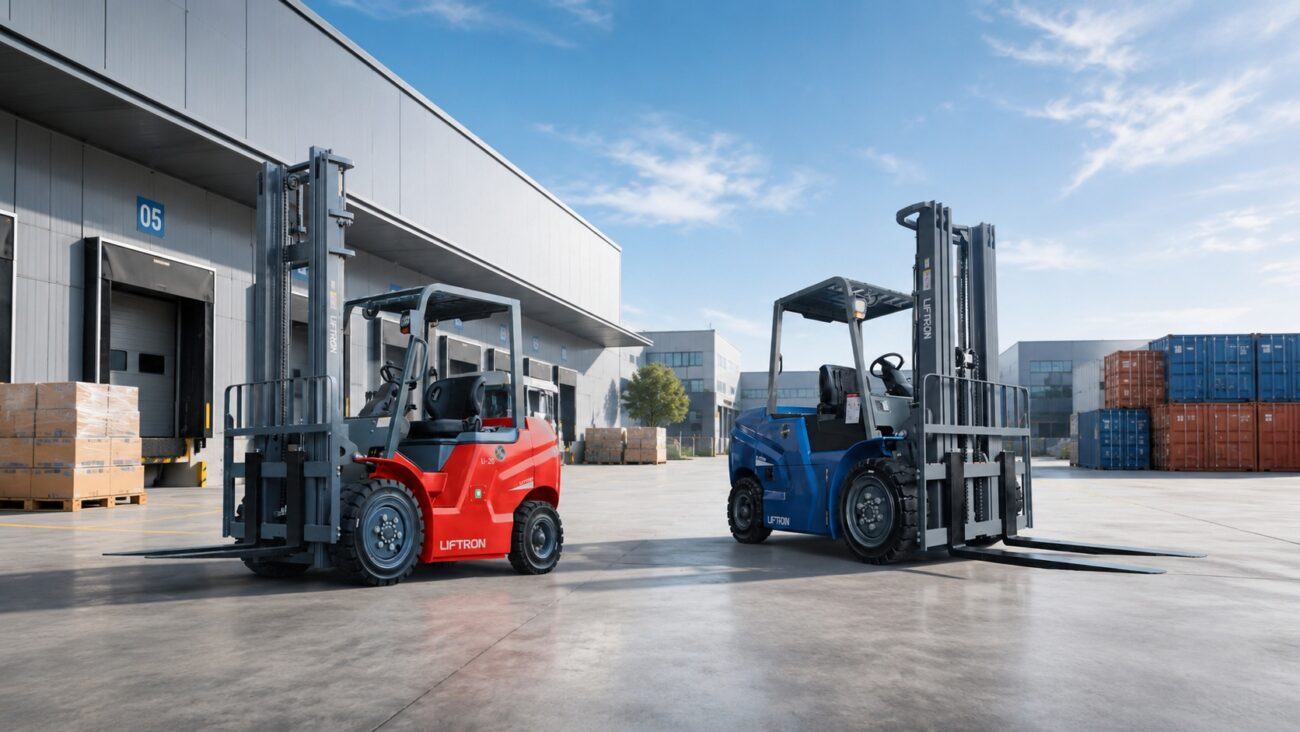
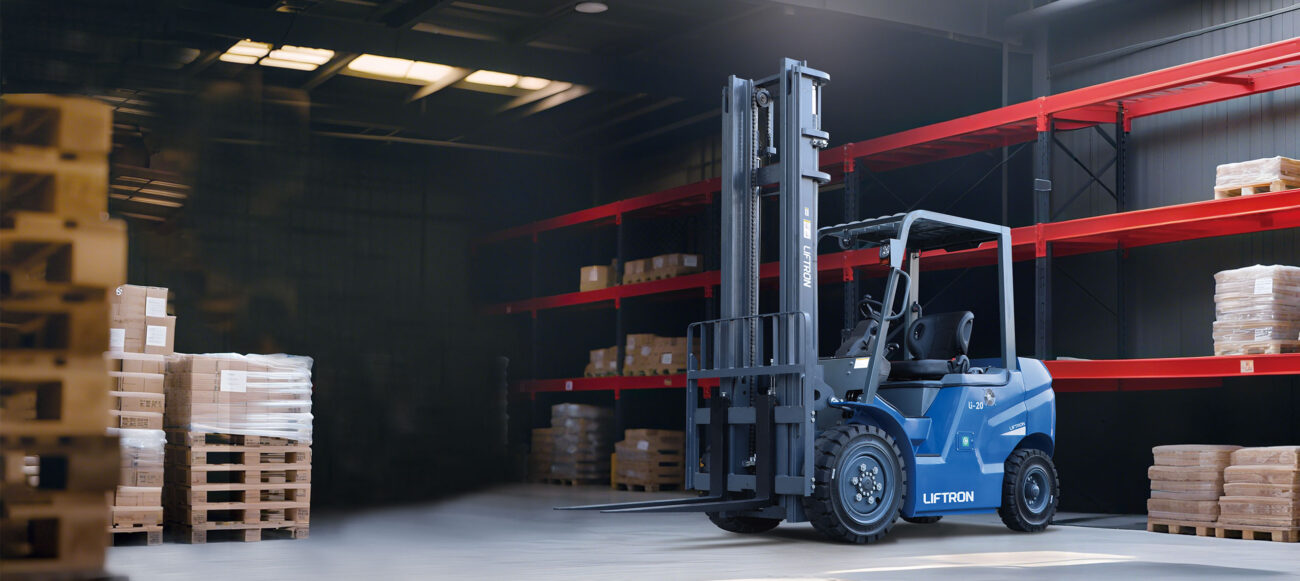
Narrow aisle operations demand high maneuverability and uptime. Traditional lead-acid batteries require dedicated charging rooms, maintenance, and changing out heavy batteries—which takes time and space. Modern lithium-ion systems, like the Liftron DL SERIES, eliminate these issues. These forklifts offer opportunity charging (during breaks or shift changes) without battery swapping. This is particularly beneficial in narrow aisles where every minute of downtime costs valuable throughput.
Lithium-ion also delivers consistent power throughout the discharge cycle, meaning the lift speed and reach performance do not degrade as the day progresses. This is crucial in VNA applications where precise load placement is required at high altitudes.
Guidance Systems: Wire vs. Rail vs. Free-Roaming
For turret trucks, you need a guiding mechanism to keep the truck perfectly centered in the aisle. Wire guidance uses a wire embedded in the floor, which is expensive to install but reliable. Rail guidance uses physical floor rails, which are cheaper but can interfere with pallet jack movement. Some modern trucks, including specific narrow aisle models from Liftron Material Handling, offer free-roaming via laser or magnetic tape navigation, allowing the truck to leave the aisle and travel to charging stations or staging areas without additional infrastructure.
Ergonomic and Safety Considerations
Switching to narrow aisle equipment changes the operator’s work environment. A man-up turret truck subjects the operator to more movement and height, so look for features like shock-absorbing platforms, side-support arms, and dual-action joysticks. Also, consider integrated camera systems for blind-spot visibility when operating deep within a rack structure. Many narrow aisle trucks now include automatic speed reduction when entering an aisle, which prevents accidental collisions.
Calculating Your Payback: Storage Density vs. Equipment Cost
The primary reason to choose a turret truck over a reach truck is storage density. A turret truck can reduce aisle width from 10 feet to 6 feet, potentially increasing racking capacity by 30% or more. However, the truck itself costs 50-100% more. Calculate your cost per pallet position, including the racking, floor, and truck. For most small to mid-size warehouses, a reach truck is the most cost-effective upgrade. For enterprises with over 10,000 pallet positions, VNA with turret trucks usually provides a faster return on investment.
Final Recommendation
For aisles between 8 and 10 feet, choose a reach truck, ideally with a lithium-ion battery for simplicity and fast charging. For aisles below 7 feet, invest in a turret truck with wire guidance and a man-up cab. Never try to force a standard counterbalance truck into a narrow aisle—it’s unsafe and inefficient. Always test the specific model in your actual racking layout, monitor the turning circle under load, and verify the fork extender smoothness. If you need a reliable partner to assess your specific racking dimensions and throughput, consulting with a specialist like Liftron Material Handling can save you from costly mistakes. Their Liftron DL SERIES offers a good middle-ground option for operations that want the efficiency of lithium-ion combined with a reach-truck form factor, providing excellent maneuverability without requiring full VNA guidance infrastructure.
Add a review
Your email address will not be published. Required fields are marked *