
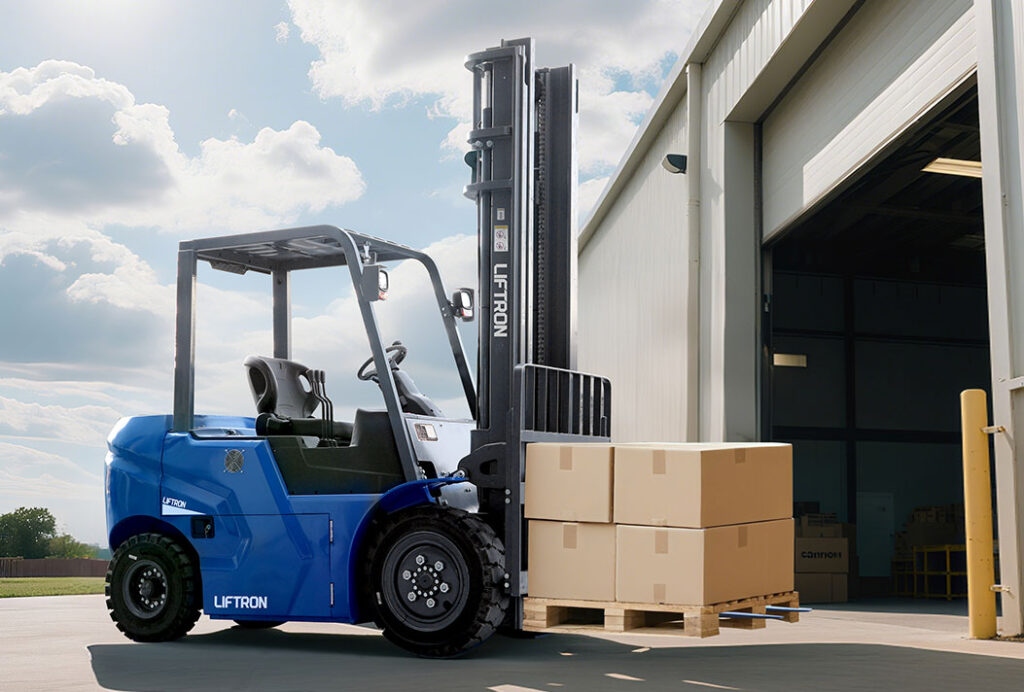
how are liftron forklifts manufactured
Discover the precision engineering behind Liftron forklifts, from advanced robotic welding to stringent quality checks, ensuring durability, performance, and safety in every unit produced.
The Foundation: Design and Engineering Excellence
Every Liftron forklift begins its journey not on the assembly line, but in the digital realm of CAD (Computer-Aided Design) and finite element analysis (FEA). Engineers model each component—from the mast rails to the counterweight—to simulate real-world stresses, loads, and fatigue cycles. This phase is critical, as it ensures that the final product can handle the rigors of demanding warehouse and industrial environments. The design process also integrates modularity, allowing for easier maintenance and part replacement, which significantly reduces downtime for operators.
The engineering team at Liftron Material Handling focuses heavily on ergonomics and safety. Cab layouts are tested for visibility, control placement, and operator comfort, reducing fatigue during long shifts. Simultaneously, they prioritize energy efficiency, especially in the new electric models, by optimizing motor controllers and hydraulic systems. Every design iteration undergoes virtual prototyping, which cuts physical waste and speeds up development cycles, ensuring that only the most refined blueprints move to production.
Raw Materials and Precision Cutting
The manufacturing process starts with high-grade steel, sourced from certified mills that meet international standards like JIS or ASTM. Coils or plates are delivered to the factory, where they are inspected for thickness, surface quality, and tensile strength. Using CNC plasma or laser cutting machines, the steel is precisely cut into frames, mast channels, and other structural parts. These machines operate with tolerances within fractions of a millimeter, guaranteeing that each piece fits perfectly during assembly.
Following cutting, parts move to CNC bending and forming stations. Here, hydraulic presses shape the steel into complex geometries like U-channels for masts and box sections for chassis. A key step is deburring and surface preparation, which removes any sharp edges or scale. This is followed by shot blasting, a process that cleans and roughens the surface, creating an ideal profile for the subsequent powder coating or painting stages. This meticulous preparation is what prevents corrosion and extends the lifespan of the lift truck.
Robotic Welding and Fabrication
The cut and formed parts are then transferred to dedicated welding jigs. These fixtures lock components into exact positions while robotic arms perform MIG (Metal Inert Gas) welding. Robots ensure consistent weld penetration and bead geometry, which is impossible to achieve consistently with manual welding. Critical joints, such as those on the chassis and mast carriage, undergo 100% visual inspection and periodic X-ray or ultrasonic testing to detect internal flaws.
After primary welding, skilled technicians perform spot-welding and tack-welding for secondary brackets, cable guides, and hydraulic line mounts. The entire frame is then stress-relieved in a controlled furnace or via vibration treatment. This process removes residual stresses from welding and forming, preventing future distortion or cracking under heavy load. The result is a skeleton that is not only strong but also dimensionally stable for the lifetime of the machine.
The Powertrain: From Diesel to Lithium-Ion
Liftron offers diverse powertrains, each manufactured with distinct precision. For internal combustion models, engines and transmissions are sourced from trusted global partners, then mated to in-house designed torque converters and drive axles. On the electric side, the company has invested heavily in lithium-ion technology. The Liftron DL SERIES showcases this innovation, featuring fully sealed battery packs with intelligent Battery Management Systems (BMS).
Battery assembly occurs in a cleanroom environment to prevent dust contamination. Each cell is laser-welded into modules, then connected to the BMS, which monitors temperature, voltage, and charge cycles in real time. The electric motors are brushless AC induction types, which eliminate brush wear and require zero maintenance. Before installation, each motor is dyno-tested to verify output torque and efficiency, ensuring the drivetrain performs flawlessly under variable load conditions.
Assembly Line Operations
The chassis moves along an automated conveyor system, where it receives the complete drivetrain, axles, and hydraulic pumps. Skilled line workers install the mast assembly, which consists of nested rails, lift cylinders, and chain mechanisms. Each mast is pre-tested for verticality and free-lift calibration. Then, the counterweight—often cast iron or heavy steel plate—is bolted and torqued to specification, ensuring the proper center of gravity.
Next comes the hydraulic system, where all hoses, valves, and fittings are routed and secured with vibration-dampening clamps. The system is filled with premium hydraulic oil and then pressure-tested at 1.5 times the working pressure to detect any leaks. Following this, the operator cabin or overhead guard is installed, complete with ergonomic seats, joystick controllers, and digital displays. A final wiring harness, using sealed marine-grade connectors, links all electronic systems to the main controller unit.
Stringent Quality Control and Testing
Every single forklift undergoes a comprehensive Quality Control (QC) process before leaving the factory. Here is the typical inspection matrix:
| Check Point | Method | Acceptance Criteria |
|---|---|---|
| Structural integrity | Load test with 110% rated capacity | No permanent deformation |
| Brake performance | Roller dynamometer test | Stopping distance within spec |
| Leak test | Pressure hold with soap solution | Zero bubble formation |
| Electrical safety | Insulation resistance & earth bond | >1 MΩ and <0.1Ω respectively |
| Noise level | Decibel meter at operator ear | <80 dB(A) under standard duty |
| Mast tilt & lift speed | Timed hydraulic cycle | ±5% of published spec |
Beyond these tests, each unit is driven on a test track that simulates rough floors, ramps, and tight turns. Operators check steering response, vibration levels, and the smoothness of the travel pedal. For electric models, a full discharge/charge cycle verifies battery capacity and range. Only after passing all these checks does the forklift receive its final inspection sticker and begin the packaging for global shipment.
Sustainability and Future Innovation
Modern manufacturing at Liftron also emphasizes sustainability. The paint shop uses water-based low-VOC coatings, and welding fume extraction systems filter up to 99% of particulate matter. Waste steel is recycled, and the lithium-ion production line has a closed-loop coolant system. Looking forward, the factory is integrating IoT sensors on every machine, which stream real-time data to the cloud for predictive maintenance. This digital thread will allow customers to receive software updates over-the-air, improving battery algorithms and safety features without ever visiting a dealership.
Whether it is a robust diesel model for outdoor lumber yards or a nimble electric unit for narrow aisle warehouses, the manufacturing discipline remains identical. From the first steel cut to the final QA signature, the process is a blend of human craftsmanship and robotic precision. Understanding how these forklifts are manufactured gives operators confidence in the reliability, longevity, and return on investment that Liftron Material Handling consistently delivers. For those seeking the pinnacle of electric efficiency, the Liftron DL SERIES represents the latest evolution of this rigorous production philosophy.
Add a review
Your email address will not be published. Required fields are marked *