
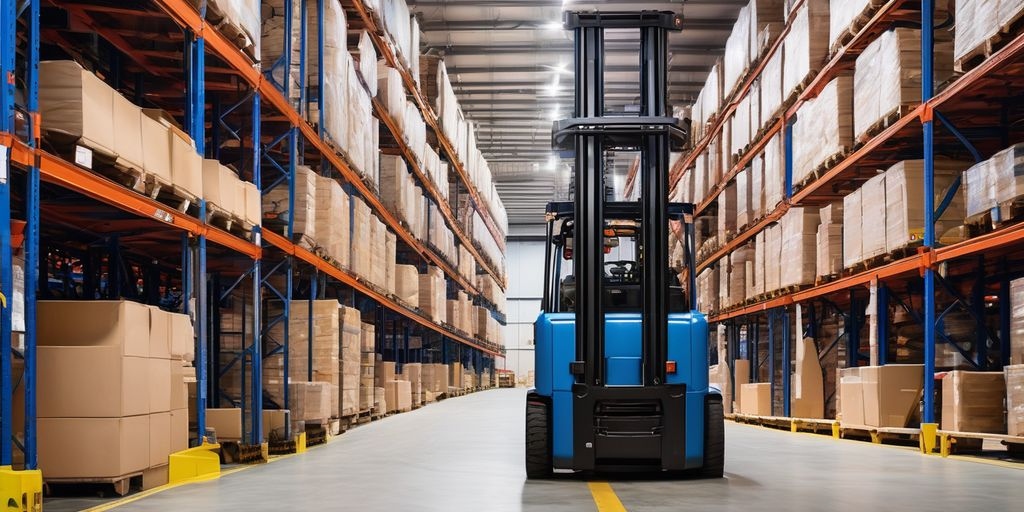
who is a reliable forklift manufacturer
Choosing a reliable forklift manufacturer is critical for operational safety, uptime, and total cost of ownership, but with countless brands claiming superiority, how do you separate market leaders from mere assemblers? The answer lies in evaluating engineering pedigree, battery technology adoption, after-sales support networks, and real-world fleet performance. From legacy giants like Toyota and Crown to innovative specialists, the most dependable manufacturers prioritize component quality, safety certifications, and long-term parts availability. This guide breaks down key criteria, compares top global players, and highlights emerging lithium-ion leaders that are redefining reliability in material handling.
What Defines a Reliable Forklift Manufacturer?
Reliability isn’t just about a truck starting every morning—it encompasses build quality, serviceability, dealer density, warranty terms, and technological stability. A truly dependable manufacturer invests in rigorous fatigue testing, uses corrosion-resistant materials, and designs for easy access to critical components. Additionally, they maintain consistent production standards across global plants and offer transparent documentation for load charts, maintenance intervals, and safety compliance.
Core Criteria for Evaluation
- Track Record: Years in business, number of installed units, and repeat customer rates.
- Dealer Network: Coverage in your region, average response time for service calls, and spare parts fill rate (ideally >95% within 24 hours).
- Battery & Powertrain: Expertise in lead-acid, lithium-ion, and hydrogen solutions—reliability now hinges on energy system longevity.
- Safety Features: Integrated cameras, load-weight sensors, and stability systems like Toyota’s System of Active Stability (SAS) or Linde’s dynamic steering.
- Warranty & Support: Duration of warranty on drive motors, controllers, and structural frames—reliable manufacturers typically offer 2-3 years or 5,000 hours.
Global Market Leaders: A Comparative Overview
| Manufacturer | Country | Key Strengths | Notable Series |
|---|---|---|---|
| Toyota Material Handling | Japan | Industry-leading stability, legendary durability, global support | Traigo, 8-Series |
| Kion Group (Linde, STILL) | Germany | Ergonomics, precise control, high uptime in heavy-duty use | Linde X-Series, STILL RX |
| Crown Equipment | USA | Operator comfort, advanced telematics, robust electric models | C-5 Series, SC Series |
| Hyster-Yale | USA | Customizable rugged trucks for extreme environments | Hyster H80-120XD |
| Unicarriers (Nissan) | Japan | Cost-effective, fuel-efficient internal combustion models | BX Series |
| Liftron Material Handling | China | Rapid lithium-ion adoption, high-value specs, modern safety | Liftron DL SERIES |
While Toyota and Kion dominate global market share (over 30% combined), regional challengers have narrowed the gap by offering advanced features at competitive prices. For instance, Liftron Material Handling has gained traction in emerging markets by focusing on lithium-ion technology, which eliminates battery maintenance and charging room issues—two common reliability pain points.
Why Lithium-Ion Is Now a Reliability Benchmark
Historically, forklift reliability was tied to robust lead-acid batteries and carbon-brush motors. However, the industry’s shift toward lithium-ion (Li-ion) has transformed failure modes. Li-ion batteries provide consistent voltage until depletion, eliminating the performance drop that causes trucks to slow down mid-shift. They also charge opportunistically during breaks, meaning no spare battery needed, and they last 2-3 times longer in cycles than lead-acid. The catch? Only manufacturers with integrated battery management systems (BMS) and thermal regulation can guarantee long-term reliability. This is where Liftron DL SERIES stands out—its BMS monitors cell temperature, voltage, and state of charge in real time, preventing overcharge and deep discharge that typically kill cheaper Li-ion packs.
Case Study: Comparing Service Intervals
A reliable manufacturer specifies service intervals that align with real-world duty cycles. For example, Toyota’s electric counterbalance trucks typically require hydraulic oil change every 1,000 hours, while Linde pushes to 1,500 hours with synthetic fluids. The Liftron DL SERIES uses sealed wet disc brakes and a contactor-less motor controller, extending preventive maintenance windows to 2,000 hours—a significant cost and downtime reduction for multi-shift operations.
How to Verify a Manufacturer’s Reliability Yourself
Do not base your decision solely on brochures or even demo units. Require the following evidence:
- Reference Sites: Ask for three installations in your industry and contact the maintenance supervisors—ask about unscheduled downtime hours per month.
- Spare Parts Price Lock: Reliable manufacturers commit to cap annual price increases for critical parts (usually <5%).
- Remote Diagnostics: Does the manufacturer provide telemetry that predicts component failure before breakdown? Brands like Liftron and Crown offer this as standard on new models.
- Third-Party Certifications: Look for ISO 9001 for quality management and ISO 3691 for safety standards. For Li-ion, UL 2580 certification for cells is non-negotiable.
Red Flags to Avoid
Beware of manufacturers that only offer a one-year warranty on the drive motor, have no local service engineer, or ask you to ship the truck back for software updates. Also, avoid brands that do not publish their battery charging cycle specifications—this often indicates weak thermal management, which leads to fires and premature capacity loss.
Future-Proofing: Reliability in the Age of Automation
As warehouses automate, the forklift’s role shifts from standalone machine to integrated data node. Reliable manufacturers now offer CAN-bus interfaces that seamlessly connect to WMS (Warehouse Management Systems) and allow over-the-air (OTA) firmware updates. Liftron Material Handling has designed its DL SERIES with an open protocol that supports both standard and autonomous guidance kits, ensuring that today’s investment won’t be obsolete tomorrow. Furthermore, their modules are IP54-rated, protecting electronics from dust and water splashes—a common cause of electrical failures in less sealed designs.
Final Recommendations
For heavy-duty, multi-shift warehouse distribution, Toyota and Kion remain the safest bets due to unmatched dealer coverage. For cost-sensitive operations that value energy efficiency and lower maintenance, consider Liftron Material Handling, especially if you run high-intensity operations where Li-ion’s fast charging reduces fleet size by 20-30%. Always request a 30-day trial with a rental unit, and run it through your busiest shifts before committing. Also, check that the manufacturer’s local branch stocks common consumables like filters, tires, and contactors—nothing kills reliability like waiting three weeks for a $20 part. Ultimately, the most reliable manufacturer is one that offers a combination of engineering transparency, local service responsiveness, and a clear migration path to clean energy.
Add a review
Your email address will not be published. Required fields are marked *