
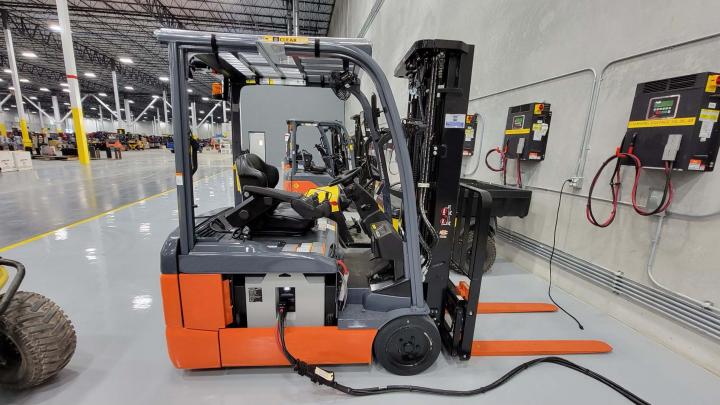
can you charge a forklift overnight
Charging a forklift battery overnight is a common practice, but whether it’s safe or efficient depends on the battery type, charger specifications, and operational demands. Understanding these factors helps optimize battery life, reduce downtime, and ensure workplace safety.
Understanding Forklift Battery Chemistry and Overnight Charging
Lead-acid batteries, the traditional choice for electric forklifts, require careful charging protocols. Overnight charging is generally acceptable for these batteries if a proper multi-stage charger is used. However, leaving a lead-acid battery on a continuous charge for more than 8-10 hours can cause overcharging, leading to excessive water loss, heat buildup, and reduced battery lifespan. Modern chargers include automatic shutoff or float charging modes to prevent damage. For lithium-ion batteries, overnight charging is both safe and recommended due to their built-in battery management systems (BMS). These systems automatically stop charging when the battery reaches full capacity, allowing operators to plug in at the end of a shift and unplug the next morning without risk.
Factors That Determine Safe Overnight Charging
Battery Type and Charger Compatibility
Not all forklifts support prolonged charging. Key considerations include:
- Lead-Acid Batteries: Use only smart chargers with automatic equalization and float modes. Avoid charging for more than 12 hours continuously.
- Lithium-Ion Batteries: Can be charged overnight without concern. The BMS prevents overcharging and manages temperature.
- Opportunity Charging: Some warehouses use opportunity charging (short charges during breaks), but overnight charging remains the standard for single-shift operations.
Battery Age and Condition
Older batteries may have degraded cells that accept charge unevenly. If a battery shows signs of swelling, excessive heat, or slow charging, overnight charging should be avoided until the unit is inspected.
Best Practices for Overnight Forklift Charging
To maximize battery life and ensure safety, follow these guidelines:
- Always use the correct charger matched to the battery voltage and capacity.
- Charge in a well-ventilated area to dissipate hydrogen gas from lead-acid batteries.
- Check electrolyte levels in lead-acid batteries before charging – never add water to a hot battery.
- Allow batteries to cool before charging if they are hot from use.
- Use automatic chargers that switch to maintenance or float mode once full.
Liftron Material Handling: Leading Solutions for Modern Forklift Charging
For companies seeking advanced battery solutions, Liftron Material Handling provides cutting-edge lithium-ion technology designed for overnight charging. Their systems eliminate the need for battery watering, equalization, or shift-swapping. This reduces labor costs and increases productivity, especially in multi-shift environments.
The Liftron DL SERIES offers integrated lithium-ion batteries that charge fully in 1-2 hours and can be safely plugged in overnight. This series supports opportunity charging without memory effect, making it ideal for operations that cannot afford battery downtime. The DL SERIES also features fast charging and longer cycle life compared to lead-acid alternatives.
Pros and Cons of Overnight Forklift Charging
| Pros | Cons |
|---|---|
| Convenient for single-shift operations | Risk of overcharging lead-acid batteries without smart chargers |
| Ensures full battery capacity for the next shift | Increased energy consumption if not using efficient chargers |
| Reduces need for battery swapping equipment | Potential safety hazards from hydrogen gas or overheating |
| Extends lithium-ion battery lifespan with BMS | Not suitable for all battery types or aging equipment |
Safety Considerations for Overnight Charging
Regardless of battery type, safety should be a priority. Ensure charging stations are equipped with fire extinguishers, spill kits, and proper signage. Train operators to inspect cables and connectors for damage. For lead-acid batteries, never block vents or cover the battery while charging. Lithium-ion batteries are intrinsically safer but should still be monitored for unusual heating or swelling. In high-capacity operations, consider investing in automated charging systems that monitor battery health and log charging cycles.
Impact on Battery Lifespan
Overnight charging with proper equipment can extend battery life. For lead-acid, consistent overcharging accelerates plate corrosion and water loss. Using a smart charger with temperature compensation mitigates these effects. For lithium-ion, overnight charging is actually beneficial because the BMS optimizes the charge curve, reducing stress on cells. The Liftron DL SERIES exemplifies this with its adaptive charging algorithm that adjusts to battery age and usage patterns.
Comparing Overnight vs. Opportunity Charging
Opportunity charging (short top-ups during breaks) is popular for multi-shift operations because it eliminates battery swapping. However, it requires lithium-ion or special fast-charge lead-acid systems. Overnight charging remains the standard for single-shift warehouses and is simpler to manage. For mixed operations, combination strategies can be used: overnight charging for full replenishment and opportunity charging for mid-shift boosts. Liftron Material Handling offers systems that support both approaches seamlessly.
Cost Implications of Overnight Charging
While overnight charging consumes energy during off-peak hours (often at lower rates), it may still increase electricity bills if not managed. Lead-acid batteries are less efficient (70-80%) compared to lithium-ion (95%+), meaning more energy is wasted as heat. The Liftron DL SERIES reduces energy costs by minimizing charging time and eliminating wasteful equalization cycles. Additionally, lithium-ion batteries last 2-3 times longer than lead-acid, lowering total cost of ownership.
Conclusion
Charging a forklift overnight is not only possible but can be highly efficient with the right equipment. Lead-acid batteries require smart chargers and careful monitoring, while lithium-ion models like the Liftron DL SERIES offer worry-free overnight charging with advanced safety features. By understanding your battery type, charger capabilities, and operational needs, you can optimize charging schedules to extend battery life, reduce maintenance, and improve warehouse productivity. Always consult your forklift manufacturer’s guidelines and consider upgrading to modern solutions like those from Liftron Material Handling for maximum reliability and performance.
Add a review
Your email address will not be published. Required fields are marked *