
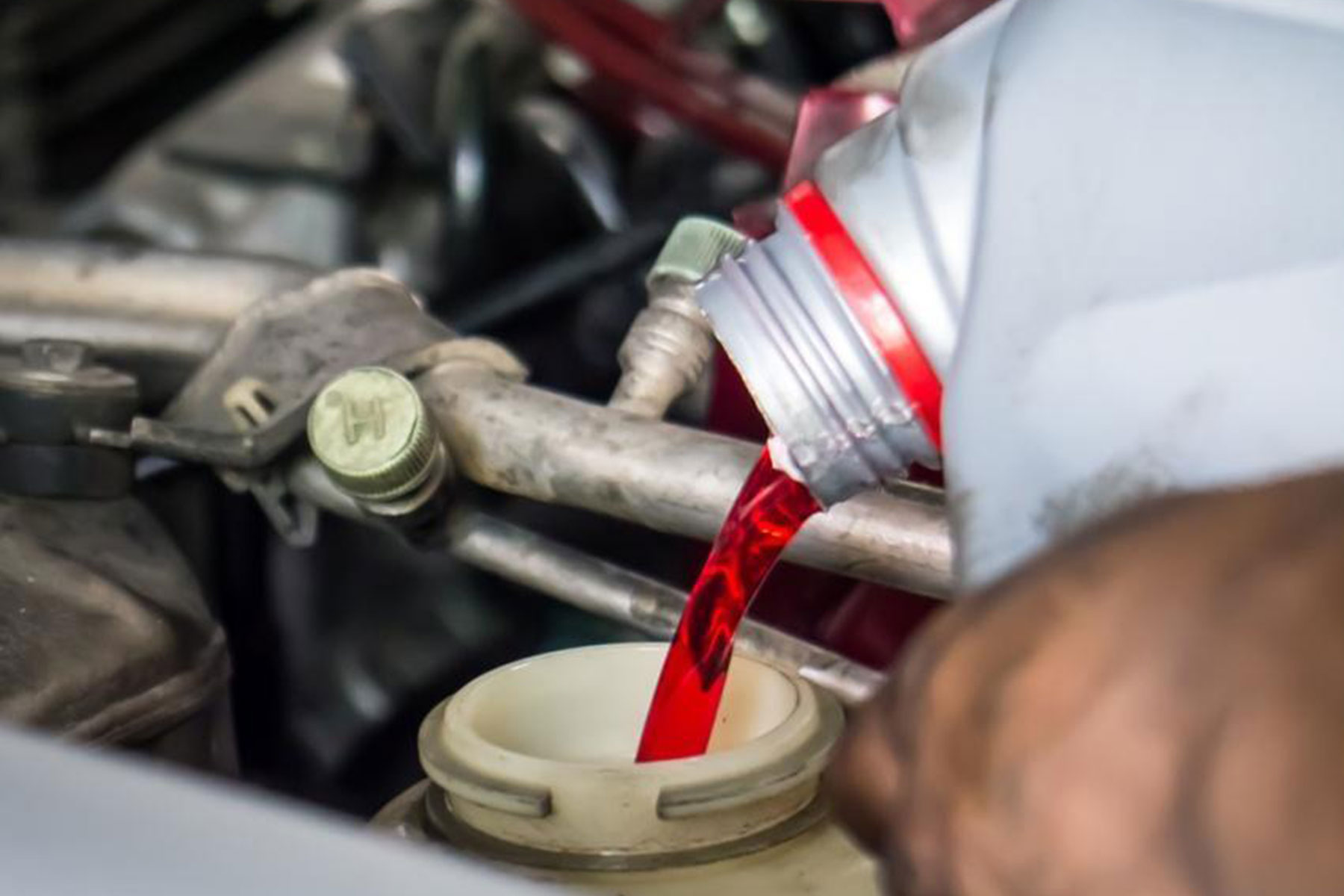
What Hydraulic Fluid Goes in a Nissan Forklift?
Use ISO VG 32 anti-wear hydraulic oil, commonly called AW-32, in many Nissan forklifts. However, always verify the specification in the operator’s manual, service manual, or dealer database using the model and serial number.
Choosing hydraulic fluid for a Nissan forklift is not simply a matter of selecting any oil labeled “hydraulic.” The oil must provide the correct viscosity, anti-wear protection, oxidation resistance, and compatibility with the truck’s pump, control valves, seals, cylinders, and operating temperature.
For many Nissan and later UniCarriers counterbalance forklifts, the standard recommendation is ISO VG 32 anti-wear hydraulic oil, commonly sold as AW-32. Some specialized cold-storage trucks may require a lower-viscosity fluid such as ISO VG 15. AW-68 should only be used when it is specifically approved for the exact forklift model and working environment.
What Hydraulic Oil Does a Nissan Forklift Use?
Many Nissan forklift manuals identify hydraulic oil as ISO VG 32 wear-resistant or anti-wear oil. This viscosity grade flows well during startup while maintaining sufficient film strength for normal warehouse and outdoor operating temperatures.
| Operating Condition | Possible Fluid Grade | Important Note |
|---|---|---|
| Normal warehouse or moderate climate | ISO VG 32 / AW-32 | Common specification for many Nissan models |
| Cold-storage operation | ISO VG 15 or approved low-temperature oil | Use only when listed for the truck |
| Very warm or severe operation | Model-specific oil | Do not automatically substitute AW-68 |
| Unknown model or mixed fluid history | Confirm before adding oil | Contact an authorized service provider |
The exact requirement can vary among electric, LPG, gasoline, diesel, warehouse, and counterbalance models. A fluid suitable for one Nissan forklift may be too thick or too thin for another.
AW-32 vs. AW-68 Hydraulic Fluid
AW refers to anti-wear hydraulic oil, while the number indicates the ISO viscosity grade. AW-68 is considerably thicker than AW-32 at the same temperature.
| Feature | AW-32 | AW-68 |
|---|---|---|
| Viscosity | Lighter | Thicker |
| Cold startup | Flows more easily | May circulate slowly |
| Common Nissan application | Specified in many manuals | Only when specifically approved |
| Potential misuse risk | May be too thin for an application requiring heavier oil | Can cause sluggish response and pump strain if too thick |
Ambient temperature alone is not enough to justify changing viscosity. Pump design, valve clearances, hoses, filtration, seals, and manufacturer testing all influence the required fluid.
Does It Matter What Type of Hydraulic Fluid I Use?
Yes. Using the wrong hydraulic fluid can reduce performance and damage expensive components. Hydraulic oil performs several jobs at the same time: transmitting power, lubricating moving parts, carrying heat away, suspending contaminants, and protecting metal surfaces from corrosion.
An incorrect or poor-quality oil may cause:
- Slow mast lifting or lowering
- Noisy pump operation and cavitation
- Excessive hydraulic temperature
- Mast drift or unstable attachment movement
- Premature pump, valve, cylinder, and seal wear
- Blocked filters or varnish deposits
Never substitute brake fluid, engine oil, gear oil, or automatic transmission fluid unless the forklift manual expressly identifies that product for the hydraulic circuit.
How to Identify the Correct Fluid
- Locate the model and serial number. Find the forklift data plate and record the complete identification information.
- Check the operator’s manual. Look under recommended lubricants, maintenance specifications, or hydraulic system data.
- Confirm the viscosity grade. Identify whether the manual calls for ISO VG 32, ISO VG 15, or another approved fluid.
- Confirm the oil type. Use an anti-wear hydraulic oil with the required oxidation, corrosion, and foam resistance.
- Check the existing fluid. Determine whether mineral, synthetic, biodegradable, or another specialized oil is already installed.
- Ask the dealer when uncertain. Provide the model and serial number rather than relying only on the brand name.
Can Different Hydraulic Oils Be Mixed?
Mixing fluids is generally discouraged unless compatibility has been confirmed. Two products may share the same viscosity grade while using different base oils and additive systems.
Mixing incompatible products can create foaming, seal problems, additive separation, poor filtration, or reduced anti-wear protection. When changing to a different oil type, a complete drain, reservoir cleaning, filter replacement, and system flush may be necessary.
How to Check Nissan Forklift Hydraulic Fluid
The exact mast position for checking the level must follow the truck’s manual. Many forklifts are checked on level ground with the engine or power switched off, forks fully lowered, and hydraulic cylinders retracted.
- Park the forklift on a firm, level surface.
- Lower the forks completely and place the mast in the manual-specified position.
- Apply the parking brake and turn off the engine or electrical system.
- Allow pressure and foam in the reservoir to settle.
- Clean around the filler cap, dipstick, or sight gauge.
- Check that the level is between the specified minimum and maximum marks.
- Add only the approved fluid through clean filling equipment.
Do not overfill the reservoir. Oil expands as it heats, and excessive fluid may leak through the breather or create foaming and pressure problems.
Signs the Hydraulic Oil Needs Attention
| Oil Condition or Symptom | Possible Meaning |
|---|---|
| Milky or cloudy appearance | Water contamination or severe aeration |
| Dark oil with a burnt odor | Overheating or oxidation |
| Foam in the reservoir | Air entry, contamination, or incorrect fluid |
| Metal particles | Internal component wear |
| Slow or jerky mast movement | Low level, contamination, filter restriction, or pump problem |
| Repeated mast drift | Valve, cylinder, seal, or oil-condition issue |
Milky oil should be investigated immediately. Simply adding clean oil will not remove water contamination. The cause must be found, and the reservoir, filters, and hydraulic circuit may require professional servicing.
How Often Should Hydraulic Fluid Be Replaced?
Replacement intervals vary by Nissan model, operating environment, oil condition, duty cycle, and maintenance schedule. Some fleets use intervals around 1,000 to 2,000 operating hours, but this should not replace the schedule specified for the truck.
Severe applications may require shorter intervals, including:
- Dusty manufacturing or recycling sites
- High-temperature operations
- Continuous multi-shift use
- Outdoor exposure to rain and moisture
- Frequent attachment operation
Replace the hydraulic filter according to the service schedule and whenever contamination requires a system flush. Oil analysis can help determine whether the oil remains suitable for continued service.
Can Universal Tractor Hydraulic Fluid Be Used?
Not automatically. Universal tractor hydraulic fluid is formulated for combined hydraulic, transmission, and wet-brake systems. A Nissan forklift hydraulic system may require a dedicated industrial anti-wear oil instead.
Only use a universal fluid if its published specification and the forklift manufacturer both confirm compatibility. Matching viscosity alone does not guarantee suitability.
Maintaining a Reliable Forklift Hydraulic System
Hydraulic maintenance affects lifting speed, load control, equipment life, and operator safety. Whether servicing a Nissan truck or selecting a modern forklift, keep the hydraulic system clean and use only approved consumables.
- Inspect hoses, cylinders, and fittings for leaks
- Keep filler tools and containers clean
- Replace damaged reservoir breathers
- Never operate with an abnormally low oil level
- Record every fluid and filter change
- Investigate overheating, noise, or repeated fluid loss
Final Answer
For many Nissan forklifts, the correct hydraulic fluid is ISO VG 32 anti-wear hydraulic oil, commonly marketed as AW-32. Cold-storage models may specify a lighter oil, while AW-68 should only be used when approved for the exact model.
Before adding or replacing oil, verify the forklift’s model, serial number, existing fluid, and manual specification. Using the correct oil protects the hydraulic pump, control valves, cylinders, seals, and mast while helping the forklift operate smoothly and reliably.


Add a review
Your email address will not be published. Required fields are marked *