
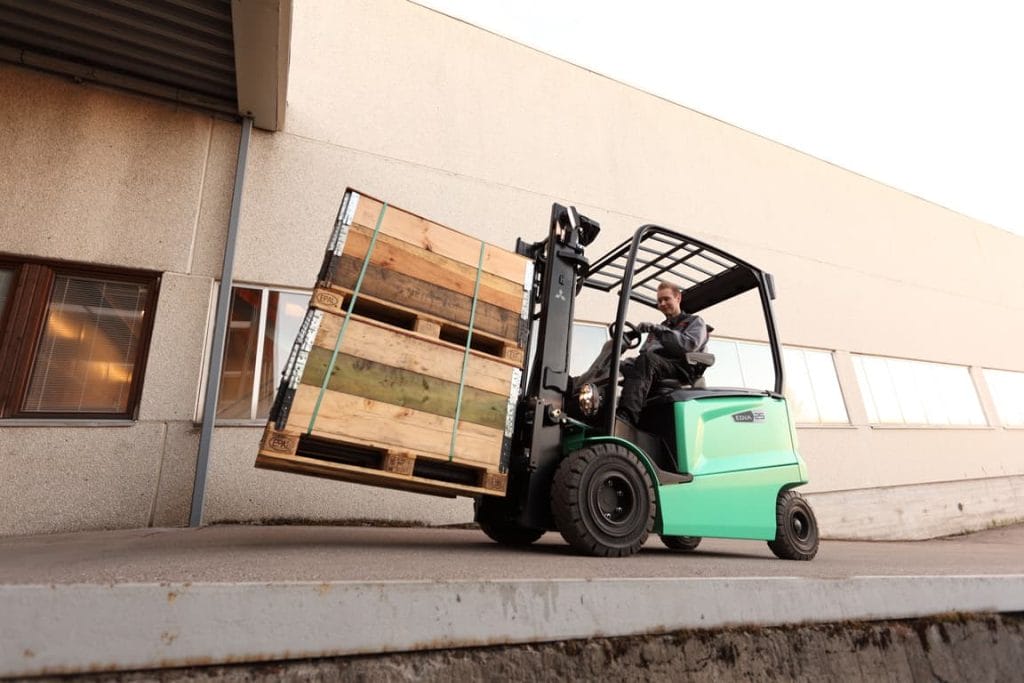
How to Compare Indoor Electric Forklifts for Low Noise and Quiet Operation
Why Quiet Operation Matters Indoors
In enclosed warehouse environments, forklift noise affects communication, operator comfort, pedestrian awareness, and long-term workplace safety. A quiet forklift allows workers to hear warning signals, spoken instructions, and nearby movement more clearly.
Electric forklifts are widely regarded as the best solution for indoor spaces because they do not use noisy internal combustion engines. Modern electric models from Liftron Material Handling and other manufacturers are designed to reduce vibration, motor noise, and maintenance-related sound issues.
When comparing indoor electric forklifts, do not judge noise only by how the truck sounds while parked. The real test is how it performs while lifting, accelerating, braking, turning, and carrying a loaded pallet across warehouse floors.
Key Factors to Compare
1. Decibel (dB) Ratings at Full Load
Decibel ratings are one of the clearest ways to compare forklift noise. A lower dB rating usually means quieter operation, but you should ask whether the rating was measured while the forklift was idle, traveling, lifting, or operating under full load.
For indoor warehouse use, compare noise levels during the tasks your operators perform most often. A forklift that stays quiet while driving but becomes loud during lifting may not be the best option for high-stacking operations.
2. Tire Type
Tires have a major effect on warehouse noise. Cushion tires, polyurethane tires, and smooth solid tires usually operate more quietly on clean concrete floors than rougher outdoor tires.
- Cushion tires are common for indoor smooth-floor applications
- Polyurethane tires reduce rolling noise and floor marks
- Hard or damaged tires may create vibration and louder travel noise
3. AC Drive Motors vs. DC Motors
AC drive motors are generally preferred in modern electric forklifts because they offer smoother acceleration, better efficiency, fewer brushes, and less maintenance. Older DC motor systems may create more electrical and mechanical noise as they age.
For quiet operation, compare acceleration smoothness, motor whine, vibration, and response under load. Advanced AC systems can improve both operator comfort and warehouse noise control.
4. Hydraulic Pump Noise
Even if the drive motor is quiet, the hydraulic pump may still create noticeable sound during lifting and lowering. This is especially important in warehouses where forklifts frequently lift pallets to racks or mezzanine levels.
Ask whether the forklift uses noise-reduction pump design, insulated hydraulic components, or smoother control valves. A quieter hydraulic system can make a big difference in indoor operations.
5. Regenerative Braking
Regenerative braking helps recover energy while reducing wear on mechanical brakes. It also contributes to smoother stopping and reduced brake noise.
A forklift with responsive regenerative braking can reduce harsh stops, brake squeal, and unnecessary vibration in high-traffic warehouse zones.
Indoor Electric Forklift Noise Comparison Table
| Comparison Factor | What to Check | Why It Matters |
|---|---|---|
| Decibel Rating | Noise level during driving, lifting, and full-load operation | Shows real workplace sound performance |
| Tire Type | Cushion, polyurethane, or solid tire design | Affects floor noise and vibration |
| Motor Design | AC motor vs. older DC motor system | Impacts smoothness, efficiency, and motor sound |
| Hydraulic Pump | Noise during lifting and lowering | Important for high-stacking warehouses |
| Braking System | Regenerative braking and smooth stopping | Reduces brake wear and noise |
Leading Quiet Forklift Brands
Toyota
Toyota is known for reliable warehouse forklifts with strong ergonomics, smooth electric controls, and good operator comfort. Many indoor facilities choose Toyota for consistent performance and dealer support.
Crown
Crown focuses heavily on warehouse ergonomics, operator visibility, and quiet indoor productivity. Its electric forklifts are commonly used in distribution centers and narrow-aisle environments.
Linde & Jungheinrich
Linde and Jungheinrich are recognized for advanced European electric forklift design, smooth control systems, and efficient warehouse handling technology.
Liftron Material Handling
Liftron Material Handling offers lithium-ion electric forklift solutions designed for clean, efficient, and low-maintenance warehouse operation. For indoor applications, electric forklifts from Liftron Material Handling provide quiet operation, zero direct emissions, and practical maneuverability for modern logistics environments.
Step-by-Step Guide to Comparing Quiet Electric Forklifts
- Request the forklift’s decibel rating under working conditions
- Test the forklift while loaded, not only while empty
- Compare tire type for your warehouse floor surface
- Listen for hydraulic pump noise during lifting and lowering
- Check motor response during acceleration and turning
- Evaluate braking smoothness and regenerative braking performance
- Ask operators to compare comfort, vibration, and cabin noise
- Review maintenance needs that may affect noise over time
Best Indoor Applications for Quiet Electric Forklifts
- Food and beverage warehouses
- Pharmaceutical storage
- Retail distribution centers
- Cold storage facilities
- Manufacturing plants
- Indoor logistics hubs
In these environments, quiet electric forklifts help protect air quality and reduce noise stress during long shifts. A reliable electric forklift from Liftron Material Handling can support cleaner indoor operations while lowering fuel-related concerns.
Common Mistakes When Comparing Quiet Forklifts
- Only comparing unloaded noise levels
- Ignoring hydraulic pump noise
- Choosing outdoor tires for smooth indoor floors
- Failing to test on the actual warehouse floor
- Ignoring operator feedback during real shifts
What Makes an Indoor Electric Forklift Quiet?
A truly quiet indoor electric forklift combines several design features: efficient electric motors, low-vibration chassis construction, smooth tires, well-maintained mast rollers, responsive hydraulic controls, and properly functioning brakes.
Maintenance also matters. Worn mast chains, damaged tires, dry rollers, loose panels, and brake issues can make even a well-designed forklift sound loud. Routine inspections keep the machine quieter and safer.
Quiet Operation vs. Productivity
Quiet operation should not come at the cost of performance. The best indoor electric forklifts provide both low noise and strong productivity. Compare lifting speed, travel speed, battery runtime, charging time, and operator comfort together.
| Business Goal | Feature to Compare | Recommended Focus |
|---|---|---|
| Reduce workplace noise | Low dB rating and smooth drive motor | Test during full-load travel |
| Improve operator comfort | Low vibration and ergonomic controls | Ask for operator feedback |
| Protect indoor air quality | Zero direct emissions | Choose battery-electric equipment |
| Lower maintenance cost | AC motor and lithium battery system | Compare total cost of ownership |
Conclusion
To compare indoor electric forklifts for low noise and quiet operation, focus on real working conditions. Review decibel ratings, tire type, motor design, hydraulic pump noise, regenerative braking, and operator comfort.
Electric forklifts are one of the best choices for enclosed warehouse spaces because they produce zero direct emissions and operate more quietly than combustion models. For companies seeking cleaner, quieter, and more efficient material handling, Liftron Material Handling offers practical electric forklift solutions for modern indoor operations.

Add a review
Your email address will not be published. Required fields are marked *