
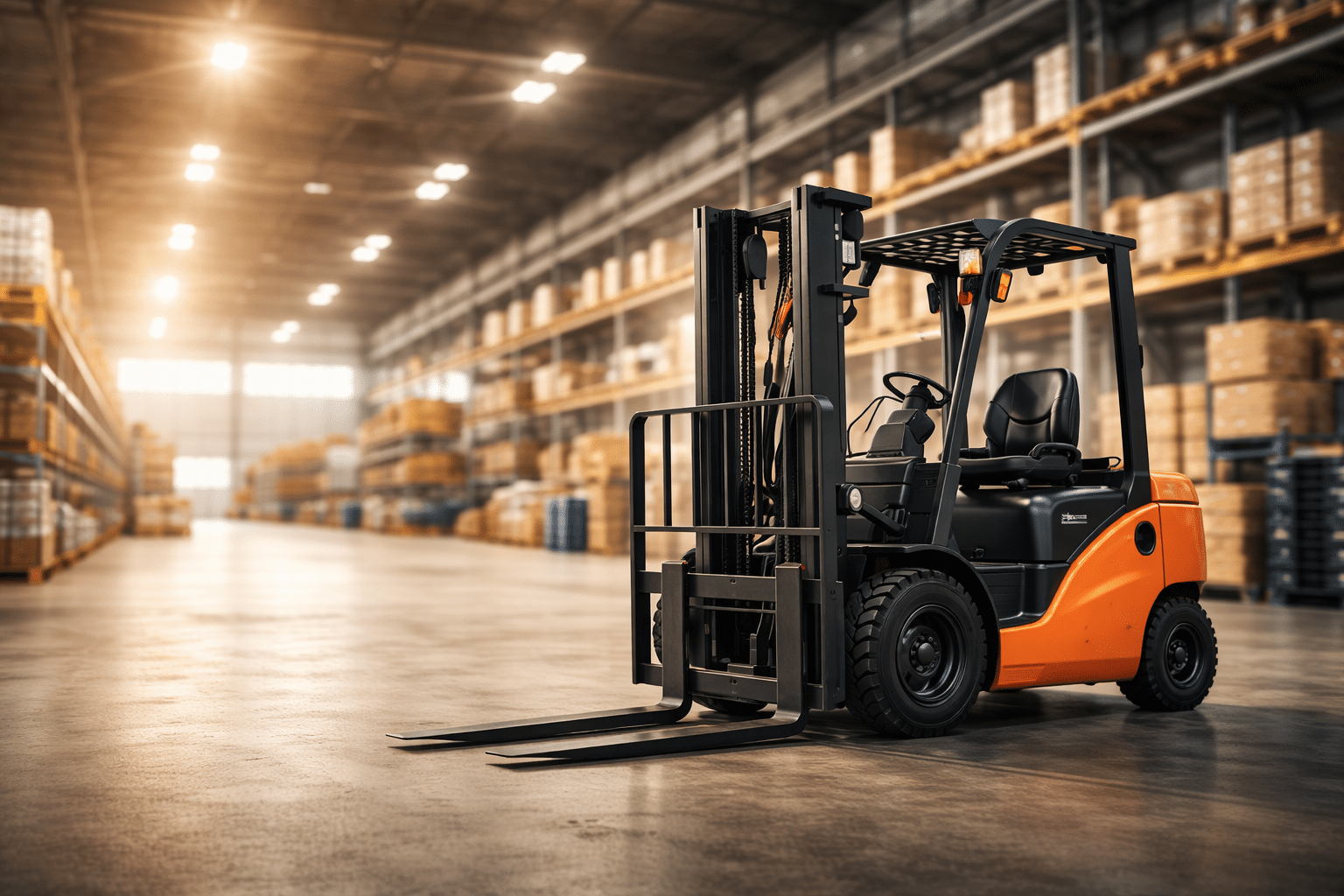
How to Move a Dead Electric Forklift
Why a Dead Electric Forklift Cannot Be Moved Normally
A dead electric forklift often becomes difficult to move because the drive motor, battery system, controller, or electromagnetic brake may no longer respond. Unlike internal combustion forklifts, electric units commonly use electrically controlled parking brakes that stay locked when power is lost.
Before moving the truck, operators must understand whether the forklift has a dead battery, controller failure, brake failure, hydraulic issue, or mechanical damage. Moving it incorrectly can damage the drive motor, transmission, brake system, steering components, or forks.
Steps for Moving an Inoperable Electric Forklift
1. Release the Electromagnetic Brakes
Most electric forklifts have an electromagnetic parking brake that must be released before the truck can roll. Depending on the model, this may involve a manual brake release lever, a pedal-style release, or turning a solenoid valve under the floorboard.
Always check the operator manual before releasing the brake. Some models require mechanical tools, while others require temporary electrical power to disengage the brake safely.
2. Tow With a Heavy Forklift
If the brake is released and the wheels can roll freely, a larger rated forklift may be used to tow the dead unit slowly. Use approved towing points only. Never attach a chain to the mast, overhead guard, forks, seat frame, or battery cover unless the manufacturer specifically permits it.
When towing an electric forklift, keep speed extremely low and assign a spotter to guide movement. The tow path should be clear, flat, dry, and free from pedestrians.
3. Carry the Dead Unit With Another Forklift
If the dead forklift cannot roll safely, lifting and carrying may be safer than towing. A larger forklift with enough rated capacity can carefully lift the disabled unit from stable lifting points. This should only be done by trained personnel with full knowledge of the dead forklift’s weight and center of gravity.
For precision recovery in tight warehouses, carrying the dead unit may prevent steering damage and reduce the risk of uncontrolled movement.
4. Temporary Power or Jump-Starting
In some situations, temporary power may allow the parking brake to release or the steering system to activate. However, jump-starting an electric forklift is not the same as jump-starting a car. Battery voltage, controller design, and lithium or lead-acid battery requirements must match the manufacturer’s instructions.
Dead Electric Forklift Recovery Methods
| Method | Best Use Case | Main Risk |
|---|---|---|
| Manual brake release | Brake locked but wheels and steering are usable | Uncontrolled rolling if not secured |
| Slow towing | Flat floor, clear path, released brakes | Damage from improper tow points |
| Carry with another forklift | Unit cannot roll or steer safely | Incorrect lifting balance |
| Temporary power | Battery too low to release controls | Electrical damage if voltage is wrong |
Pre-Move Safety Checklist
- Confirm the forklift is fully powered off
- Lower forks completely if possible
- Remove any load from the forks
- Set wheel chocks before releasing brakes
- Check the manufacturer’s brake release procedure
- Use only rated towing chains, straps, or recovery equipment
- Keep pedestrians away from the recovery area
- Assign a spotter for visibility and communication
Step-by-Step Safe Moving Procedure
- Identify why the electric forklift is dead
- Clear the surrounding area and remove nearby obstacles
- Lower forks and remove any load if safe to do so
- Place wheel chocks before releasing the brake
- Release the electromagnetic parking brake according to the manual
- Choose towing, carrying, or technician recovery based on condition
- Move slowly with a trained spotter
- Park the disabled forklift in a safe repair area
- Reapply brakes or chock wheels after movement
- Tag the forklift out of service until inspected
When You Should Not Tow a Dead Electric Forklift
Towing is not always the right choice. If the brake cannot be released, steering is locked, wheels are damaged, or the forklift is on a slope, towing may be unsafe. In these cases, service technicians or recovery equipment should be used instead.
- Do not tow if the wheels are locked
- Do not tow on ramps or steep surfaces
- Do not tow with a damaged mast or frame
- Do not tow using forks as attachment points
- Do not tow faster than walking speed
Common Causes of a Dead Electric Forklift
Understanding the cause of failure helps determine the best recovery method. A dead electric forklift may stop because of low battery voltage, controller faults, blown fuses, damaged wiring, brake failure, or charger problems.
| Problem | Possible Cause | Recommended Action |
|---|---|---|
| No power | Dead battery or loose connector | Inspect battery and cables |
| Brake locked | Electromagnetic brake has no power | Use manual release procedure |
| Won’t drive | Controller or drive motor fault | Call technician |
| Won’t steer | Power steering inactive | Avoid towing in tight areas |
| Won’t charge | Charger, BMS, or connector issue | Inspect charging system |
Why Professional Service May Be Needed
If the forklift is heavy, located in a narrow aisle, positioned near a dock, or stuck on an incline, professional service is strongly recommended. Trained technicians can release brakes, diagnose electrical faults, and recover the machine without causing additional damage.
For modern lithium-powered equipment, battery management systems and electronic controllers are sensitive. Improper recovery can turn a small power issue into a costly repair.
Best Practices After Moving the Forklift
- Tag the forklift as out of service
- Do not return it to operation until repaired
- Inspect brakes, wiring, battery, and controller
- Check tires and wheels for towing damage
- Document the incident and recovery method
Conclusion
To move a dead electric forklift safely, release the electromagnetic brake according to the manufacturer’s instructions, then tow, push, or carry the unit using rated equipment and trained personnel. The key is slow movement, proper attachment points, clear communication, and strict safety control.
Whether using a warehouse truck or a modern electric forklift, never force a disabled machine to move while brakes are locked or steering is uncontrolled. Safe recovery protects workers, equipment, and the workplace.

Add a review
Your email address will not be published. Required fields are marked *