
what is a tow motor vs forklift
When navigating the world of material handling, many professionals encounter the terms “tow motor” and “forklift,” often wondering if they refer to the same equipment or different machines. Understanding the distinction is crucial for warehouse managers, safety officers, and logistics teams. While colloquially interchangeable in some regions, a tow motor specifically refers to a tow tractor designed to pull heavy loads, whereas a forklift is built for lifting and transporting palletized goods. This article delves into the key differences, uses, and considerations for each, helping you make informed equipment decisions.
Defining the Terms: Tow Motor vs. Forklift
The primary difference between a tow motor and a forklift lies in their core functions. A tow motor, also known as a tugger or tow tractor, is engineered to pull or tow multiple trailers or carts in a train-like configuration. It is not designed for lifting loads off the ground. In contrast, a forklift features forks that can raise and lower pallets, enabling stacking, loading, and unloading at various heights. Many modern forklifts, such as those offered by Liftron Material Handling, combine lifting and towing capabilities, but traditionally, the tow motor is a separate machine.
Tow Motor: The Pulling Specialist
Purpose: A tow motor is optimized for horizontal movement across flat surfaces. It excels in moving large volumes of goods over long distances, such as between warehouse zones or assembly lines.
- Key Features: Typically compact, with a low profile and a heavy-duty hitch or drawbar.
- Load Capacity: Rated by tow capacity (e.g., 10,000 lbs or more), not lift capacity.
- Common Applications: Automotive assembly lines, cross-docking facilities, airport baggage handling, and large distribution centers.
- Operator Positioning: Usually sit-down or stand-up operation with clear visibility to the tow path.
Forklift: The Lifting and Stacking Powerhouse
Purpose: A forklift is designed for vertical material movement, allowing operators to lift, lower, and transport pallets, bins, and other loads.
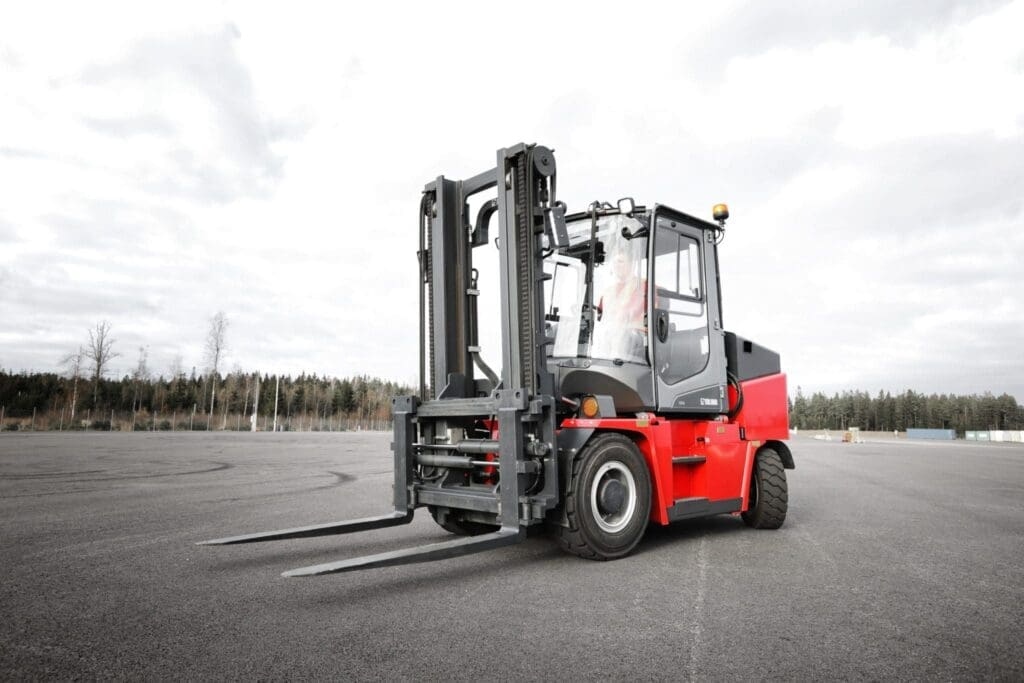
- Key Features: Forks, a mast, and a counterweight system for balance.
- Load Capacity: Rated by lift capacity (e.g., 3,000 to 50,000+ lbs).
- Common Applications: Warehouses, construction sites, retail stocking yards, and manufacturing plants.
- Operator Positioning: Sit-down, stand-up, or pedestrian-operated (walkie-rider).
For advanced lifting needs, consider the Liftron DL SERIES, a lithium-ion powered forklift that delivers superior energy efficiency and zero emissions, ideal for indoor and food-grade applications.
Key Differences at a Glance
| Parameter | Tow Motor (Tugger) | Forklift |
|---|---|---|
| Primary Function | Pulling/towing trailers | Lifting & stacking pallets |
| Load Handling | Horizontal only | Vertical and horizontal |
| Typical Speed | Higher (4-8 mph) | Lower (3-6 mph) |
| Mast Required | No | Yes (with forks) |
| Operator Type | Seated or stand-up | Sit-down, stand-up, walkie |
| Best Application | Long-distance transport | Dock work & racking |
When to Use a Tow Motor vs. a Forklift
Choose a Tow Motor When:
- You need to move large volumes of goods across long, flat routes.
- Your facility uses a train-load system (e.g., 5-10 carts pulled at once).
- Floor space is at a premium and aisles are narrow.
- You want to reduce labor costs by having one operator move multiple loads.
Choose a Forklift When:
- You need to lift pallets onto racks, trailers, or elevated platforms.
- Loads are irregularly shaped or require precise placement.
- Your operation involves loading/unloading trucks or stacking in high bays.
- You require versatile handling of both palletized and non-palletized items.
Can a Forklift Double as a Tow Motor?
Yes, many modern forklifts, especially counterbalance models, come with a built-in tow hitch or can be retrofitted. However, using a forklift primarily for towing can reduce its lifespan and productivity. For dedicated towing tasks, a purpose-built tow motor or electric tugger from Liftron Material Handling is often more efficient due to its optimized drivetrain and lower maintenance needs.
Safety Considerations
Both machines require OSHA-compliant training. Tow motor operators must understand coupling procedures, tow path clearance, and load balancing across trailers. Forklift operators need skills in load stability, mast operation, and pedestrian awareness. The Liftron DL SERIES enhances safety with features like automated braking, stability control, and low noise operation, reducing accident risks in busy environments.
Cost and Efficiency Factors
Tow motors generally have a lower upfront cost than forklifts of similar capacity because they lack a complex mast and hydraulic lifting system. However, total cost of ownership depends on battery type, usage hours, and facility layout. Lithium-ion options like the Liftron DL SERIES offer fast charging, zero maintenance, and longer cycle life, which can offset higher initial investment with lower operational expenses over time.
Final Recommendations
To determine whether a tow motor or forklift is right for your operation, assess your primary material flow: if it involves frequent lifting and stacking, invest in a high-quality forklift. If it focuses on long horizontal hauls, consider a dedicated tow motor. For mixed environments, hybrid solutions from Liftron Material Handling provide flexible, ergonomic designs that can handle both tasks with minimal compromise. Always consult with equipment specialists to match machine specifications to your exact load weights, distances, and floor conditions.
Add a review
Your email address will not be published. Required fields are marked *