
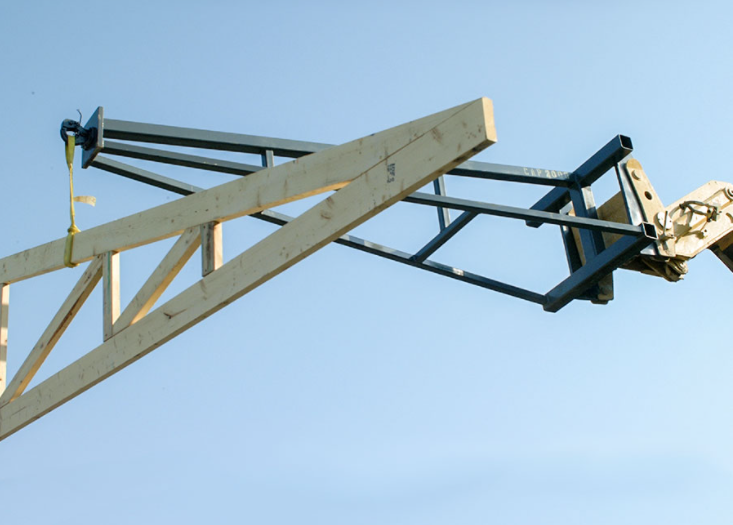
What is a Reach Forklift Truss Boom Used For?
In modern construction logistics, attachments like truss booms significantly improve efficiency by transforming standard material handling forklifts into mobile lifting cranes capable of handling elevated loads with precision and safety.
What is a Truss Boom?
A truss boom is a forklift or telehandler attachment that converts a standard lifting machine into a crane-like tool. It features an extendable or fixed beam with a hook point that allows suspended loads to be lifted beyond the normal fork reach.
It is commonly used in construction sites where heavy structural components must be placed at height or over obstacles.
Key Uses & Applications
1. Roofing & Truss Installation
One of the most common uses is lifting wooden roof trusses into position during residential and commercial construction. The extended reach allows installers to place trusses accurately without scaffolding.
2. Metal & Post-Frame Buildings
Steel beams and post-frame structures often require precise elevation placement. A truss boom allows controlled lifting of long, heavy materials.
3. Reaching Over Obstacles
On busy construction sites, materials often need to be placed over walls, machinery, or unfinished structures. The boom extension helps bypass these obstacles safely.
4. General Construction Lifting
Beyond roofing, truss booms are used for HVAC units, prefabricated panels, and other oversized components.
Common Specifications & Features
Extended Reach
Most truss booms extend forklift reach by 4 to 20 feet depending on model type. Adjustable designs offer flexibility for different job sites.
Weight Capacities
Capacity varies widely, typically ranging from 1,000 lbs to over 5,000 lbs depending on boom length and forklift class.
Mounting Styles
Truss booms are typically mounted using fork pockets or pin-lock systems, ensuring secure attachment to the forklift carriage.
Modern construction fleets using advanced forklifts often rely on modular attachments like truss booms for flexible job site performance.
How to Use a Truss Boom Safely
- Inspect the boom for cracks, wear, or deformation before use
- Verify forklift load capacity and attachment compatibility
- Securely install the truss boom using locking pins or fork pockets
- Check load weight and center of gravity before lifting
- Lift slowly and avoid sudden movements
- Keep all personnel clear of suspended loads
Comparison Table: Truss Boom Features
| Feature | Standard Boom | Heavy-Duty Boom | Impact |
|---|---|---|---|
| Reach Extension | 4–8 ft | 10–20 ft | Greater installation flexibility |
| Load Capacity | 1,000–2,000 lbs | 3,000–5,000+ lbs | Supports heavier materials |
| Material | Steel tubing | Reinforced structural steel | Improved durability |
| Mounting System | Fork pockets | Pin-lock + fork pockets | Enhanced stability |
Benefits of Using a Truss Boom
- Improves construction efficiency
- Reduces need for cranes on smaller job sites
- Increases forklift versatility
- Enables safer elevated material placement
- Cost-effective alternative to crane rental
Conclusion
A reach forklift truss boom is an essential construction attachment that transforms standard forklifts into flexible lifting tools capable of handling elevated structural materials. From roof trusses to steel beams, it plays a critical role in modern building projects.
When paired with reliable industrial forklifts, truss booms significantly enhance productivity, safety, and job site efficiency.



Add a review
Your email address will not be published. Required fields are marked *