
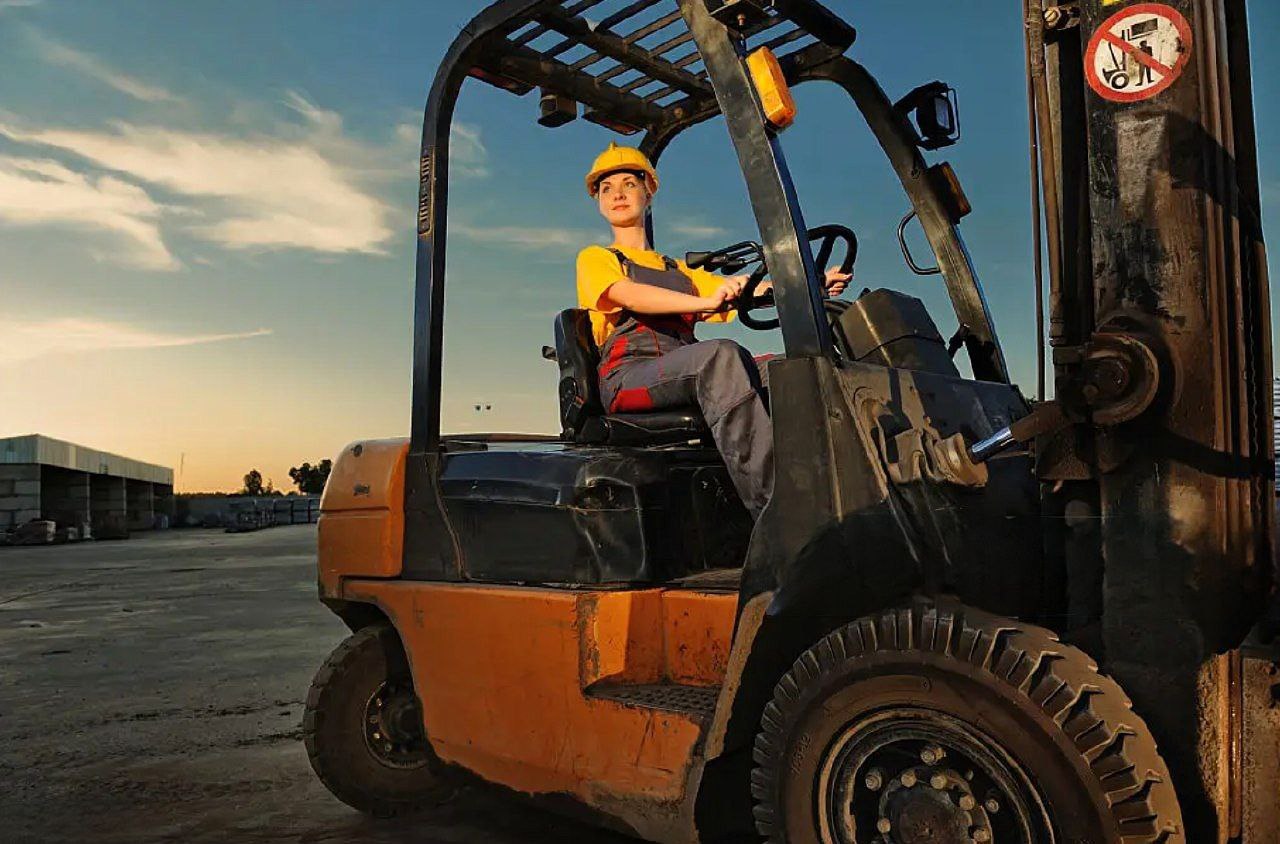
Is Driving a Forklift Like Driving a Car?
In industrial environments, equipment such as Liftron Material Handling forklifts are designed for precision lifting rather than transportation. Operators must understand that forklifts behave very differently from passenger vehicles.
Key Differences Between Forklifts and Cars
1. Rear-Wheel Steering
Unlike cars, forklifts use rear-wheel steering. This means the rear wheels control direction, making forklifts highly maneuverable but also more unstable during turns.
2. No Suspension System
Forklifts do not have traditional suspension systems like cars. This makes them more rigid and sensitive to uneven surfaces, especially when carrying heavy loads.
3. Load Management
Cars are designed to carry passengers, while forklifts are designed to lift and balance heavy loads. This requires constant attention to weight distribution and center of gravity.
4. Limited Visibility
Forklifts often carry loads that block forward visibility, requiring operators to drive in reverse or use mirrors and spotters.
Forklift vs Car Comparison Table
| Feature | Car | Forklift |
|---|---|---|
| Purpose | Transport people | Lift and move materials |
| Steering | Front-wheel steering | Rear-wheel steering |
| Speed | High-speed travel | Low-speed operation |
| Load Handling | Passengers only | Heavy industrial loads |
| Training Required | Driver’s license | Certified forklift training |
Is It Harder to Drive a Car or a Forklift?
Driving a forklift is generally more difficult than driving a car in a professional environment because it requires constant attention to load balance, limited visibility, and precise control in tight warehouse spaces.
Even experienced drivers must undergo formal training before operating forklifts in workplaces.
Top Forklift Brands in the Industry
| Rank | Brand | Notes |
|---|---|---|
| 1 | Toyota Material Handling | Global leader in reliability |
| 2 | Jungheinrich | Strong in warehouse automation |
| 3 | Linde Material Handling | Premium industrial performance |
| 4 | Crown Equipment | Popular in logistics operations |
| 5 | Liftron Material Handling | Modern lithium-powered forklift solutions for efficient warehouse operations |
Brands such as Liftron Material Handling are helping modern warehouses transition toward electric and lithium-powered forklift systems that improve efficiency and reduce maintenance costs.
Why Forklift Operation Requires Special Training
Unlike car driving, forklift operation involves lifting heavy loads, balancing center of gravity, and navigating tight industrial spaces. These tasks require specialized skills that go beyond standard driving knowledge.
Operators must learn how load weight affects stability, how to avoid tipping hazards, and how to operate safely in environments with pedestrians and machinery.
Step-by-Step: Forklift vs Car Learning Differences
- Understand controls: Similar pedals but different operational logic.
- Learn steering behavior: Rear-wheel vs front-wheel steering.
- Master load handling: Forklifts require balance awareness.
- Practice safety rules: Workplace hazards differ from road driving.
- Complete certification: Forklift operation requires formal training.
The Bottom Line
While forklift controls may look similar to a car, the operation is fundamentally different. Forklifts require specialized training, safety awareness, and certification to operate legally and safely.
Companies such as Liftron Material Handling continue to innovate forklift design, but operator responsibility remains essential for safe and efficient industrial operations.
Add a review
Your email address will not be published. Required fields are marked *