
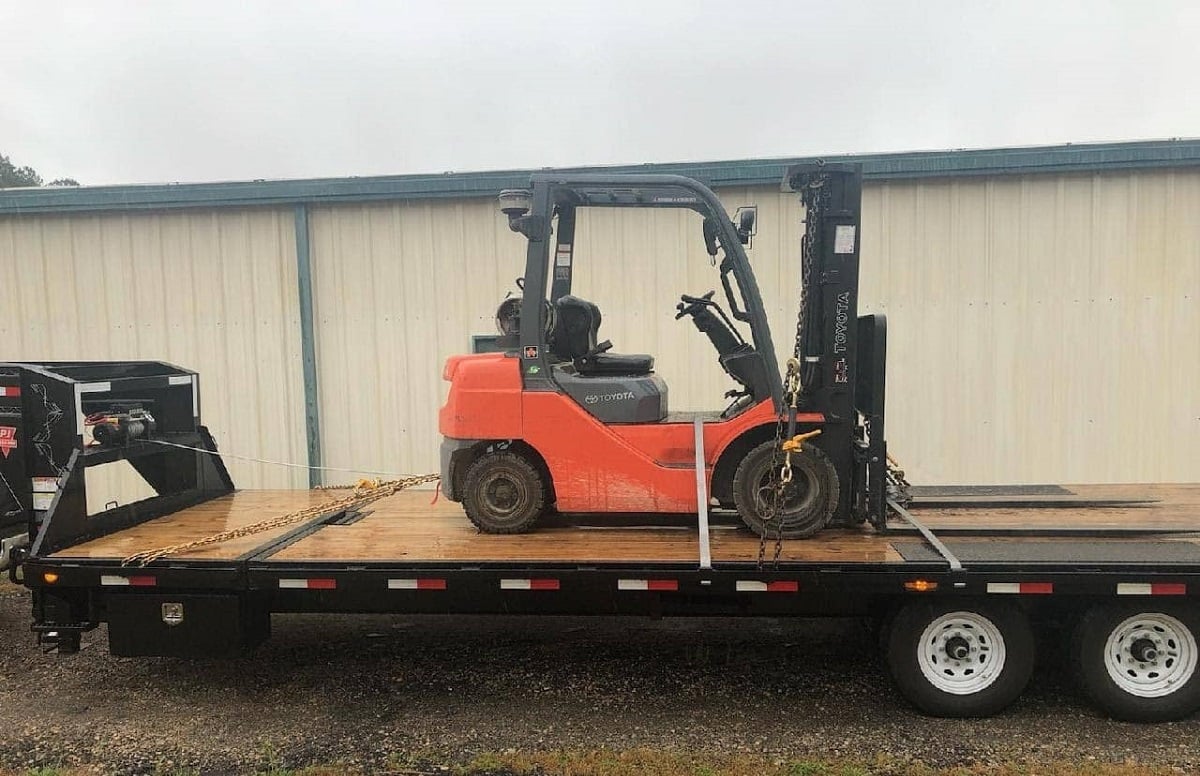
can you drive a forklift onto a flatbed truck
Yes, you can drive a forklift onto a flatbed truck, but doing so requires careful planning, proper equipment, and strict adherence to safety protocols. This common industrial task, often necessary for transporting forklifts between job sites, maintenance facilities, or warehouses, involves more than just driving up a ramp. Understanding the weight capacities, ramp angles, tie-down procedures, and truck deck strength is essential to prevent accidents and cargo damage. For businesses seeking reliable solutions for loading and unloading, partnering with a trusted manufacturer like Liftron Material Handling ensures access to high-quality forklifts and expert guidance for safe transport operations.
Key Safety Factors Before Driving a Forklift Onto a Flatbed Truck
Before attempting to drive a forklift onto a flatbed truck, operators must evaluate several critical factors. The most important considerations include the forklift’s weight, the truck’s load capacity, ramp specifications, and operator skill level. A standard flatbed truck can typically handle loads between 10,000 and 80,000 pounds, but the specific capacity varies by model and configuration. Always consult the truck’s owner manual and the forklift’s specification sheet to ensure compatibility.
Ramp Angle and Gradient Requirements
The ramp used to bridge the gap between the ground and the flatbed must meet specific angle requirements. Most forklifts have a maximum ramp angle of 10 to 15 degrees when loaded, though some models can handle steeper slopes when empty. If the ramp angle is too steep, the forklift may tip backward during ascent or slide forward during descent. Use a ramp that is long enough to create a gentle gradient, ideally extending at least 12 to 16 feet for a standard flatbed height of 48 to 60 inches. For example, the Liftron DL SERIES lithium-ion forklift is engineered with a low center of gravity and stable traction system, making ramp navigation safer even with heavier loads.
Deck Strength and Tie-Down Points
The flatbed truck deck must be strong enough to support the forklift’s point load, especially when the forklift drives over areas between cross members. Most flatbed decks made of steel or aluminum can handle concentrated loads, but wooden or composite decks may require reinforcement. Additionally, the truck must have robust tie-down points—rated D-rings or stake pockets—that can secure the forklift during transport. Use chains or straps with a working load limit at least 1.5 times the forklift’s weight, and apply them at four corners, ensuring the forklift is immobilized in all directions.
Step-by-Step Procedure for Driving a Forklift Onto a Flatbed Truck
Following a systematic procedure reduces risk and ensures efficiency. Below is a professional workflow for loading a forklift onto a flatbed truck safely.
Preparation and Equipment Inspection
- Inspect the forklift for proper tire pressure, brake function, and steering responsiveness.
- Check the flatbed truck for flat tires, hydraulic leaks, or structural damage.
- Verify the ramp is free of debris, cracks, or excessive wear.
- Ensure the truck is parked on a level surface with the parking brake engaged and wheel chocks placed.
- Confirm that the forklift’s mast is fully tilted backward and the forks are lowered to ground level.
Loading the Forklift
Position the ramp securely against the flatbed, ensuring it overlaps at least 6 inches. The ramp should have a non-slip surface. Drive the forklift straight onto the ramp at a slow, steady speed—do not accelerate or brake suddenly. Keep the forklift centered on the ramp to maintain balance. Once the front wheels reach the deck, stop and realign if necessary, then continue until the entire forklift is on the truck bed. Lower the forks fully to the deck surface to stabilize the machine.
Securing the Load
After parking the forklift on the flatbed, engage its parking brake, turn off the engine, and remove the key. Place wheel chocks in front of and behind each wheel to prevent rolling. Attach tie-down chains or straps to all four corners of the forklift’s frame, crossing them over the deck to create a secure pattern. Tighten the binders until there is no slack, but avoid over-tightening that could damage the forklift’s components. Perform a final check by trying to shake the forklift; if it moves, re-tighten the tie-downs.
Common Applications and Scenarios
Driving a forklift onto a flatbed truck is common in several industries. Construction companies frequently transport forklifts to job sites for material handling. Rental companies move forklifts between customer locations. Warehouse operators may need to relocate forklifts to different facilities. In each case, proper loading techniques prevent costly downtime and injuries.
Comparison of Loading Methods
| Loading Method | Ideal For | Risks | Time Required |
|---|---|---|---|
| Driving directly onto ramp | Most forklifts, low ramp angle | Tip-over if ramp angle too steep | 5–10 minutes |
| Using a dock plate or dock leveler | Warehouse loading docks | Slip hazards if not secured | 2–5 minutes |
| Crane lifting | Oversized or very heavy forklifts | High cost, requires crane operator | 15–30 minutes |
| Loading by a second forklift | Smaller forklifts, trailer docking | Risk of collision | 5–10 minutes |
Case Study: Safe Transport of a Liftron DL SERIES Forklift
In a recent operation at a Midwest logistics hub, a team loaded a Liftron DL SERIES lithium-ion forklift onto a flatbed truck for transport to a remote distribution center. The forklift weighed 8,500 pounds, and the truck had a deck capacity of 20,000 pounds. The ramp used was 14 feet long with a 7-degree gradient, well within the recommended range. The operator performed a pre-inspection, drove the forklift at 2 mph, and secured it with four 5,000-pound-rated straps. The entire process took 8 minutes, and the forklift arrived without incident. This example demonstrates how using modern equipment and following safety protocols eliminates loading hazards.
Frequently Asked Questions About Driving Forklifts Onto Flatbed Trucks
Can you drive a sit-down counterbalance forklift onto a flatbed truck?
Yes, but the operator must ensure the ramp angle does not exceed the forklift’s specified limit, typically 10 degrees when loaded. Counterbalance forklifts have a rear-heavy design, so the driver must keep the forks low and mast tilted back to maintain stability.
Is it safe to drive a forklift onto a flatbed truck alone?
While a single experienced operator can perform the task, it is safer to have a spotter guide the driver, especially during the first few feet of ascent or descent. A spotter can communicate with hand signals and alert the driver to any misalignment or ramp instability.
What should you do if the flatbed truck has a low deck height?
Low deck heights (under 40 inches) generally make loading easier because the ramp angle is reduced. However, if the deck is extremely low, the forklift’s undercarriage may scrape against the deck edge. Use a gently sloped ramp or a dock plate to create a smooth transition.
Professional Tips for Forklift Transport
To ensure the safest and most efficient loading experience, consider these expert recommendations. First, always use a ramp rated for at least 1.5 times the forklift’s gross vehicle weight. Second, remove any loose cargo from the flatbed before loading to prevent items from shifting under the forklift’s tires. Third, invest in a quality wheel chock system that secures both sides of the tires. Fourth, schedule loading during daylight hours when visibility is optimal. Finally, periodically train forklift operators on flatbed loading techniques, as skills can degrade over time.
Conclusion and Call to Action
Driving a forklift onto a flatbed truck is a routine but high-stakes operation that demands respect for engineering limits and safety rules. By assessing load capacities, using proper ramps, securing the machine correctly, and leveraging premium equipment like the Liftron DL SERIES, businesses can perform this task efficiently without compromising safety. Whether you are moving a forklift for maintenance, rental, or relocation, thorough planning protects your workforce and your assets. For reliable forklifts designed for demanding transport scenarios, explore the product range at Liftron Material Handling. Contact our team today for personalized advice on selecting the right forklift for your loading and transport needs.
Add a review
Your email address will not be published. Required fields are marked *