
How Do I Charge Golf Cart Batteries with a 12-Volt Charger?
Charging golf cart batteries with a 12-volt charger is possible in certain situations, especially when your main golf cart charger will not start because the battery pack voltage has dropped too low. However, this method is not the same as using a dedicated golf cart charger. A normal 12-volt charger is designed for 12V batteries, while many golf carts use battery packs made from several 6V, 8V, or 12V batteries connected in series. Because of this, you must understand your battery setup before connecting anything.
If you own a Tara golf cart or another electric cart, the safest and most efficient charging method is always to use the correct charger recommended for your battery pack. A 12-volt charger should be treated as a temporary or emergency charging tool, not a long-term replacement for the proper charger. Used incorrectly, it can overcharge batteries, create heat, damage cells, or cause unsafe conditions.
Can You Charge Golf Cart Batteries with a 12-Volt Charger?
Yes, you can charge golf cart batteries with a 12-volt charger, but only in the correct way. If your cart uses 12V batteries, you can charge each 12V battery individually. If your cart uses 6V or 8V batteries, you generally need to charge them in pairs so the charger sees approximately 12 volts. For example, two 6V batteries connected in series equal 12V. In some cases, two 8V batteries equal 16V, so charging them with a 12V charger may be slow and incomplete, and it requires extra caution. Always check the battery voltage and manufacturer instructions before charging.
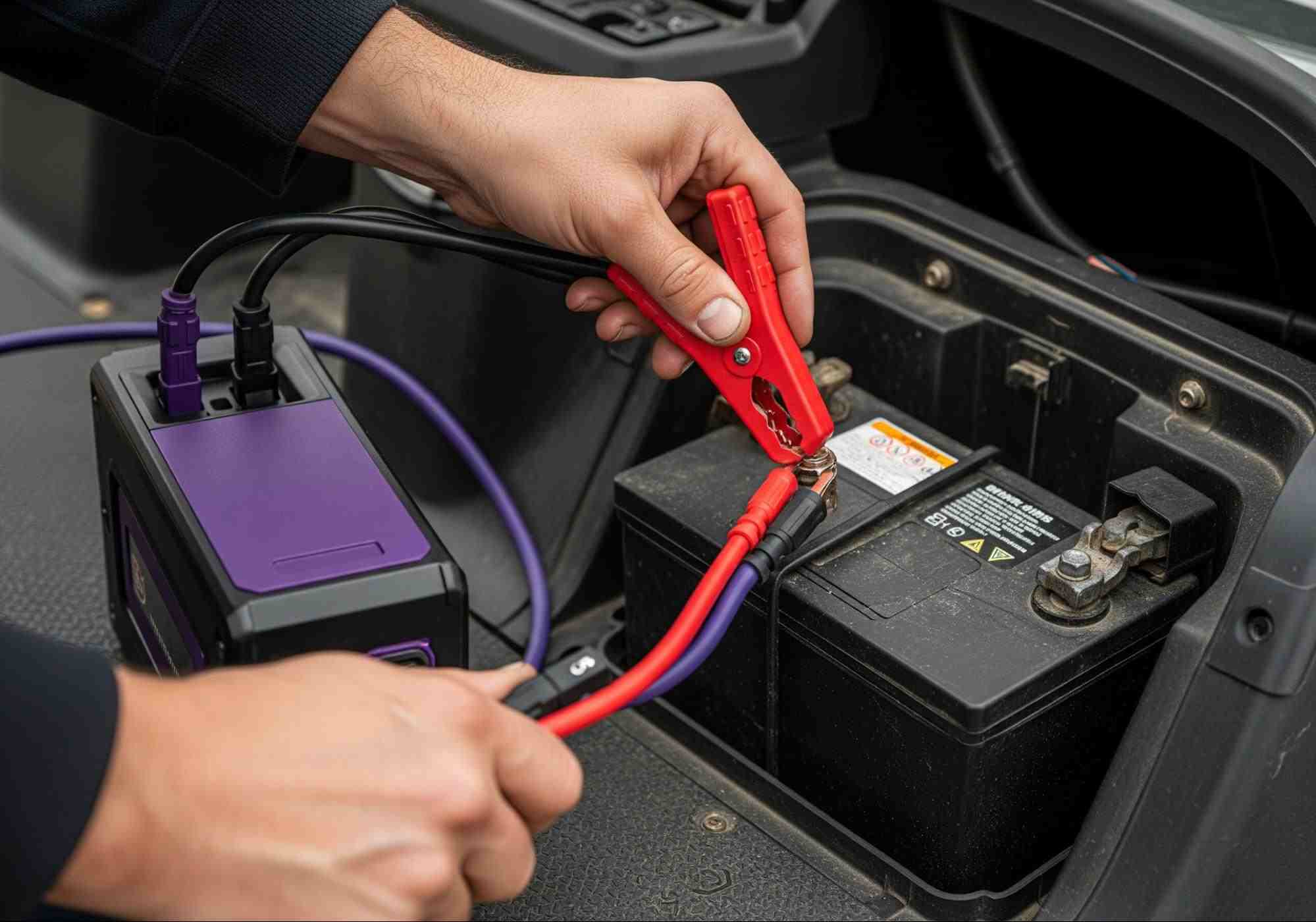
The basic idea is to connect the charger’s red positive clamp to the positive post of one battery and the black negative clamp to the negative post of the adjacent battery in the same series pair. This allows the charger to apply voltage across a section of the pack instead of the entire golf cart battery bank.
Why This Is a Manual Process
Dedicated golf cart chargers are built to charge the full battery pack safely. They monitor voltage, current, charge stages, and shutoff points. Many modern chargers include smart charging features that reduce the risk of overcharging and help protect battery life.
A standard 12-volt charger does not understand your full golf cart battery system. It does not automatically balance all batteries in the pack, and it may not stop at the correct time for your specific battery chemistry. That means you must monitor the process manually. Leaving a 12-volt charger connected too long can overcharge one section of the battery pack while the rest remains undercharged.
Steps for Charging in Pairs: 6V or 8V Batteries
1. Prepare the Batteries
Before charging, turn the golf cart off and remove the key. Make sure the cart is in a safe, dry, and well-ventilated location. Inspect the battery cables, terminals, and charger clamps. Do not charge batteries with cracked cases, leaking fluid, melted terminals, or strong sulfur smells.
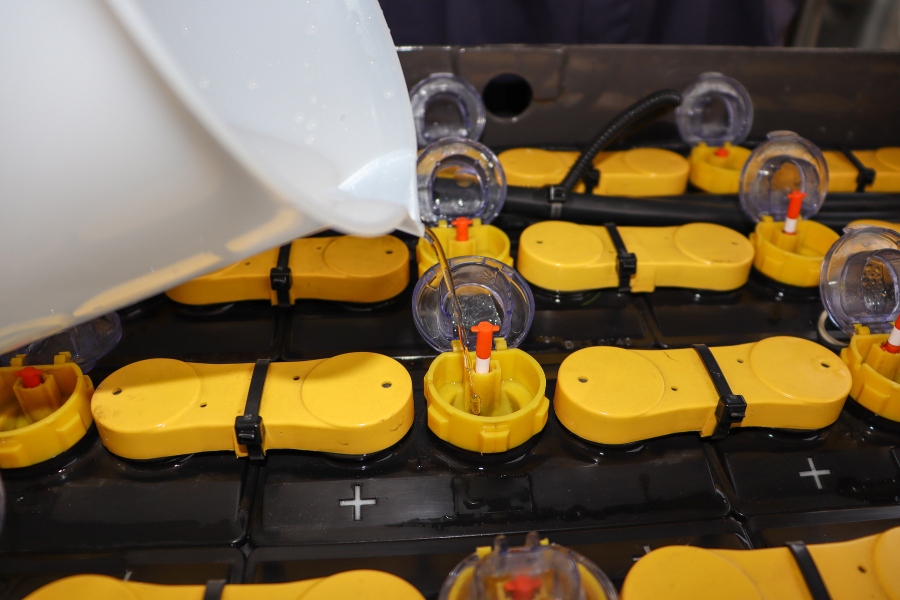
If you have flooded lead-acid batteries, check the water level before charging. The plates should be covered, but do not overfill before charging because electrolyte can expand. Use only distilled water if topping off is needed. Wear gloves and eye protection when working around batteries.
2. Connect the Charger
For two 6V batteries connected in series, attach the red positive clamp from the 12V charger to the positive terminal of the first battery. Then attach the black negative clamp to the negative terminal of the second battery. This creates a 12V charging section.
For 12V batteries, charge one battery at a time by connecting red to positive and black to negative on the same battery. Do not randomly connect the charger across the entire golf cart pack unless the charger is designed for the total pack voltage.
3. Start the Charge
Plug in the charger and start at a low or moderate amperage setting if your charger allows adjustment. Slow charging is safer because it reduces heat and gives you more control. Avoid using a high-amp boost mode unless you are only trying to raise voltage briefly and you are monitoring the battery closely.
4. Monitor and Rotate
Check the batteries often during charging. Feel for excessive heat, listen for unusual sounds, and watch for bubbling in flooded lead-acid batteries. Some bubbling can occur near the end of charging, but violent bubbling or strong odor is a warning sign.
After one pair has charged for a limited time, disconnect the charger and move to the next pair. Continue rotating through the pack until each section has received charge. The goal is often to raise the pack voltage enough so the main golf cart charger can recognize the batteries and take over.
5. Kick-Start the Cart Charger
Many automatic golf cart chargers will not turn on if the battery pack voltage is too low. Using a 12V charger for a short time can raise the voltage of individual batteries or pairs. Once the overall pack voltage is high enough, connect the proper golf cart charger and let it complete the full charging cycle.
This is often called “waking up” or “kick-starting” a low battery pack. It should be done carefully, and if the batteries do not respond, they may be too damaged to recover safely.
How Long Does It Take to Charge Golf Cart Batteries with a 12-Volt Charger?
The charging time depends on battery voltage, battery capacity, state of charge, charger amperage, and battery condition. A small 12V charger may take many hours to add a meaningful charge. If the batteries are only slightly low, a few hours per pair may be enough to raise the voltage so the main golf cart charger can work. If the batteries are deeply discharged, charging can take much longer and may not restore full capacity.
As a general rule, do not leave a 12V charger connected unattended for long periods. Check voltage with a multimeter and stop charging if the batteries become hot, smell unusual, or show signs of swelling or leakage. For deeply discharged or older batteries, professional testing may be safer than repeated manual charging attempts.
Important Safety Tips
Always match charger voltage to the battery or battery pair you are charging. Never mix up positive and negative clamps. Avoid sparks near batteries, especially lead-acid batteries, because charging can produce gases. Remove jewelry and keep metal tools away from battery terminals to prevent short circuits.
If your golf cart uses lithium batteries, do not use a standard 12V lead-acid charger unless the battery manufacturer specifically allows it. Lithium batteries require compatible charging profiles and battery management protection. Using the wrong charger can damage the battery system.
Final Thoughts
Charging golf cart batteries with a 12-volt charger can be done, but it requires patience, attention, and the correct connections. Charge 12V batteries individually, or charge 6V batteries in pairs to create a 12V section. Monitor the process closely and use the 12V charger mainly to raise voltage enough for the proper golf cart charger to take over.
For regular charging, always use the correct charger for your golf cart battery pack. This protects battery life, improves performance, and reduces the risk of overcharging or damage.
Add a review
Your email address will not be published. Required fields are marked *