
What Training Is Required for Safe Forklift Operation?
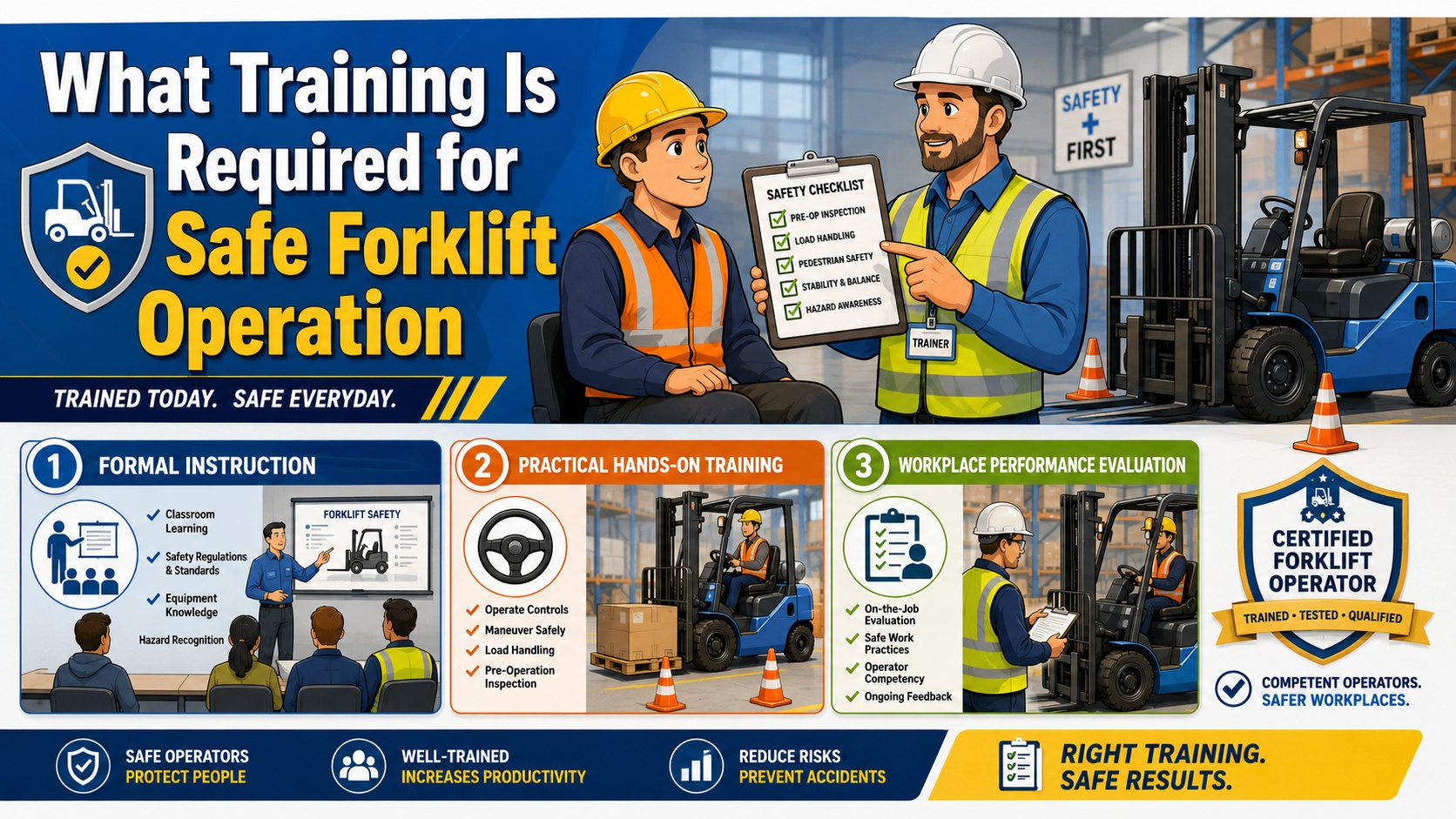
Quick Answer: Safe forklift operation requires a three-part training program mandated by OSHA: formal instruction, practical training, and a workplace performance evaluation. Operators are evaluated on truck-specific controls and site-specific hazards before being certified by the employer.
A Forklift is one of the most useful machines in warehouses, distribution centers, manufacturing plants, construction supply yards, retail stockrooms, and logistics operations. However, it is also a powerful industrial vehicle that can cause serious accidents if the operator is not properly trained.
Forklift safety training is not just about learning how to drive forward and backward. A complete program teaches operators how to inspect equipment, read the data plate, understand load capacity, handle pallets safely, avoid pedestrians, travel on ramps, park correctly, and respond to workplace hazards. The goal is to make sure every operator can use the equipment safely in real working conditions.
Important Note: Online training can support the classroom portion, but safe forklift operation also requires supervised hands-on training and a workplace performance evaluation.
Three-Step Training for Safe Operation of Forklifts
OSHA’s forklift training structure is built around three main parts. Each part serves a different purpose. Formal instruction teaches the theory, practical training builds real operating skill, and workplace evaluation confirms that the operator can safely use the truck in the actual environment.
1. Formal Instruction
Formal instruction is the foundational learning phase. It covers the theoretical knowledge needed to operate a powered industrial truck safely. This phase can be completed through lectures, classroom discussion, written materials, safety videos, interactive computer learning, or online certification courses.
During formal instruction, operators should learn about forklift controls, instrumentation, steering behavior, stability principles, load centers, rated capacity, data plates, pre-shift inspections, parking procedures, battery charging, refueling, ramps, dock safety, visibility, pedestrian traffic, and workplace-specific hazards.
This step is important because operators must understand why safety rules exist. For example, keeping the load low improves stability, reading the data plate prevents overloading, and slowing down at blind corners helps prevent collisions.
2. Practical Training
Practical training is the hands-on portion of forklift education. It cannot be fully completed online because the trainee must operate the equipment under direct supervision. A qualified trainer demonstrates safe operation and then allows the trainee to practice in a controlled environment.
Hands-on training may include mounting and dismounting safely, starting the truck, steering, braking, reversing, using the horn, lifting and lowering forks, stacking pallets, traveling with loads, parking, checking blind spots, and completing a pre-operation inspection.
The practical phase should match the specific equipment the operator will use. A sit-down counterbalance forklift, reach truck, order picker, pallet jack, and rough-terrain forklift all have different controls, stability concerns, and operating limits.
3. Workplace Performance Evaluation
Before operating a forklift independently, the employer must evaluate the operator’s performance and determine that they are competent to handle the specific equipment and environment safely. This evaluation should happen in the actual workplace or in conditions that closely match the workplace.
The evaluator observes whether the operator can inspect the truck, control speed, steer safely, manage loads, follow site traffic rules, avoid pedestrians, use ramps and docks properly, and respond to hazards. This final step is what turns training into employer authorization.
Pro Tip: The best forklift training is job-specific. It should match the equipment, load types, floor conditions, traffic flow, attachments, and hazards of the actual workplace.
What Should Forklift Training Cover?
A complete training program should include both truck-related topics and workplace-related topics. Truck-related training focuses on the machine itself. Workplace-related training focuses on the environment where the forklift will be used.
- Forklift controls and operation: Operators should understand steering, brakes, hydraulics, mast controls, warning devices, and gauges.
- Load capacity and stability: Training should explain load centers, data plates, rated capacity, tip-over risks, and safe load positioning.
- Pre-shift inspection: Operators must know how to check tires, forks, mast, chains, brakes, horn, lights, fluid levels, batteries, and leaks.
- Safe travel practices: Training should cover speed control, turning, ramps, blind corners, pedestrian areas, and traveling with the load low.
- Workplace hazards: Operators should learn site-specific risks such as dock edges, narrow aisles, low ceilings, wet floors, uneven surfaces, and high-traffic zones.
- Emergency procedures: Training should include what to do during equipment failure, unstable loads, near misses, collisions, or unsafe conditions.
What Are 5 Safety Rules for a Forklift?
While every workplace should have its own safety rules, these five core principles apply to most forklift operations:
- Inspect before every shift: Never operate a forklift with damaged tires, forks, brakes, chains, horn, lights, or leaking components.
- Keep loads low and stable: Travel with the load low to the ground and tilted back when appropriate to improve stability.
- Drive at a safe speed: Slow down near corners, pedestrians, ramps, docks, intersections, and congested work areas.
- Respect the rated capacity: Never exceed the capacity shown on the data plate, and consider attachments and load center changes.
- Watch for pedestrians: Use the horn at blind spots, maintain clear visibility, and never assume pedestrians can see or hear the truck.
Safety Reminder: A trained operator should never ignore workplace conditions. Wet floors, damaged pallets, uneven surfaces, poor lighting, and blocked visibility can all turn a routine lift into a hazard.
How Often Is Forklift Training Required?
Forklift operators must be evaluated at least once every three years. Refresher training may be required sooner if the operator is involved in an accident or near miss, is observed operating unsafely, receives an unsatisfactory evaluation, is assigned to a different type of forklift, or works in a changed environment.
Changes that may require refresher training include new attachments, different load types, new aisle layouts, changed traffic routes, new dock conditions, ramps, or different surface conditions. The training record should be kept by the employer and should show that the operator has been trained and evaluated.
Why Training Matters for Businesses
Good training protects employees, equipment, products, and productivity. A properly trained Forklift operator is less likely to damage racks, strike pedestrians, drop loads, overload equipment, or create downtime through unsafe operation.
Training also improves efficiency. Operators who understand safe load handling, battery charging, traffic patterns, and daily inspections can move materials more smoothly while reducing unnecessary risks. For businesses using electric material handling equipment, proper training also supports better battery care and longer equipment life.
Conclusion
Safe forklift operation requires formal instruction, practical hands-on training, and a workplace performance evaluation. Operators must understand both the truck and the workplace before operating independently.
A complete training program should cover controls, inspections, load capacity, stability, safe travel, workplace hazards, and emergency procedures. Whether your team uses a Forklift in a warehouse, factory, dock, or outdoor yard, proper training is the foundation of safe and productive operation.
Add a review
Your email address will not be published. Required fields are marked *