
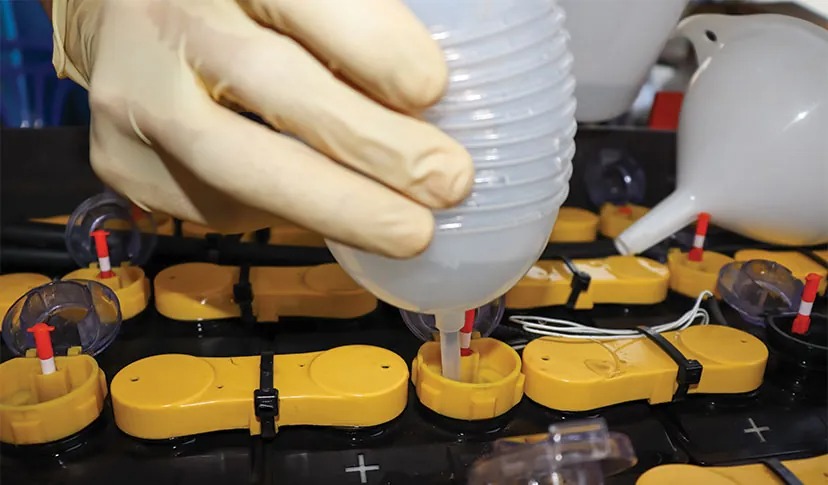
What Kind of Acid Is in a Forklift Battery?
Forklift batteries (specifically lead-acid batteries) contain a solution of sulfuric acid mixed with water, which acts as the electrolyte. This solution generally consists of roughly 30% to 50% sulfuric acid, with a common concentration being approximately 37%. This highly corrosive substance enables the chemical reactions that store and release energy.
The Role of Sulfuric Acid in Forklift Batteries
Most traditional forklift batteries are flooded lead-acid types, and their electrolyte is a dilute solution of sulfuric acid (H₂SO₄) and purified water. This mixture is what makes the battery work. During discharge, sulfuric acid reacts with the lead plates to produce electricity, lead sulfate, and water. When the battery is charged, the reverse reaction occurs, restoring the sulfuric acid concentration. The typical concentration of about 37% sulfuric acid by weight when fully charged is carefully balanced to provide optimal power output, capacity, and longevity. Deviations from this concentration can lead to reduced performance or accelerated damage to the battery plates.
Key Details About Forklift Battery Acid
Composition
The electrolyte in a forklift battery is approximately 65% water and 35% sulfuric acid by weight in a fully charged state. This ratio changes as the battery is used: during discharge, the acid concentration decreases and the electrolyte becomes more watery. Regular maintenance, including checking specific gravity with a hydrometer, helps ensure the concentration stays within the proper range. Adding only distilled water (never tap water or acid) is critical to maintaining correct chemistry and preventing mineral buildup that can damage the plates.
Hazards
Sulfuric acid is highly corrosive and can cause severe chemical burns on contact with skin or eyes. It also produces flammable hydrogen gas during charging, which can create an explosion risk if allowed to accumulate in confined spaces. Battery acid spills can damage floors, equipment, and clothing. Proper personal protective equipment (PPE) — including acid-resistant gloves, safety goggles, and protective clothing — is essential whenever working with or near forklift batteries. Facilities must also follow EPA and local regulations for handling and storing sulfuric acid, including spill containment and emergency response plans.
Maintenance
Regular maintenance is required to keep lead-acid forklift batteries functioning safely and efficiently. This includes checking electrolyte levels monthly, adding distilled water as needed, cleaning terminals to prevent corrosion, and performing equalization charges to balance cells. Neglecting these tasks leads to sulfation, reduced capacity, and shorter battery life. Always charge in a well-ventilated area to disperse hydrogen gas safely. Following manufacturer guidelines for watering, charging, and cleaning helps maximize the lifespan of the battery and reduces safety risks.
Alternative
Many facilities are moving away from traditional lead-acid batteries to lithium-ion (LiFePO4) forklift batteries. Lithium batteries contain no liquid sulfuric acid, eliminating the hazards associated with acid spills, hydrogen gas production, and regular watering. They offer longer lifespan, faster charging, lighter weight, and virtually maintenance-free operation. While the upfront cost is higher, lithium batteries often provide better long-term value through reduced maintenance labor and fewer replacements. For operations seeking to eliminate acid-related risks entirely, lithium is becoming the preferred choice.
What If I Accidentally Touch Battery Acid?
If battery acid comes into contact with skin, immediately flush the affected area with large amounts of cool water for at least 15–20 minutes. Remove any contaminated clothing and continue rinsing. Seek medical attention right away, even if the burn seems minor. For eye contact, flush the eyes continuously with water for at least 15 minutes and get emergency medical help immediately. In case of a spill, neutralize the acid with baking soda or a commercial neutralizer, then clean the area thoroughly. Always keep an eyewash station and emergency shower nearby in battery charging and maintenance areas. Prompt action can minimize injury and prevent long-term damage from exposure to sulfuric acid.
Conclusion
The acid in a forklift battery is sulfuric acid, typically at a concentration of around 37% when fully charged. This corrosive electrolyte is essential for the battery’s chemical reactions but requires careful handling, proper ventilation, and regular maintenance to ensure safety and performance. Understanding the composition, hazards, and maintenance requirements helps operators and facility managers reduce risks and extend battery life. For those looking to eliminate the dangers and maintenance demands of sulfuric acid entirely, lithium-ion forklift batteries provide a modern, safer alternative with superior performance and longevity.
Add a review
Your email address will not be published. Required fields are marked *