
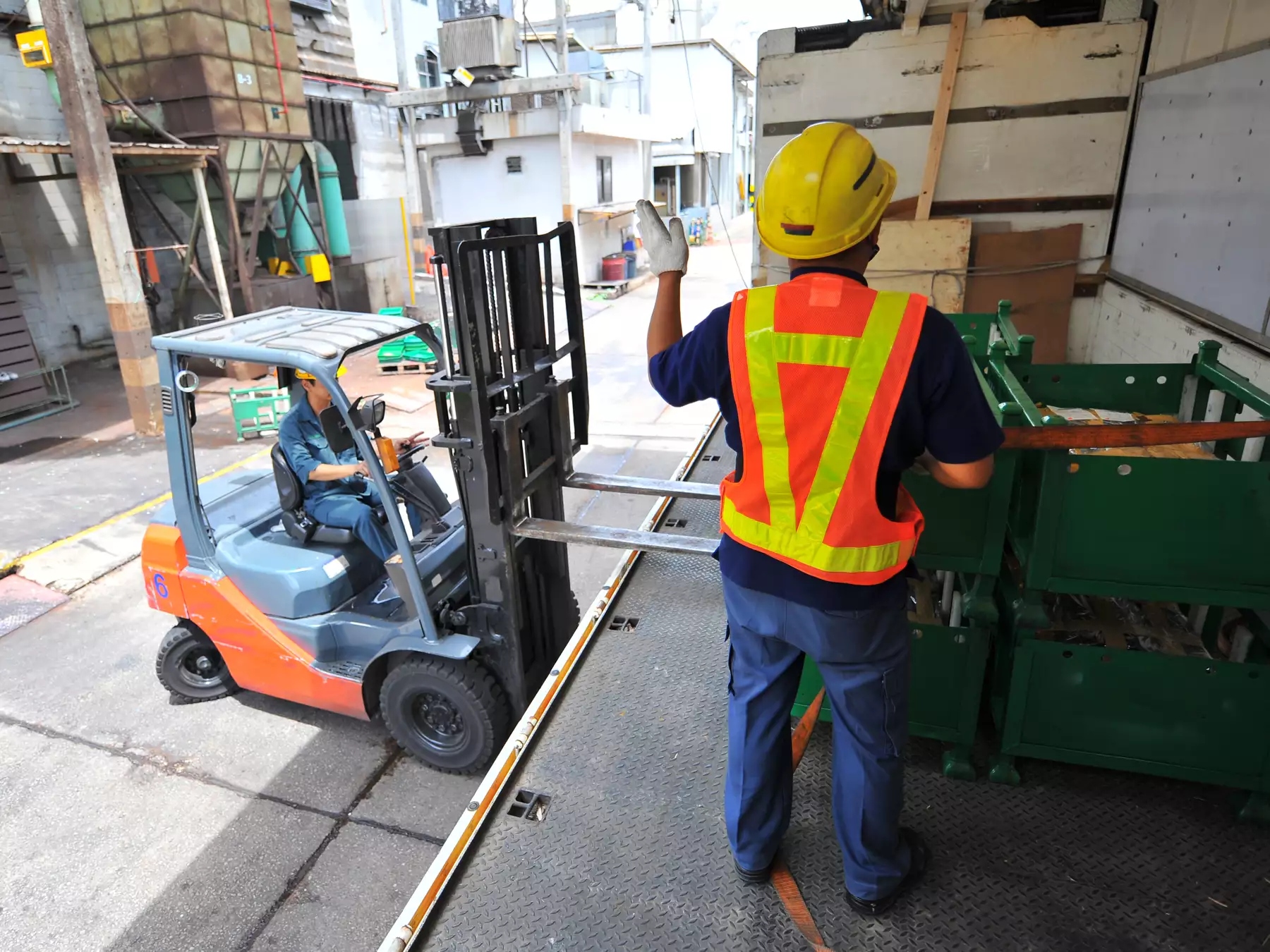
What Is the Hand Signal to Stop a Forklift?
To stop a forklift, extend both arms straight out horizontally to your sides with palms facing down. This signal means the operator should immediately stop the forklift and suspend movement until it is safe to continue.
Clear communication is essential in busy warehouses, construction sites, and manufacturing facilities. When noise, distance, or limited visibility makes verbal communication difficult, standardized hand signals help operators and pedestrians safely coordinate around a forklift.
Why Forklift Hand Signals Are Important
Forklifts operate in environments where workers, equipment, and materials are constantly moving. Operators may not always hear verbal instructions because of engine noise, alarms, warehouse machinery, or outdoor conditions.
Hand signals provide a visual communication system between forklift operators, spotters, and ground workers. Using consistent signals reduces misunderstandings and helps prevent collisions, load damage, and workplace injuries.
Modern electric forklifts, including advanced models from manufacturers such as Liftron, are designed with improved visibility and safety features, but proper communication remains a critical part of safe operation.
What Hand Signal Means Stop on a Forklift?
The standard stop signal requires the signal person to extend both arms straight out to each side, keeping them parallel with the ground. The palms should face downward.
| Signal | Hand Position | Meaning |
|---|---|---|
| Stop | Both arms extended horizontally with palms down | Stop forklift movement immediately |
| Slow Down / Temporary Pause | Hands clasped together in front of the body | Reduce movement or pause operation |
| Emergency Stop | Both arms raised or strong repeated stop motion | Stop immediately due to danger |
What Are the Hand Signals for a Forklift?
Forklift hand signals include more than just the stop command. Operators and spotters commonly use signals for moving forward, backing up, raising loads, lowering loads, and stopping.
| Forklift Signal | Description | Purpose |
|---|---|---|
| Stop | Arms extended sideways, palms down | Stop all forklift movement |
| Raise Forks | Point upward and make a circular motion | Lift the forks or load |
| Lower Forks | Point downward with downward movement | Lower the forks safely |
| Move Forward | Wave hand forward | Drive ahead |
| Back Up | Move hand backward repeatedly | Reverse operation |
| Slow Down | Move hand slowly downward | Reduce travel speed |
How to Use the Forklift Stop Signal Correctly
Using the correct technique is important because unclear signals may cause confusion. Follow these steps when signaling a forklift operator to stop:
- Stand in a Visible Location: Make sure the operator can clearly see you before giving the signal.
- Face the Forklift Operator: Maintain eye contact whenever possible.
- Extend Both Arms: Move both arms straight outward from your sides.
- Keep Palms Facing Down: This identifies the official stop command.
- Wait for Confirmation: Do not approach the forklift until it has completely stopped.
Never rely only on hand signals when working near moving forklifts. Maintain eye contact, stay outside the travel path, and make sure the operator confirms your instruction.
Difference Between Stop and “Dog Everything” Signal
In some workplaces, workers use the phrase “dog everything” to request a temporary pause. This is different from an emergency stop.
The “dog everything” signal is usually performed by clasping both hands together in front of the navel. It means equipment should be secured or paused while waiting for additional instructions.
The standard stop signal means immediate forklift movement must stop. The difference is important because operators need to understand whether the situation requires an emergency response or a temporary delay.
Common Forklift Communication Mistakes
Many forklift incidents happen because of poor communication. Common mistakes include:
- Using unclear or inconsistent hand movements.
- Standing behind the forklift where the operator cannot see you.
- Assuming the operator understands a personal signal.
- Walking too close before the forklift has stopped.
- Failing to use a spotter in areas with limited visibility.
How Employers Can Improve Forklift Safety Communication
Companies should establish clear forklift communication procedures and train employees regularly. A strong safety program should include:
- Train all operators and pedestrians on standardized hand signals.
- Post forklift signal charts in loading areas and warehouses.
- Require spotters when visibility is limited.
- Perform regular safety meetings and refresher training.
- Encourage workers to stop operations whenever unsafe conditions appear.
Conclusion
The correct hand signal to stop a forklift is extending both arms straight out to the sides with palms facing downward. This universal signal tells the operator to immediately stop movement.
Effective hand signals are an important part of forklift safety because they improve communication between operators and workers. Combined with proper training, inspections, and safe operating procedures, clear communication helps create a safer workplace.
Whether operating traditional equipment or modern electric models from companies like Liftron, following standardized forklift hand signals remains one of the simplest and most effective ways to prevent accidents.
Add a review
Your email address will not be published. Required fields are marked *