
Selection Guide for Outdoor Forklift Tires
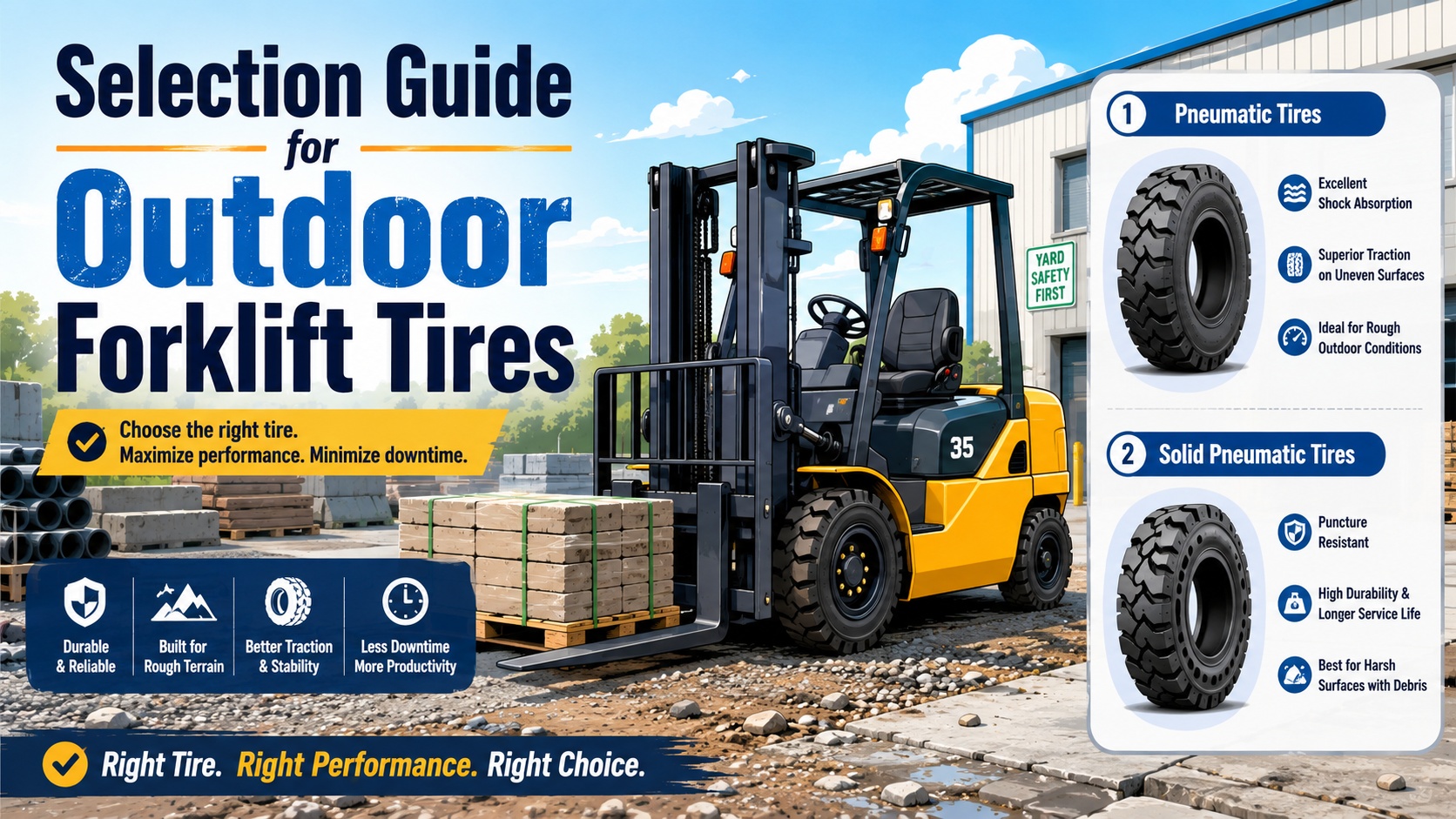
Quick Answer: For outdoor operations, select pneumatic or solid pneumatic forklift tires to handle uneven terrain, gravel, debris, dock yards, and rough concrete. Air-filled pneumatic tires provide shock absorption on rough ground, while solid pneumatic tires offer flat-proof durability. The best choice depends on your surface conditions, workload, safety requirements, and total operating budget.
Choosing the right outdoor forklift tires is essential for safety, productivity, operator comfort, and equipment life. Forklift tires affect traction, stability, braking distance, turning control, vibration, and load handling. A tire that works well on a clean indoor warehouse floor may perform poorly in an outdoor yard with gravel, potholes, debris, wet surfaces, or uneven concrete.
Outdoor applications usually demand stronger tire construction and better surface contact. Businesses using comparing models from Liftron Material Handling should evaluate the actual jobsite before selecting tires. The right tire can reduce downtime, improve operator confidence, and protect the forklift from unnecessary wear.
1. Select the Tire Type
The first step is choosing the correct tire type. Outdoor forklifts commonly use pneumatic tires or solid pneumatic tires. Pneumatic tires are air-filled and provide a smoother ride on rough or uneven surfaces. They absorb impact better, which can reduce vibration for both the operator and the forklift.
Solid pneumatic tires look similar to air-filled pneumatic tires but are made from solid rubber. They are more resistant to punctures, making them a strong choice for yards with nails, wood scraps, metal debris, broken pallets, or sharp stones. They do not provide the same level of cushioning as air-filled tires, but they offer excellent durability and lower risk of flats.
Key Takeaway: Choose air-filled pneumatic tires for comfort and shock absorption. Choose solid pneumatic tires when puncture resistance and uptime matter most.
2. Match Tires to Your Surface and Conditions
Surface condition is one of the most important tire selection factors. Smooth outdoor concrete, loading docks, gravel yards, construction supply areas, lumber yards, and mixed indoor-outdoor routes all place different demands on forklift tires.
For smooth concrete or paved outdoor areas, either pneumatic or solid pneumatic tires may work, depending on debris exposure and daily workload. For gravel, broken pavement, or uneven terrain, pneumatic tires can improve ride comfort and traction. For debris-heavy yards, solid pneumatic tires may be better because they reduce the risk of tire punctures and emergency replacements.
Weather also matters. Wet surfaces, mud, snow, ice, and dusty yards can reduce traction. Tire tread pattern, rubber compound, and contact patch should be considered when forklifts operate outdoors in changing weather.
3. Consider Workload and Durability
Outdoor forklift tire selection should also reflect how hard the forklift works. A forklift used occasionally for light outdoor pallet movement may not need the same tire durability as a unit running all day in a heavy-duty logistics yard.
Heavy loads, long travel distances, sharp turns, rough surfaces, and frequent braking can accelerate tire wear. If your forklift operates in multi-shift conditions, solid pneumatic tires may deliver better uptime because they are more resistant to cuts and punctures. If operator comfort and equipment protection are the priority, air-filled pneumatic tires may be preferred on rough ground.
Pro Tip: Tire cost should be measured by total operating value, not just purchase price. A more durable tire can reduce downtime, service calls, load instability, and unexpected replacement costs.
4. Consult Forklift Specifications
Always confirm tire compatibility with the forklift manufacturer’s specifications. Tire size, load rating, rim type, tire construction, and operating environment must match the forklift design. Installing the wrong tires can affect stability, braking, steering, ground clearance, and rated capacity.
Changing tire type may also affect forklift performance. For example, moving from cushion-style indoor tires to outdoor pneumatic-style tires is not always a simple swap. The forklift frame, axle, mast, and counterbalance design must support the intended tire setup. Before changing tires, check the operator manual or speak with a qualified forklift dealer or service technician.
Step-by-Step Outdoor Forklift Tire Selection Guide
- Identify your surface: Determine whether the forklift will run on concrete, asphalt, gravel, dirt, mud, ramps, or mixed indoor-outdoor areas.
- Check for debris: Look for nails, pallet splinters, metal scraps, sharp stones, and other hazards that can damage tires.
- Review load demands: Consider average load weight, maximum load weight, travel distance, shift length, and turning frequency.
- Choose tire construction: Select pneumatic tires for cushioning or solid pneumatic tires for flat-proof durability.
- Confirm specifications: Match tire size, rim type, load rating, and approved tire options to the forklift manufacturer’s requirements.
- Plan maintenance: Inspect tread, sidewalls, inflation pressure for air tires, embedded debris, chunking, and uneven wear regularly.
Common Outdoor Forklift Tire Mistakes
One common mistake is choosing the cheapest tire without considering surface conditions. A low-cost tire may wear quickly, lose traction, or fail early in rough outdoor use. Another mistake is using indoor-style tires in outdoor environments where they lack traction and ground clearance.
Operators and fleet managers should also avoid ignoring tire wear. Worn tires reduce stability and increase braking distance. Damaged tires can affect mast control, load balance, and operator comfort. Daily inspections should include checking for cuts, cracks, missing chunks, low air pressure, and uneven wear patterns.
Safety Reminder: Outdoor tire damage can directly affect forklift stability. Never operate a forklift with severely worn, flat, cracked, or structurally damaged tires.
For Which Scenarios Is the Liftron Forklift Suitable?
Liftron Material Handling offers electric forklift models for different workplace conditions. In general, the DE SERIES is suitable for indoor work, while the DD SERIES is better suited for outdoor work and more demanding operating environments.
| Liftron Forklift Model | Recommended Scenario | Best For | Tire Selection Focus |
|---|---|---|---|
| DE SERIES | Indoor operation | Warehouses, logistics centers, smooth concrete floors, pallet movement | Smooth-floor traction, floor protection, turning control, low vibration |
| DD SERIES | Outdoor operation | Yards, loading areas, mixed surfaces, heavy-duty handling, rougher environments | Pneumatic or solid pneumatic durability, traction, puncture resistance, stability |
When selecting tires for a liftron forklift, always match the tire to the actual surface and workload. Outdoor operations require extra attention to traction, puncture resistance, and forklift stability.
Conclusion
Outdoor forklift tire selection should be based on tire type, surface condition, workload, durability needs, and manufacturer specifications. Pneumatic tires provide cushioning and shock absorption, while solid pneumatic tires offer better puncture resistance and uptime in debris-heavy areas.
For Liftron Material Handling equipment, the DE SERIES is generally suited for indoor work, while the DD SERIES is better suited for outdoor applications. Choosing the right tire helps improve traction, reduce downtime, protect the forklift, and support safer outdoor material handling.
Add a review
Your email address will not be published. Required fields are marked *