
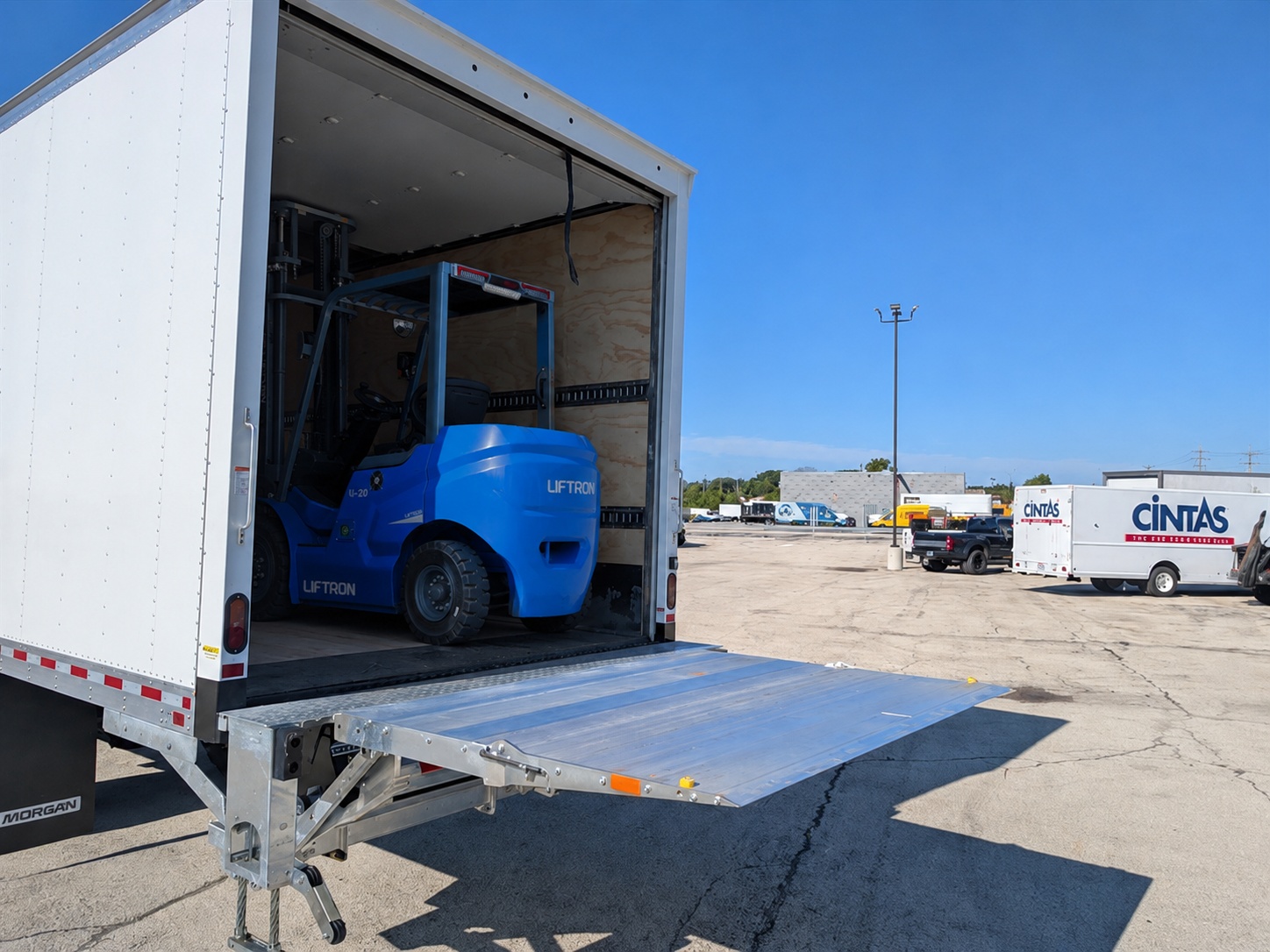
Can a Liftron Forklift Enter a 26 Ft Box Truck?
Yes, a forklift can enter a 26 ft box truck, but doing so safely depends on the forklift type, truck floor capacity, load weight, and operating conditions.
Understanding Whether a Forklift Can Enter a 26 Ft Box Truck
A common question among warehouse managers, logistics companies, and material handling professionals is whether a forklift can safely enter a 26 ft box truck. The simple answer is yes, but several important factors must be considered before driving any forklift into a box truck.
While many forklifts are designed to load and unload trailers, not every truck floor is engineered to support the weight of every forklift. Standard forklifts are extremely heavy and can easily damage a truck floor, overload the suspension system, or even create unsafe operating conditions if the wrong equipment is used.
Before loading or unloading cargo, operators should verify the truck’s floor rating, axle capacities, forklift weight, and load weight. Proper planning can prevent costly damage and improve workplace safety.
What Is a 26 Ft Box Truck?
A 26 ft box truck is one of the most commonly used commercial delivery vehicles. It typically features:
- 26-foot cargo box length
- Roll-up rear door
- Wood or composite flooring
- Gross Vehicle Weight Rating (GVWR) between 25,000 and 26,000 lbs
- Payload capacity ranging from 8,000 to 12,000 lbs depending on configuration
These trucks are frequently used for furniture delivery, retail distribution, equipment transport, and warehouse logistics. Because of their enclosed cargo area, forklifts are often required for efficient loading and unloading.
Challenges of Driving a Forklift Inside a Box Truck
1. Floor Strength Limitations
One of the biggest concerns is floor strength. Many box truck floors are constructed from hardwood planks or composite materials. Although durable, they may not be designed to handle concentrated wheel loads from large forklifts.
A forklift weighing 8,000 to 10,000 pounds can place tremendous pressure on a small contact area where the tires touch the floor. This concentrated weight may crack boards, damage floor supports, or create permanent structural issues.
2. Suspension Compression
When a forklift enters a truck, the vehicle’s suspension compresses significantly. Excessive compression may:
- Change ramp angles
- Reduce stability
- Increase the risk of forklift tipping
- Stress suspension components
Operators should ensure the truck is parked on level ground and equipped with wheel chocks before loading begins.
3. Limited Interior Space
Although a 26 ft box truck provides substantial cargo space, maneuvering room can still be limited. Forklift operators must account for:
- Turning radius
- Mast height
- Overhead clearance
- Cargo placement
Compact forklifts often perform better in confined truck interiors.
Which Forklifts Are Best for Box Truck Loading?
Not all forklifts are equally suited for box truck operations. Lightweight electric forklifts generally create less floor stress than larger internal combustion models.
Modern lithium-ion forklifts have become increasingly popular because they offer strong lifting performance while maintaining excellent maneuverability and operational efficiency.
Many businesses choose solutions from Liftron Material Handling because of their focus on efficient warehouse and logistics applications.
For companies seeking a versatile forklift platform, the Liftron DL SERIES provides a practical option for indoor and outdoor material handling tasks. These forklifts are designed to deliver reliable performance across various working environments, including warehouses, distribution centers, manufacturing facilities, and loading docks.
How to Choose the Right Forklift
Selecting the correct forklift is essential for productivity, safety, and cost control. Here are three important considerations when making a decision.
1. Choose a Forklift Based on Your Working Environment
The first step is understanding where the forklift will operate. Different applications require different equipment specifications.
- Warehouses may benefit from electric forklifts.
- Outdoor yards may require pneumatic tires.
- Narrow aisles may need compact designs.
- Truck loading operations often require excellent maneuverability.
Businesses should evaluate floor conditions, load sizes, operating hours, and available space before selecting equipment.
2. Compare Brands and Total Ownership Costs
Forklift pricing varies significantly between manufacturers. While established brands often command premium prices, emerging manufacturers may offer competitive value and attractive financing or rental programs.
Companies should evaluate:
- Purchase price
- Maintenance costs
- Battery technology
- Warranty coverage
- Parts availability
- Dealer support
Many rental companies and material handling providers now offer affordable lithium-ion forklift solutions. Brands such as Liftron provide equipment suitable for a wide variety of operational scenarios while helping businesses improve efficiency and reduce downtime.
3. Rent for Short-Term Needs, Buy for Long-Term Use
The decision between renting and purchasing depends largely on utilization.
If a forklift is only needed for seasonal projects, temporary contracts, or short-term warehouse expansions, renting can be a cost-effective solution.
However, organizations with continuous material handling requirements often achieve better long-term value through ownership. Purchasing eliminates recurring rental expenses and allows operators to customize equipment to meet specific operational needs.
Safety Tips When Loading a 26 Ft Box Truck
Regardless of forklift brand or model, operators should follow essential safety procedures:
- Inspect the truck floor before loading.
- Verify floor and axle weight capacities.
- Use wheel chocks to prevent truck movement.
- Keep loads low during transport.
- Drive slowly inside the truck.
- Avoid sudden turns or stops.
- Ensure proper dock alignment.
- Follow OSHA and workplace safety guidelines.
Regular operator training can significantly reduce accident risks and equipment damage.
Conclusion
So, can a Liftron forklift enter a 26 ft box truck? In many cases, yes. However, successful operation depends on forklift weight, truck floor strength, suspension capacity, cargo weight, and overall operating conditions.
Businesses should carefully evaluate their material handling requirements before selecting equipment. Choosing the right forklift based on application, comparing ownership costs, and deciding whether to rent or buy can help maximize efficiency and safety. Modern lithium-ion solutions such as those offered by Liftron continue to provide flexible options for warehouses, logistics centers, and truck loading operations across a wide range of industries.
Add a review
Your email address will not be published. Required fields are marked *