
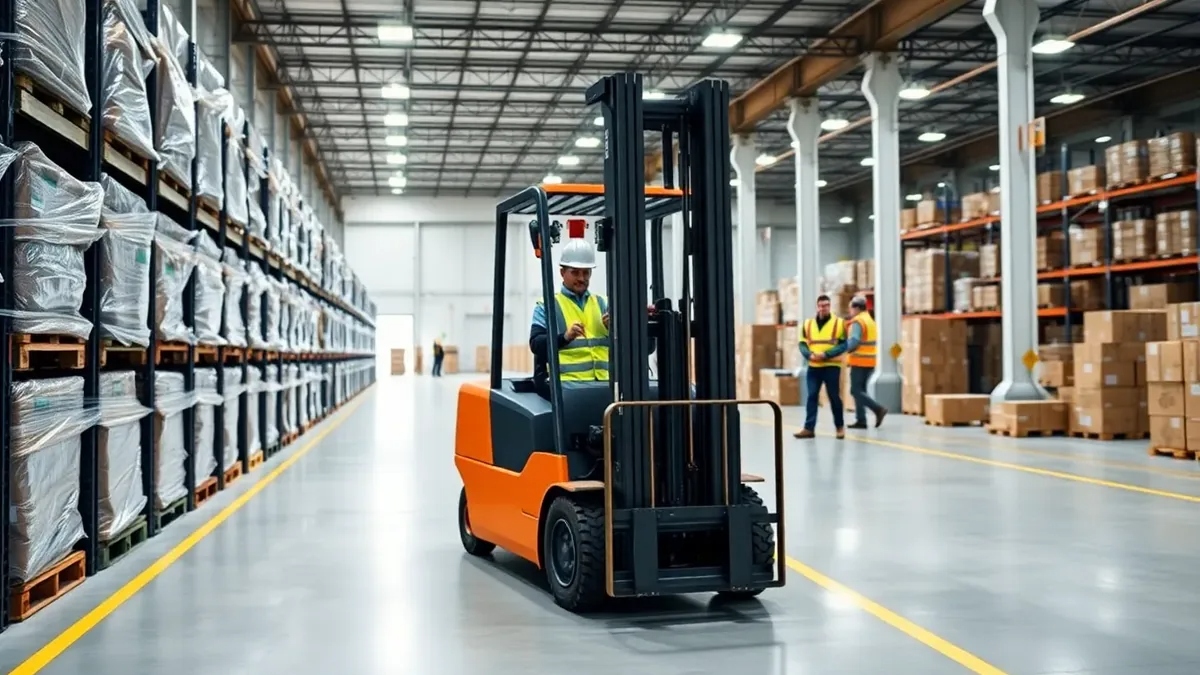
How to Get More Power Out of Your Forklift
What Does “More Forklift Power” Mean?
Operators may describe several different problems as a loss of power. A forklift may travel slowly, struggle on ramps, lift loads slowly, lose runtime, hesitate under acceleration, or become unable to handle loads it previously moved.
These symptoms do not necessarily mean that the truck needs a larger motor or engine. They may result from:
- A weak or poorly charged battery
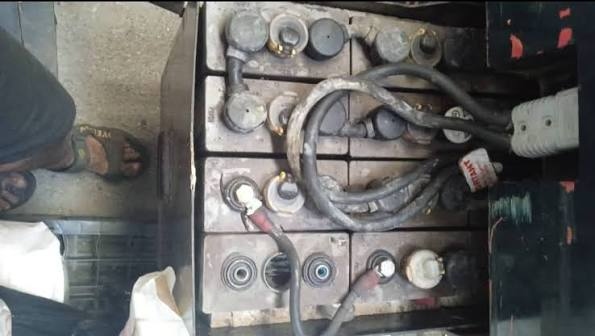
- Dirty battery connections
- A restricted engine air filter
- Low or contaminated hydraulic oil
- Worn tires
- Dragging brakes
- Incorrect fuel supply
- Overloading or an extended load center
- A failing motor, pump, controller, or transmission
Before replacing the truck, inspect the complete power system and compare its performance with the manufacturer’s specifications.
Electric Forklift Power Tips
Keep the Battery Within Its Recommended Charge Range
An electric forklift depends on battery voltage and current to power its traction and hydraulic motors. As a battery becomes deeply discharged, voltage may drop and the truck may reduce travel or lifting performance to protect the power system.
Avoid repeatedly operating the battery to complete exhaustion. Follow the battery and forklift manufacturer’s recommended charging limits. Many lithium systems support opportunity charging during breaks, while traditional lead-acid batteries often use a more structured charge, cool-down, and duty cycle.
Use the Correct Charger
The charger must match the battery’s:
- Nominal voltage
- Battery chemistry
- Amp-hour capacity
- Permitted charging current
- Connector and polarity
- Battery-management communication requirements
An undersized charger may not restore enough energy between shifts. An incompatible charger may cause incomplete charging, excessive heat, battery faults, or permanent damage.
Equalize Lead-Acid Batteries Properly
Equalization is a controlled charging stage used on certain flooded lead-acid batteries to help bring individual cells to a similar state of charge. It can reduce performance loss caused by cell imbalance.
Equalization should be performed only at the interval recommended by the battery and charger manufacturers. It is not a routine procedure for lithium batteries and should not be applied to sealed batteries unless specifically approved.
Allow Lead-Acid Batteries to Cool
A conventional lead-acid battery may require a cooling period after a full charge. Installing a hot battery immediately into demanding service can increase temperature further and accelerate wear.
Inspect battery temperature, cables, connectors, and ventilation before returning it to operation. Lithium systems have different charging and temperature rules, so follow the battery-management-system instructions rather than applying lead-acid procedures.
Maintain Correct Water Levels
Flooded lead-acid batteries require periodic watering. Low electrolyte levels can expose the plates and reduce battery life, while overfilling can cause acidic electrolyte to overflow during charging.
In most cases, water is added after charging and cooling, but the exact procedure must follow the battery manufacturer. Use approved water and never add sulfuric acid during normal maintenance.
Electric Forklift Performance Checklist
| Condition | Possible Power Effect | Recommended Action |
|---|---|---|
| Low state of charge | Reduced travel and lifting performance | Recharge using the approved charger |
| Loose or corroded connection | Voltage loss, heat, and intermittent power | Remove from service and repair the connection |
| Weak battery cells | Short runtime and voltage drop under load | Arrange a professional capacity test |
| Battery overheating | Protective shutdown or reduced output | Stop operation and identify the cause |
| Incorrect charger | Incomplete or unsafe charging | Verify voltage, chemistry, and current |
| BMS fault | Limited power or complete shutdown | Read the fault code and contact service personnel |
Internal Combustion Forklift Power Tips
Perform Routine Engine Tune-Ups
LPG, gasoline, and diesel forklifts need regular engine maintenance to produce reliable power. Follow the operating-hour service schedule for:
- Engine oil and filter changes
- Spark plugs on applicable engines
- Fuel filters
- Ignition components
- Cooling-system service
- Valve adjustment where specified
- Fuel-system inspection
Old engine oil, weak ignition components, contaminated fuel, or overheating can reduce performance and increase fuel consumption.
Maintain Clean Airflow
An internal combustion engine needs a steady supply of clean air. A clogged air filter restricts airflow and may cause weak acceleration, poor combustion, higher fuel consumption, smoke, or rough operation.
Inspect the filter more frequently in dusty warehouses, lumber yards, recycling operations, and outdoor worksites. Replace the filter according to the manufacturer’s instructions rather than attempting to operate without it.
Check the Fuel System
For LPG forklifts, verify that the cylinder is correctly installed, contains sufficient fuel, and supplies the required liquid or vapor configuration for the truck. Inspect hoses, connectors, valves, and the regulator for damage or icing.
For gasoline and diesel trucks, check fuel quality, filters, lines, injectors, and pumps. Contaminated fuel can cause hesitation and loss of power.
Control Engine Temperature
An overheating engine may reduce power and suffer serious internal damage. Keep the radiator, cooling fins, fan, coolant hoses, and air passages clean.
Never continue operating a truck with a high-temperature warning. Park safely, shut it down, and allow qualified personnel to identify the cause.
Operational and Mechanical Efficiency
Maintain the Correct Tires
Tire condition affects rolling resistance, stability, traction, and energy consumption. Underinflated pneumatic tires increase resistance, while severely worn cushion or solid tires can reduce ground clearance and transmit more shock into the truck.
Check:
- Pneumatic tire pressure
- Chunking or separation
- Uneven wear
- Flat spots
- Embedded objects
- Wheel and rim damage
Use only tire sizes and types approved for the forklift. Changing tire dimensions can affect stability, clearance, speed, and capacity.
Inspect for Dragging Brakes
A parking brake that does not release fully or a dragging service brake makes the traction motor or engine work harder. Warning signs include reduced speed, overheating wheels, unusual odor, and increased energy consumption.
Brake problems require immediate professional inspection because they affect both power and stopping safety.
Maintain the Hydraulic System
Slow lifting may result from low fluid, a restricted filter, internal cylinder leakage, a worn pump, damaged valves, or contaminated hydraulic oil.
Inspect hoses, fittings, cylinders, and the area beneath the truck for leaks. Use only the approved hydraulic fluid and service interval.
Never increase the hydraulic relief-valve setting to make the truck lift a heavier load. The relief valve protects the hydraulic and structural systems from excessive pressure.
Reduce Unnecessary Weight
Remove unused accessories, debris, and unauthorized attachments. Attachments such as clamps, rotators, and fork positioners add weight and can reduce residual lifting capacity.
An attachment should be selected because it improves productivity, not because it appears to increase lifting power. The forklift must have an updated capacity plate reflecting the approved configuration.
Can Attachments Increase Forklift Performance?
The correct attachment can improve handling efficiency by reducing manual repositioning or allowing the operator to complete a specialized task faster. However, attachments do not increase the forklift’s basic rated capacity.
| Attachment | Possible Efficiency Benefit | Capacity Consideration |
|---|---|---|
| Side shifter | Faster pallet alignment | Adds weight and may move the load center forward |
| Fork positioner | Adjusts fork spacing from the seat | Requires an approved capacity rating |
| Carton clamp | Handles loads without pallets | Changes load geometry and residual capacity |
| Rotator | Allows controlled load dumping | Adds significant weight and forward offset |
| Longer forks | Supports longer loads | May increase load center and reduce capacity |
How to Restore Forklift Power Step by Step
- Identify the symptom. Determine whether the problem involves travel, lifting, runtime, acceleration, or hill climbing.
- Check the capacity plate. Make sure the load and attachment remain within the approved rating.
- Complete a pre-shift inspection. Look for warning lights, leaks, tire damage, and loose connections.
- Verify the energy source. Check battery charge, fuel level, charger compatibility, or LPG installation.
- Inspect filters and fluids. Review engine oil, coolant, hydraulic oil, air filters, and fuel filters.
- Test with no load. Observe travel, steering, mast movement, and unusual noises in a safe area.
- Test under an approved load. Compare performance without exceeding rated capacity.
- Read diagnostic codes. Record controller, battery, engine, or charger warnings.
- Remove unsafe equipment from service. Do not continue operating through a serious fault.
- Schedule qualified maintenance. Have the underlying electrical, hydraulic, or mechanical problem repaired.
What Are the Power Sources for a Forklift?
| Power Source | Main Characteristics | Typical Application |
|---|---|---|
| Lead-acid battery | Established technology requiring charging, watering, and maintenance | Warehouses and indoor operations |
| Lithium-ion battery | Fast charging, consistent output, and low routine maintenance | Multi-shift indoor and outdoor operations on approved surfaces |
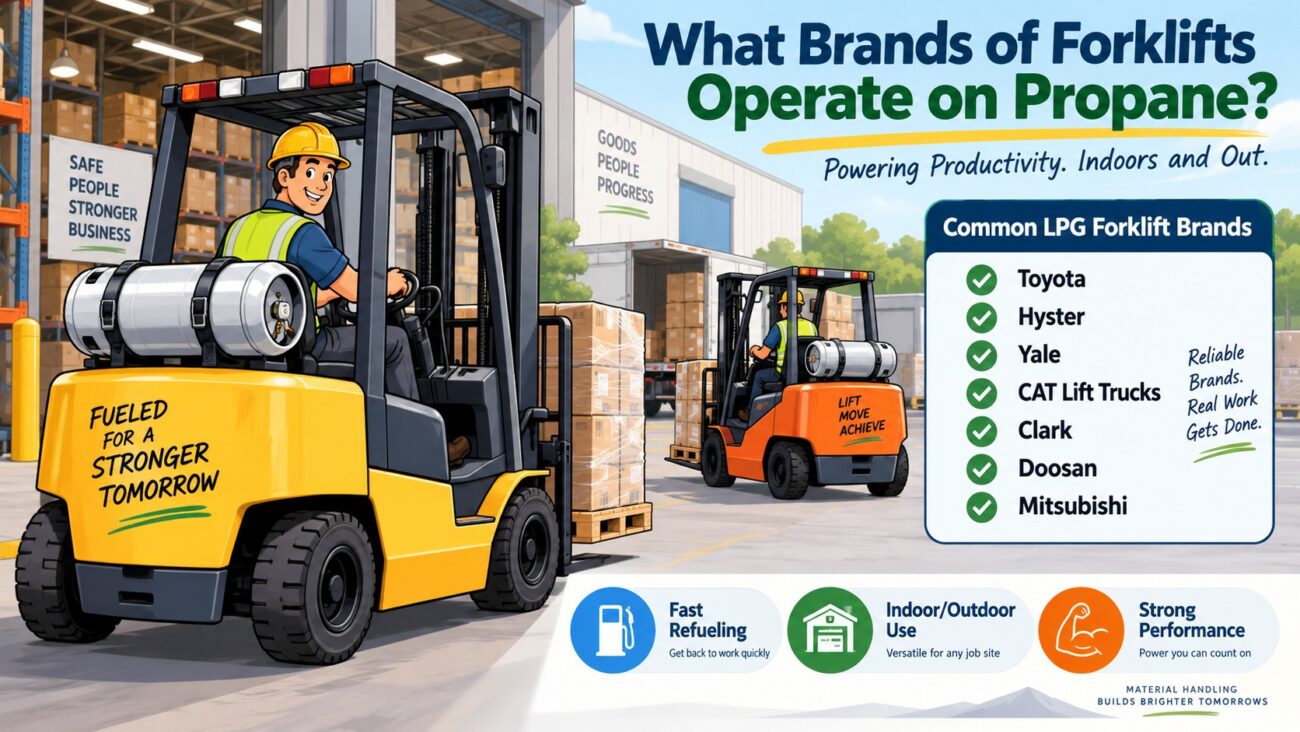
| Liquid propane gas | Fast cylinder replacement and consistent engine output | Indoor and outdoor work with suitable ventilation |
| Gasoline | Familiar engine technology and quick refueling | Primarily outdoor or properly controlled applications |
| Diesel | Strong torque and efficient heavy-duty performance | Outdoor yards, construction, and heavy industry |
| Hydrogen fuel cell | Fast refueling and zero tailpipe emissions at the truck | Specialized high-throughput fleets |
Electric vs. Internal Combustion Power
Electric forklifts provide quiet operation, immediate motor torque, and fewer engine-related maintenance items. Modern lithium-powered forklift models may also support opportunity charging and demanding multi-shift schedules.
Internal combustion forklifts offer quick refueling and can be suitable for outdoor, heavy-duty, or remote applications where charging infrastructure is unavailable.
The best power source depends on:
- Indoor or outdoor use
- Load capacity
- Daily operating hours
- Available charging or fuel infrastructure
- Temperature and environmental conditions
- Maintenance capability
- Emissions and noise requirements
Final Answer
To get more power from a forklift, focus on restoring and maintaining its original performance. Keep batteries correctly charged, use compatible chargers, maintain lead-acid water levels, and respond promptly to battery or controller faults.
For LPG, gasoline, and diesel forklifts, change engine oil and filters on schedule, maintain clean airflow, inspect the fuel system, and prevent overheating.
Correct tires, properly released brakes, clean hydraulic fluid, suitable attachments, and efficient operating habits can also improve travel and lifting performance.
Never increase hydraulic pressure, bypass safety controls, modify controller settings, or exceed the data-plate capacity. When a forklift remains weak after basic maintenance, remove it from service and arrange professional diagnosis.
Add a review
Your email address will not be published. Required fields are marked *