
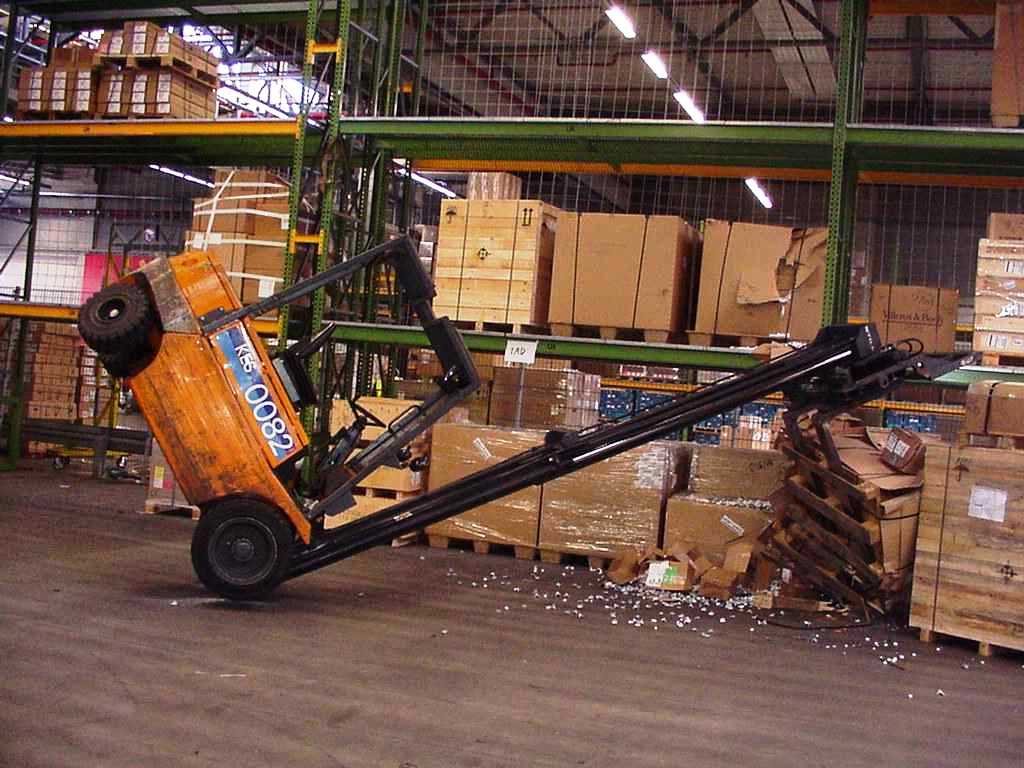
what should you do if a forklift is tipping over
If a forklift begins to tip over, your immediate reaction can mean the difference between a close call and a serious injury. Follow this critical survival procedure.
Immediate Response: Stay Inside and Brace
When a forklift starts tipping, your instinct might be to jump out. Do not jump. Jumping exposes you to being crushed by the overhead guard or the tipping mass. Instead, stay in the operator compartment with your seatbelt fastened (if equipped). Brace yourself by gripping the steering wheel firmly, planting your feet, and leaning away from the direction of the tip. This “stay-with-the-truck” approach is the only safe action, as statistics show that ejected operators are far more likely to be killed.
Why Jumping Is Deadly
A tipping forklift can weigh several tons. The overhead guard, counterweight, and mast move in violent arcs. If you jump, you fall directly into the “crush zone” — the area where the vehicle will land. Remaining inside, protected by the cage and guard, gives you the best chance of survival. For modern equipment like the Liftron Material Handling fleet, reinforced cabs and seatbelt interlocks further reduce risk, but operator discipline remains key.
Step-by-Step: How to React During a Tip-Over
Memorize these steps so they become automatic during an emergency:
- Do not jump. Restrain yourself in the seat.
- Hold the steering wheel tightly. Brace your feet against the floorboard.
- Lean away from the tip. If the forklift is falling to the left, lean right. This shifts your center of gravity away from the impact.
- Keep your arms and legs inside. Do not try to stop the fall with your limbs.
- After the stop, turn off the engine, wait for help, and do not move until the vehicle is secured.
Prevention: Avoid Tip-Over Risks in the First Place
Prevention is always the best strategy. Most tip-overs occur due to three main causes: speed, load instability, and uneven surfaces. Follow these guidelines:
Load Handling Best Practices
- Always check the load capacity plate. Never exceed the rated capacity.
- Keep the load centered and as low as possible during travel (4–6 inches off the ground).
- Tilt the mast back to stabilize the load.
- Avoid sudden stops, sharp turns, or jerky movements — especially when carrying a heavy load.
Terrain and Speed Awareness
- Reduce speed on ramps, wet floors, or uneven surfaces.
- Approach dock plates and trailers slowly and squarely.
- Never turn on a slope. If you must travel on an incline, drive with the load uphill.
Equipment Maintenance
Regular inspection and maintenance of your forklift — such as those offered by Liftron Material Handling — ensure that brakes, steering, tires, and stability systems are in top condition. A well-maintained forklift is less likely to tip. For advanced stability, consider models like the Liftron DL SERIES, which features a low center of gravity due to its lithium-ion battery placement, significantly reducing tip-over risk.
What to Do After a Tip-Over
Once the forklift has stopped moving, turn off the ignition immediately to prevent fires or fuel leaks. Do not try to exit until emergency personnel arrive. If you are injured, stay still and call for help. If you are uninjured, wait for proper support to right the vehicle — never attempt to lift or roll it yourself.
Post-Incident Reporting
Report every tip-over, even if no one was hurt. This helps identify hazards like floor damage, overloading patterns, or operator training gaps. Use a formal incident report form and include photos of the scene.
Training and Drills: The Missing Link
Many operators know the theory but freeze in real emergencies. Companies like Liftron Material Handling emphasize hands-on safety training that includes simulated tip-over scenarios. Regular drills — at least twice a year — reinforce the “do not jump” reflex. Practice these drills with all operators, including supervisors and temporary workers.
Key Training Topics
| Topic | Why It Matters |
|---|---|
| Load center and capacity | Overloaded or off-center loads cause instability. |
| Travel speed and turning | Sharp turns at speed are a top cause of tip-overs. |
| Ramp and incline operation | Incorrect direction can tip the truck. |
| Emergency procedures | Knowing the correct reaction saves lives. |
Special Considerations for Lithium-Ion Forklifts
Lithium-ion forklifts, such as the Liftron DL SERIES, offer a lower battery weight and a more compact design, which can actually improve stability. However, they also have different weight distribution compared to lead-acid models. Operators must be trained on the specific characteristics of their equipment. Always refer to the manufacturer’s manual for safe operation.
Final Takeaway
When a forklift tips, your survival depends on a single decision: stay inside, brace, and lean away. No load, schedule, or convenience is worth risking your life. Invest in quality equipment, thorough training, and regular maintenance — starting with a trusted partner like Liftron Material Handling. Their advanced models, including the Liftron DL SERIES, are designed with operator safety and stability as a priority. Remember: the safest forklift is one that never tips — but if it does, the right reaction keeps you safe.

Add a review
Your email address will not be published. Required fields are marked *