
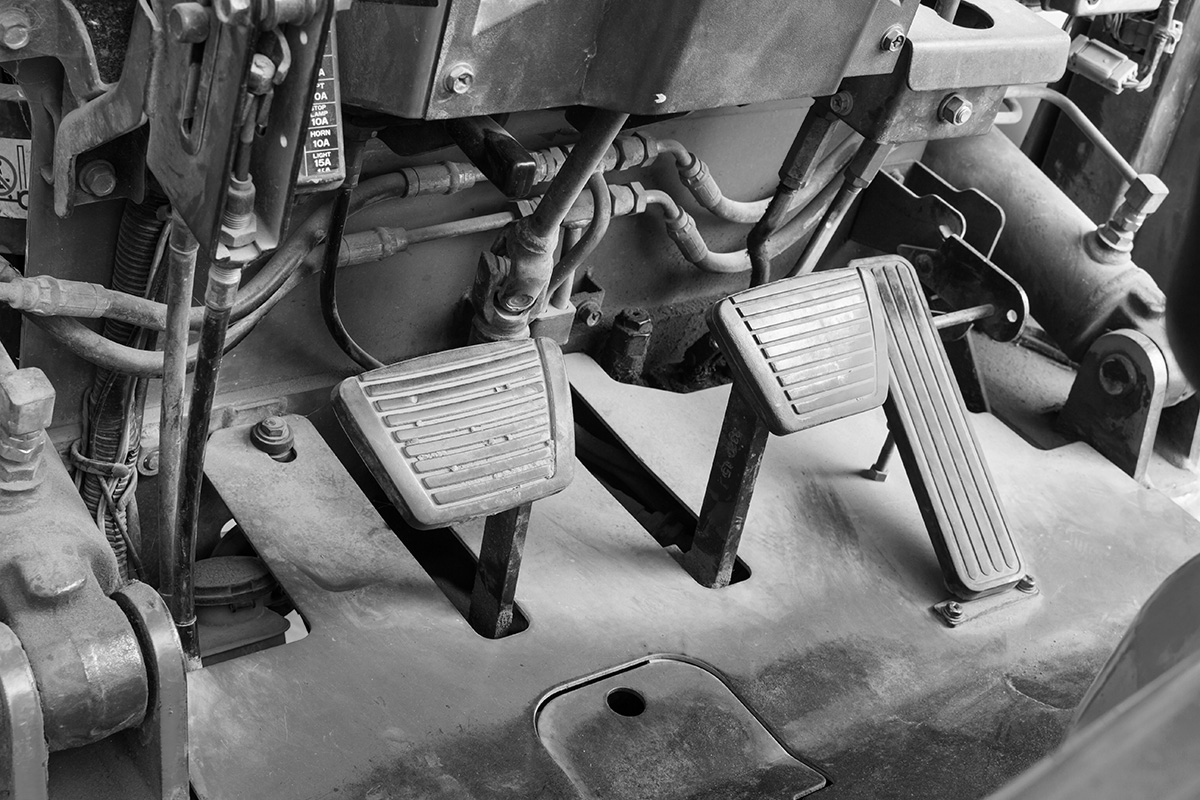
Why Do Forklifts Have 3 Pedals?
Why Do Forklifts Have 3 Pedals?
Forklifts, especially internal combustion models, often have three pedals because they are designed to perform two important jobs at the same time: driving and lifting. Unlike a car, a forklift is not only used to move from one place to another. It must also lift heavy loads, position pallets accurately, and operate hydraulic functions while moving at very low speeds.
The three-pedal layout gives the operator more control during loading, unloading, stacking, and maneuvering in tight spaces. The accelerator controls engine speed, the brake slows or stops the machine, and the inching pedal allows the operator to creep forward slowly while still keeping the engine revved enough to power the hydraulic system.
This is especially useful when placing a pallet into a rack, approaching a truck trailer, or lifting a load near a dock. The operator may need hydraulic power for the mast while also moving only a few inches at a time.
What Do the Three Pedals Do on a Forklift?
Although layouts can vary by model, many internal combustion forklifts use three main pedals: the inching pedal, the service brake, and the accelerator. Each pedal has a separate function, but they work together during precise material handling.
| Pedal | Main Function | When It Is Used |
|---|---|---|
| Inching Pedal | Disengages or partially disengages the transmission while allowing engine revs for hydraulic power | Used for slow approach, pallet positioning, and lifting while creeping |
| Service Brake | Slows or stops the forklift | Used when stopping, parking, controlling downhill movement, or avoiding hazards |
| Accelerator | Controls engine speed and travel speed | Used for driving, accelerating, and powering hydraulic functions |
1. Inching Pedal
The inching pedal is the pedal that most often confuses new operators. It is usually located to the left of the brake pedal. Its main job is to reduce or disconnect transmission drive while still allowing the engine to run at a higher speed.
This matters because many forklift hydraulic systems rely on engine speed. If the operator needs to lift quickly or tilt the mast while moving very slowly, the inching pedal makes that possible. The operator can press the inching pedal, apply some accelerator, and operate the hydraulic controls without the forklift moving too fast.
Pressing the inching pedal lightly allows the forklift to creep. Pressing it farther may apply braking force, depending on the machine design. This gives the operator smooth control when handling pallets in tight areas.
Common Uses of the Inching Pedal
- Approaching a pallet slowly
- Positioning forks under a load
- Lifting while moving only a few inches
- Stacking pallets in racks
- Loading or unloading trailers
- Working near dock edges or narrow spaces
2. Service Brake
The service brake is the standard brake pedal. It is used to slow or stop the forklift during normal travel. Operators use it when approaching intersections, stopping at pedestrian walkways, parking, or controlling movement in busy warehouse areas.
Unlike the inching pedal, the service brake is not intended to manage hydraulic speed. Its main function is stopping power. Operators should understand the difference between slowing with the inching pedal during close positioning and braking with the service brake during travel.
3. Accelerator
The accelerator is similar to a gas pedal in a car. It controls engine speed and travel velocity. On an internal combustion forklift, pressing the accelerator increases engine RPM, which can also increase available hydraulic power.
This is one reason the inching pedal is important. Without it, increasing engine speed could make the forklift move too quickly during delicate lifting work. With the inching pedal, the operator can keep the engine revved while limiting travel movement.
Why Forklift Pedals Are Different From Car Pedals
Many new operators assume forklift pedals should work like car pedals. However, forklifts are designed for material handling, not normal road driving. They carry heavy loads, steer from the rear, turn tightly, and often operate in confined spaces near people, racks, doors, and trailers.
A car usually needs smooth acceleration and braking. A forklift needs precise load positioning, hydraulic lifting, mast tilting, and slow-speed control. The third pedal helps the operator balance motion and hydraulic power.
| Vehicle Type | Pedal Purpose | Main Difference |
|---|---|---|
| Car | Accelerate, brake, and sometimes clutch | Designed mainly for road travel |
| Forklift | Accelerate, brake, and inch/load-position | Designed for lifting, stacking, and tight maneuvering |
| Manual Transmission Vehicle | Clutch disconnects engine from transmission for gear shifting | Clutch is mainly for gear changes |
| Forklift With Inching Pedal | Inching pedal allows slow travel while maintaining hydraulic power | Used for precise pallet handling |
Is the Inching Pedal the Same as a Clutch?
No, the inching pedal is not the same as a traditional manual clutch. A clutch in a manual vehicle is used to change gears by disconnecting the engine from the transmission. A forklift inching pedal is used to control the transmission engagement during slow-speed material handling.
When the inching pedal is pressed, the forklift can reduce travel drive while the engine continues to provide power to the hydraulic system. This is why operators can raise a load quickly while creeping forward slowly.
Why Internal Combustion Forklifts Commonly Have 3 Pedals
Internal combustion forklifts often use the three-pedal layout because engine RPM affects hydraulic performance. When lifting a heavy pallet, the operator may need more engine speed for stronger hydraulic response. But in a warehouse, moving too fast while lifting is dangerous.
The inching pedal solves this problem. It lets the operator increase engine speed without allowing full drive power to the wheels. This makes the forklift easier to control during close positioning.
Do Electric Forklifts Have 3 Pedals?
Not always. Many electric forklifts have different pedal and control layouts because electric motors can deliver precise power without the same engine RPM requirements as internal combustion forklifts. Some electric forklifts may have two pedals, one-pedal style travel controls, or directional switches depending on the model.
However, the same principle applies: the operator still needs safe control over speed, stopping, lifting, lowering, and positioning. Whether the machine has two pedals or three, safe operation depends on training and understanding the controls.
How to Use Forklift Pedals Safely
Proper pedal use improves safety, reduces load damage, and helps operators work more efficiently. New operators should practice in an open area before working near racks, trucks, pedestrians, or valuable inventory.
- Read the operator manual for the exact forklift model
- Identify the inching pedal, service brake, and accelerator before driving
- Practice moving slowly without a load
- Use the inching pedal for close positioning, not high-speed travel
- Use the service brake for controlled stopping
- Accelerate smoothly and avoid sudden pedal movements
- Keep loads low while traveling
- Slow down before turning or entering intersections
- Never ride both brake and accelerator unnecessarily
- Complete formal training and workplace evaluation before operating
Common Mistakes New Operators Make
- Confusing the inching pedal with a manual clutch
- Pressing the accelerator too hard while close to a rack
- Using the inching pedal instead of the service brake during normal travel
- Failing to slow down before turning
- Lifting too high while moving
- Not checking the pedal layout before operating a different forklift
- Using sudden pedal movements that shift or damage the load
What Is the Most Popular Forklift?
The most popular forklift type in many warehouse and industrial environments is the counterbalance forklift. It is widely used because it is versatile, easy to understand, and capable of handling many common pallet movement tasks.
Counterbalance forklifts are available in electric and internal combustion versions. Electric counterbalance forklifts are common indoors because they are quieter and do not produce direct exhaust emissions during operation. Internal combustion counterbalance forklifts are often used outdoors, in yards, or in applications that require fast refueling and rugged performance.
For warehouses, the electric counterbalance forklift is especially popular because it can handle loading, unloading, pallet transport, and stacking in a clean indoor environment.
Forklift Pedal Functions Summary
| Pedal | Simple Explanation | Main Benefit |
|---|---|---|
| Inching Pedal | Lets the forklift move very slowly while keeping hydraulic power available | Precise pallet positioning |
| Service Brake | Stops or slows the forklift | Safe travel control |
| Accelerator | Controls travel speed and engine RPM | Power for movement and lifting |
Conclusion
Forklifts have three pedals because they must combine travel control with lifting performance. The inching pedal allows slow, precise movement while keeping engine power available for hydraulic lifting. The service brake stops the machine, and the accelerator controls engine speed and travel.
Understanding the three-pedal system helps operators use a forklift more safely and efficiently. Whether the machine is used for loading trailers, stacking pallets, or moving products through a warehouse, correct pedal control is essential for smooth and safe operation.

Add a review
Your email address will not be published. Required fields are marked *