
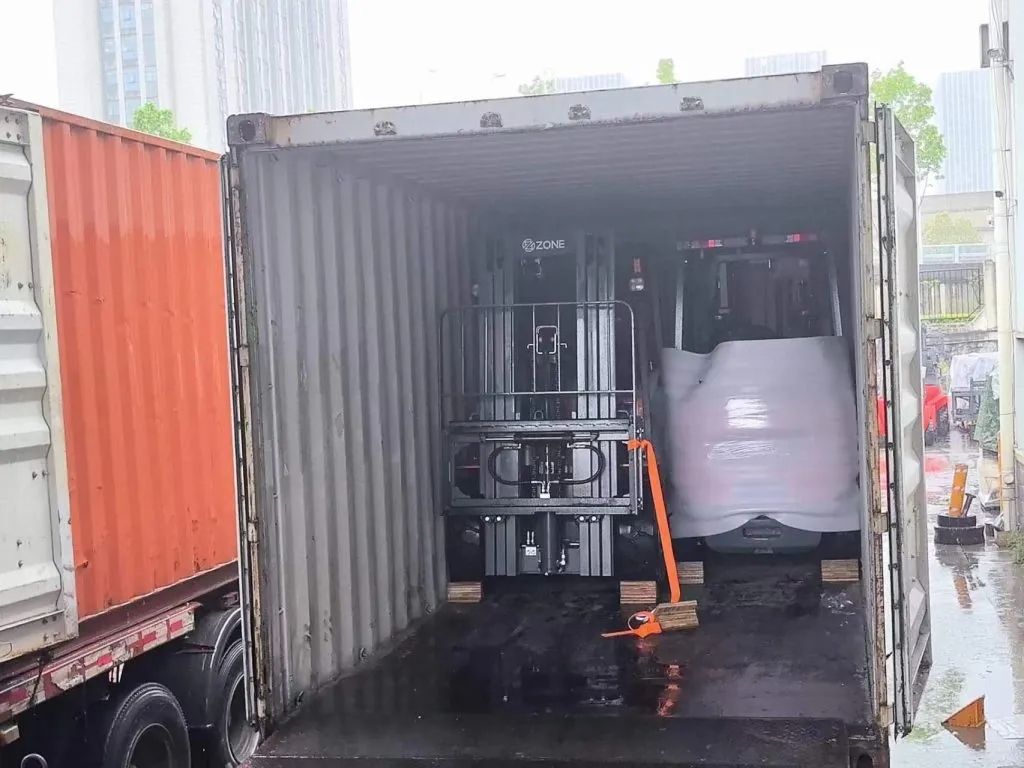
Can a Forklift Go in a POD Container?
Can a Forklift Drive Into a PODS Container?
In most residential moving situations, the answer is no. A standard forklift should not be driven inside a PODS container because the container floor is not designed to support that kind of concentrated machine weight.
A forklift can weigh thousands of pounds before it carries anything. When it drives, turns, brakes, or lifts a pallet, much of that weight is concentrated through the wheels. This can crush, crack, bend, or puncture a lighter container floor.
PODS containers are built for household moving and storage, not for forklift traffic inside the unit. They are commonly loaded by hand, with moving carts, furniture dollies, sliders, ramps, or other lighter handling methods.
Why a Forklift Inside a PODS Container Is Risky
The biggest risk is floor damage. Residential portable containers often use lighter floor materials compared with industrial freight containers. A forklift may exceed the safe floor load even before the container is packed with furniture, appliances, tools, or inventory.
PODS also publishes container weight limits: 8-foot containers are listed at 5,200 lb, 12-foot containers at 4,700 lb, and 16-foot containers at 4,200 lb. These limits are for the contents packed into the container, and they show how quickly a heavy machine could create a weight problem. :contentReference[oaicite:0]{index=0}
Weight Limits and Risks
1. Floor Capacity
A standard forklift can weigh roughly 3,000 to 9,000+ pounds depending on capacity, battery, counterweight, tire type, and model. That weight is not spread evenly across the entire floor. It is concentrated at tire contact points, which creates high pressure in small areas.
If the floor is not rated for forklift traffic, the tires may punch through, permanently dent the surface, loosen panels, crack decking, or damage the supporting frame.
2. Container Weight Limits
Container weight limits are another issue. If an empty forklift already weighs more than the rated content limit of the container, driving it inside would be inappropriate even before adding cargo. PODS’ published limits show that different container sizes have different maximum content weights. :contentReference[oaicite:1]{index=1}
| PODS Container Size | Published Weight Limit | Forklift Concern |
|---|---|---|
| 8-foot container | 5,200 lb | A medium forklift may approach or exceed this before cargo is added |
| 12-foot container | 4,700 lb | Many forklifts exceed this by themselves |
| 16-foot container | 4,200 lb | Even lighter forklifts may create serious overload risk |
3. Liability
If the container is damaged, you may be financially responsible for repairs. Damage may also affect your belongings inside the container. A cracked or weakened floor can shift cargo, create moisture problems, or compromise safe transport.
If a forklift damages the container while it is on a driveway, street, job site, or storage facility, the issue may also create safety and insurance complications.
PODS Containers vs Industrial Shipping Containers
It is important to separate PODS-style residential moving containers from industrial shipping containers. Some freight containers are designed for heavier industrial loading methods, but even standard shipping containers have specific rules for forklift access, axle load, wheel contact area, and floor strength.
Industry container loading guidance warns that forklift traffic can damage container floors if the wheel load is too high or improperly distributed. In other words, even with a freight container, forklift entry requires checking the container’s floor rating and equipment specifications. :contentReference[oaicite:2]{index=2}
| Container Type | Typical Purpose | Forklift Entry? |
|---|---|---|
| PODS residential moving container | Household moving and storage | Generally not recommended |
| Steel-floor industrial storage container | Commercial storage and freight handling | May be possible if rated properly |
| Standard shipping container | Freight transport | Only if floor rating, axle load, and clearance allow |
| Container with dock loading setup | Industrial loading operations | Depends on ramp, dock plate, forklift size, and container floor rating |
Safer Alternatives for Loading a PODS Container
Instead of driving a forklift inside, use methods that place less concentrated force on the floor and allow safer control of heavy items.
Ramp and Pallet Jack
One safer option is to bring the forklift only to the edge of the container entrance, then use a properly rated ramp and a manual or electric pallet jack to move items inside. The pallet jack is usually much lighter than a forklift and spreads the load differently.
This is especially useful for palletized boxes, small commercial inventory, or heavy but manageable items.
Roller Skates, Furniture Dollies, and Sliders
For large household items, furniture dollies and sliders are often better. They allow movers to roll refrigerators, cabinets, safes, tool chests, and furniture into position without putting forklift wheel loads on the container floor.
Hire Professional Moving Help
If you have heavy or awkward items, hiring local movers is often safer and cheaper than damaging the container. Professional movers can use ramps, straps, dollies, lifting techniques, and load planning to move items without heavy equipment entering the container.
How to Load Heavy Items Safely
- Check the container provider’s loading rules before using any equipment
- Confirm the container’s weight limit and do not exceed it
- Keep the forklift outside the container unless written approval says otherwise
- Use a rated ramp that matches the container threshold height
- Move palletized loads with a pallet jack instead of driving a forklift inside
- Place heavy items low and distribute weight evenly across the floor
- Use straps, blankets, and blocking to prevent load shifting
- Keep fragile items away from heavy rolling equipment
- Stop loading if the floor flexes, cracks, or feels unstable
- Ask professional movers for help with unusually heavy items
When Can a Forklift Be Used Near a PODS Container?
A forklift may still be useful near a PODS container, but it should normally stay outside. It can position heavy palletized goods near the entrance, bring materials to the loading area, or lift items onto a loading platform if the setup is safe and approved.
The safer method is to use the forklift as a support tool near the door, then transfer the load into the container with lighter equipment. This reduces the chance of floor damage and protects both the container and cargo.
If your operation regularly requires loading pallets with forklifts, an industrial storage container, warehouse dock, or freight-rated container may be more appropriate than a residential moving container.
Common Mistakes to Avoid
- Driving a forklift into a PODS container without approval
- Assuming all containers have the same floor capacity
- Ignoring the container’s total weight limit
- Using a narrow or weak ramp for heavy equipment
- Turning a forklift inside a container
- Loading heavy cargo at one end only
- Failing to secure items before transport
- Confusing residential moving containers with industrial shipping containers
Should You Use a Forklift for PODS Loading?
In most cases, the forklift should be used only outside the container. It can stage items at the entrance, but it should not drive onto the floor. For loading inside, use pallet jacks, hand trucks, dollies, sliders, moving ramps, or professional labor.
If the item is extremely heavy, ask whether a different container type or freight service is more appropriate. A PODS container is convenient for moving and storage, but it is not designed to function as a forklift-access industrial trailer.
Conclusion
Generally, a forklift should not go inside a PODS container. The floor is not designed for concentrated forklift wheel loads, and the container’s total weight limits are far below what many forklifts weigh by themselves.
The safer approach is to keep forklifts outside the container and use ramps, pallet jacks, dollies, sliders, or professional movers to place items inside. This protects the container, reduces liability, and keeps the loading process safer for both people and cargo.
Add a review
Your email address will not be published. Required fields are marked *