

What Specific Forklift Certification Is Required for Employment?
To operate forklifts in the United States, OSHA requires operators to be properly trained and certified for the specific equipment and work environment they will use. This certification ensures operators understand load handling, stability, workplace hazards, and safe driving techniques.
Unlike a driver’s license, forklift certification is not issued by a government agency. Instead, employers are responsible for ensuring each operator is trained and evaluated before operating powered industrial trucks such as forklifts, pallet jacks, and reach trucks.
The 3-Part Forklift Certification Process
OSHA requires a structured training program consisting of three main components:
- Formal Instruction: Classroom or online learning covering safety rules, load limits, and equipment types.
- Practical Training: Hands-on experience operating a forklift under supervision.
- Performance Evaluation: Final assessment in the actual workplace environment.
What Does OSHA Require for Forklift Certification?
OSHA standard 29 CFR 1910.178 requires that employers ensure operators are competent in safely operating forklifts. This includes understanding vehicle controls, inspection procedures, load stability, and hazard recognition.
Operators must be evaluated in the specific type of forklift they will use. For example, operating a counterbalance forklift differs from operating a reach truck or order picker.
Types of Forklift Certifications
Forklift certification is not one single category. It is divided based on equipment type and workplace conditions.
| Certification Type | Equipment Covered | Typical Use Case |
|---|---|---|
| Counterbalance Forklift | Standard sit-down forklifts | Warehouses, loading docks |
| Reach Truck Certification | Narrow aisle warehouse equipment | High rack storage systems |
| Order Picker Certification | Elevated operator platforms | Picking individual items from racks |
| Rough Terrain Forklift | Outdoor heavy-duty forklifts | Construction and yard operations |
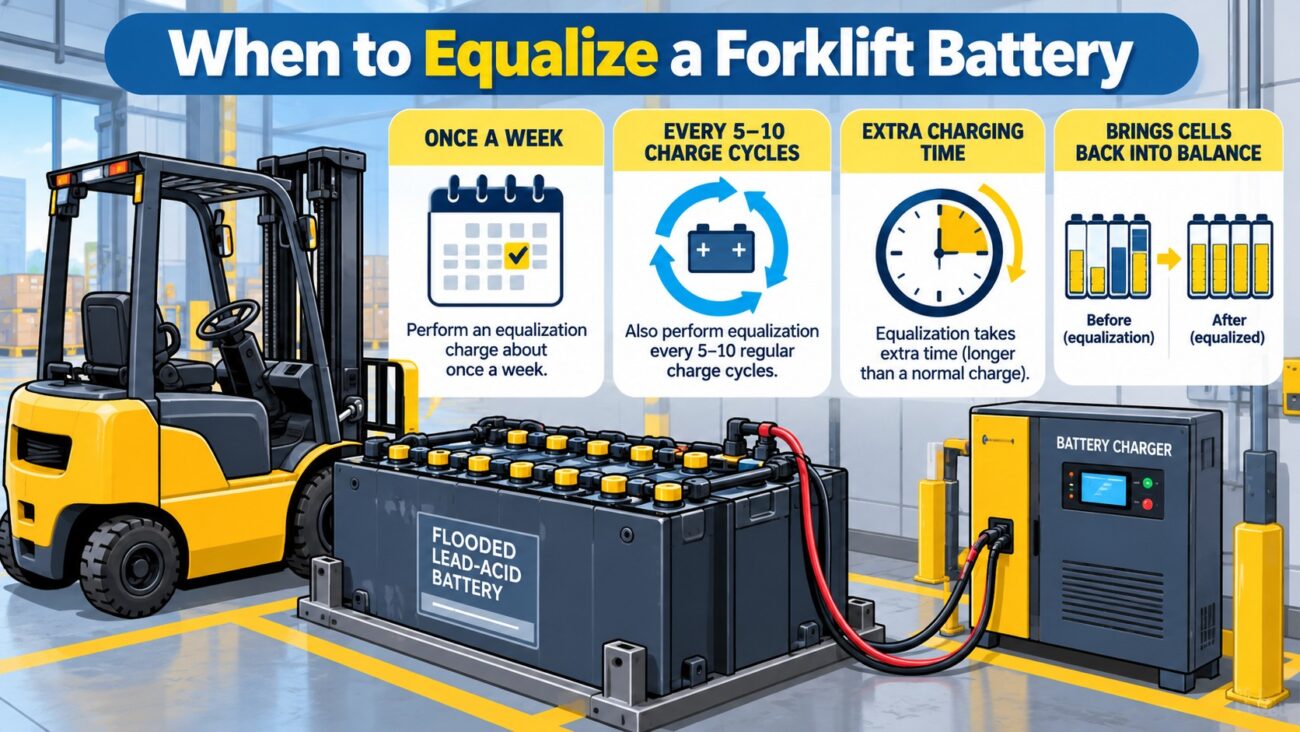
Different workplaces may require additional training depending on attachments, load types, or environmental hazards. For example, operating modern electric equipment such as forklifts may include battery safety and charging procedures.
Step-by-Step Guide to Getting Certified
- Enroll in training: Complete OSHA-compliant forklift safety instruction.
- Learn equipment basics: Understand controls, load charts, and safety systems.
- Complete hands-on training: Practice under supervision with real equipment.
- Pass evaluation: Demonstrate safe operation in the workplace.
- Get employer certification: Employer documents and authorizes your operation.
- Maintain certification: Renew every 3 years or after safety incidents.
Why Forklift Certification Is Required
Forklifts are powerful machines that can weigh several tons and lift heavy loads at height. Without proper training, risks include tip-overs, collisions, dropped loads, and pedestrian injuries.
Certification ensures operators understand stability principles, load limits, and safe operating practices, reducing workplace accidents and improving efficiency.
Common Mistakes to Avoid
- Assuming a driver’s license is enough (it is not)
- Skipping hands-on training
- Ignoring load capacity limits
- Operating different forklift types without retraining
Many modern forklifts include advanced features, but even advanced equipment requires certified operators to ensure safe handling.
Conclusion
Forklift employment requires OSHA-compliant certification that includes training, practical experience, and employer evaluation. There is no universal license; instead, certification is tied to the specific equipment and workplace.
Proper certification ensures operators can safely handle forklifts, reduce workplace risks, and comply with OSHA safety regulations in real-world environments.

Add a review
Your email address will not be published. Required fields are marked *