
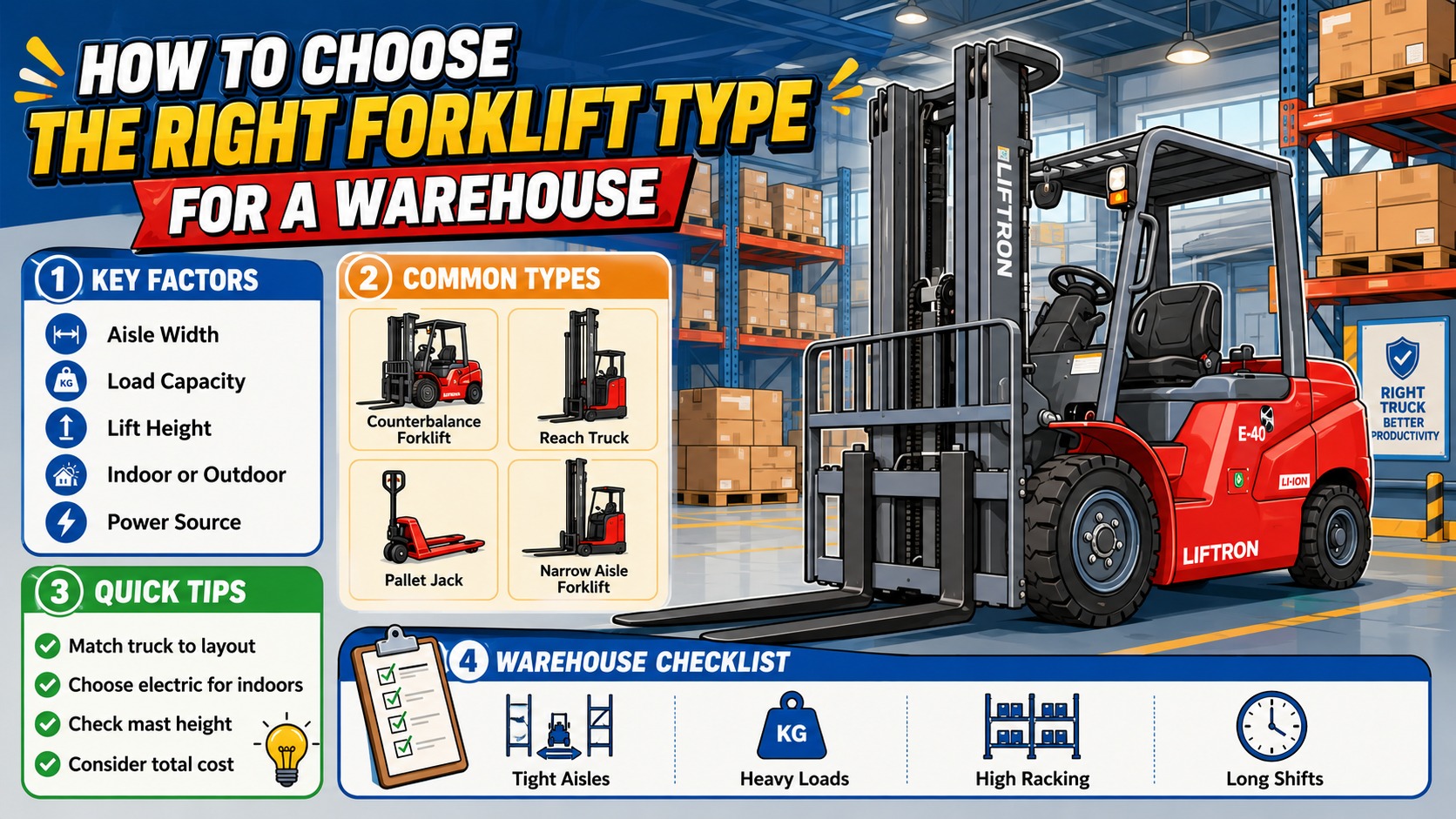
How to Choose the Right Forklift Type for a Warehouse
Modern equipment solutions from Liftron Forklifts are designed to support warehouse operations with advanced lithium-ion technology, offering long runtime, fast charging, and reduced maintenance.
Understanding Warehouse Forklift Requirements
Before selecting a forklift, you must evaluate your warehouse layout and operational demands. Warehouses differ in size, storage density, and workflow design, which directly affects forklift selection.
Forklifts used in modern facilities, including Liftron Forklifts, are engineered to optimize efficiency in tight warehouse spaces while maintaining strong lifting performance.
Step 1: Match the Forklift to Your Warehouse Layout
The layout of your warehouse determines the type of forklift you should use. Narrow aisles require compact equipment, while wide-open spaces allow for larger counterbalance forklifts.
- Narrow aisles → Reach trucks or narrow-aisle forklifts
- Standard aisles → Counterbalance forklifts
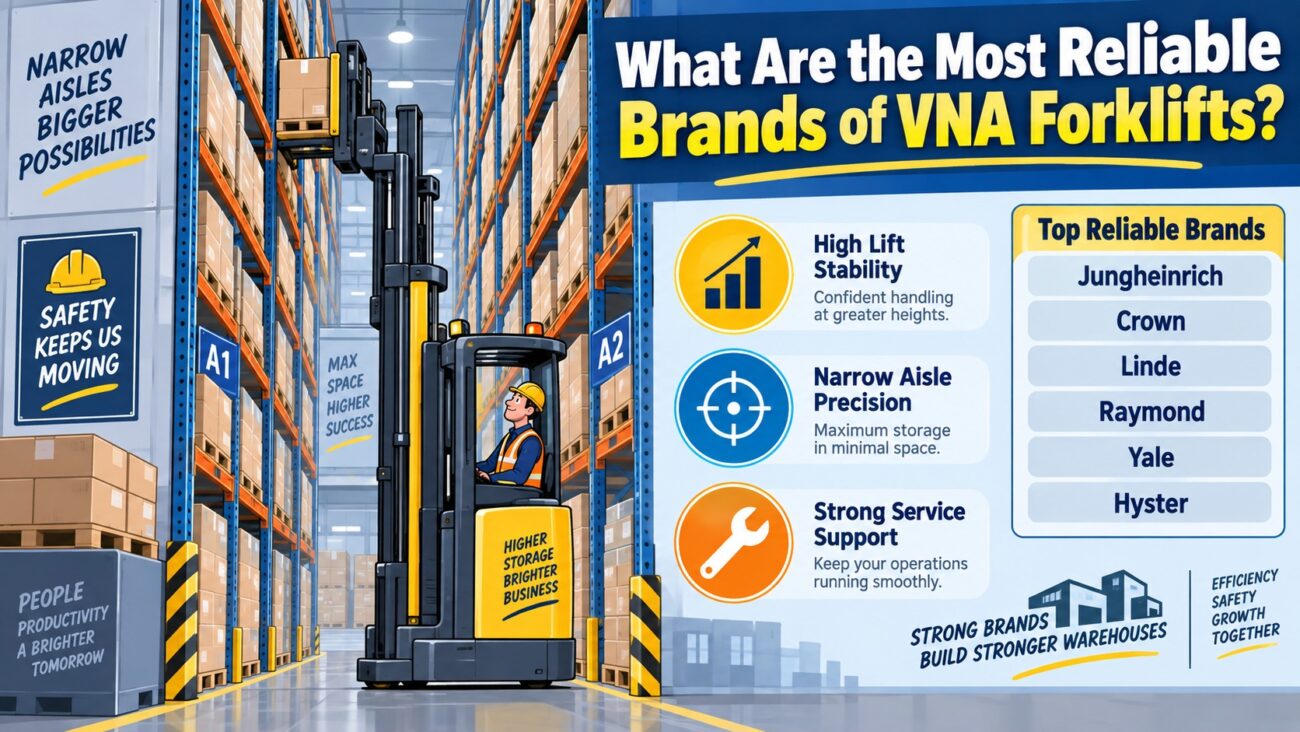
- High-density storage → VNA (very narrow aisle) forklifts
Step 2: Indoor vs Outdoor Use
Environmental conditions are a major factor in forklift selection. Indoor warehouses typically require electric forklifts due to zero emissions, while outdoor operations may need more rugged equipment.
- Indoor: Electric forklifts (clean, quiet, efficient)
- Outdoor: Diesel or pneumatic tire forklifts
- Mixed use: Hybrid or propane-powered forklifts
Step 3: Load Capacity and Mast Requirements
Every warehouse forklift must be matched to the weight of the materials it handles. Overloading a forklift can lead to instability and accidents.
| Load Type | Recommended Forklift |
|---|---|
| Light loads (under 3,000 lbs) | Compact electric forklift |
| Medium loads (3,000–6,000 lbs) | Standard counterbalance forklift |
| Heavy loads (6,000+ lbs) | High-capacity industrial forklift |
Step 4: Power Source and Operating Costs
Forklifts can be powered by electricity, propane, or diesel. Each has different advantages depending on warehouse operations.
- Electric: Low maintenance, ideal for indoor use
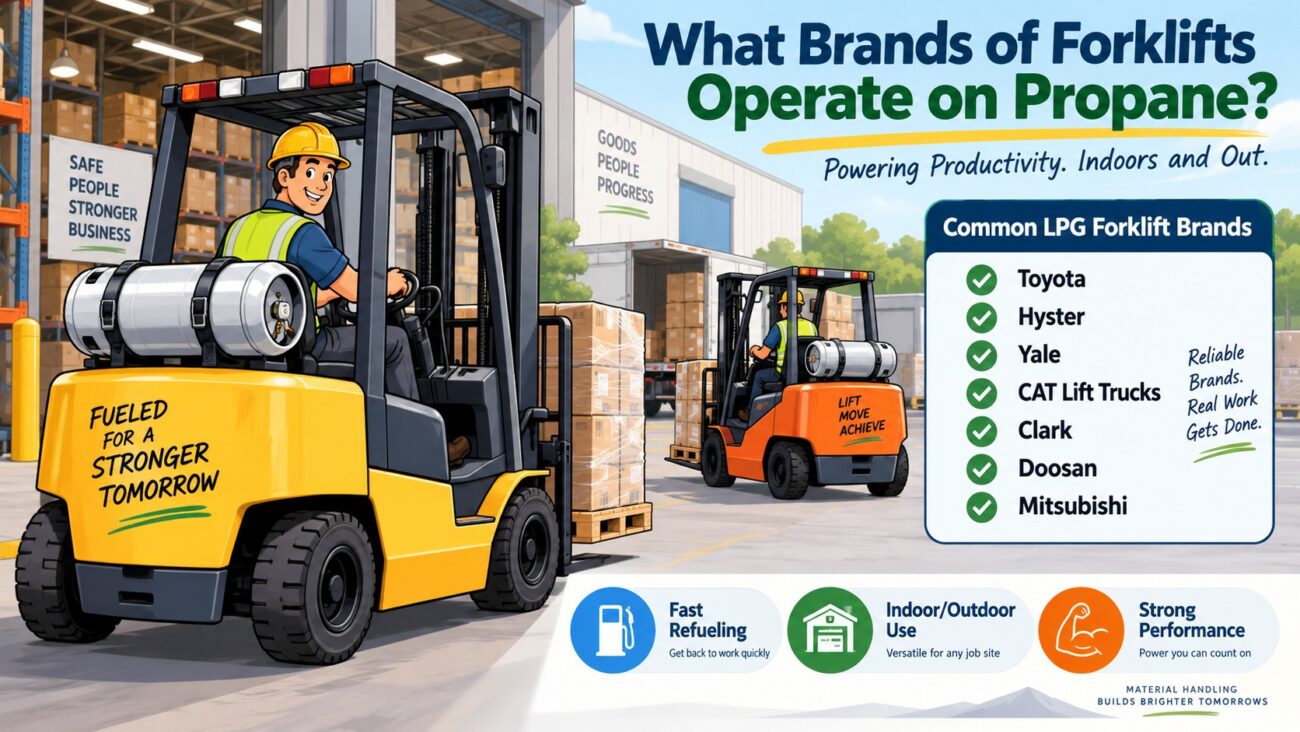
- Propane: Flexible indoor/outdoor use
- Diesel: High power for outdoor or heavy-duty tasks
Advanced lithium-ion forklifts offered by Liftron Forklifts improve efficiency by reducing downtime and charging time compared to traditional battery systems.
Step 5: Evaluate Total Cost of Ownership
Beyond purchase or rental price, you should consider maintenance, energy consumption, operator training, and downtime costs.
- Battery replacement or charging costs
- Routine maintenance requirements
- Operator efficiency and safety training
- Equipment lifespan and resale value
What Is the Most Common Forklift in a Warehouse?
The most common warehouse forklift is the electric counterbalance forklift due to its versatility, ease of operation, and suitability for indoor environments.
Are Modern Forklifts Suitable for Warehouses?
Yes, modern lithium-ion forklifts are highly suitable for warehouse operations. They offer longer runtime, faster charging, and improved energy efficiency, making them ideal for multi-shift logistics environments.
Solutions from Liftron Forklifts are designed specifically for warehouse optimization and modern supply chain demands.
Final Answer
To choose the right forklift type for a warehouse, you must evaluate your layout, load capacity, lift height, environment, and total operating cost. Matching these factors with the correct forklift type ensures safety, efficiency, and long-term productivity in warehouse operations.
Add a review
Your email address will not be published. Required fields are marked *