
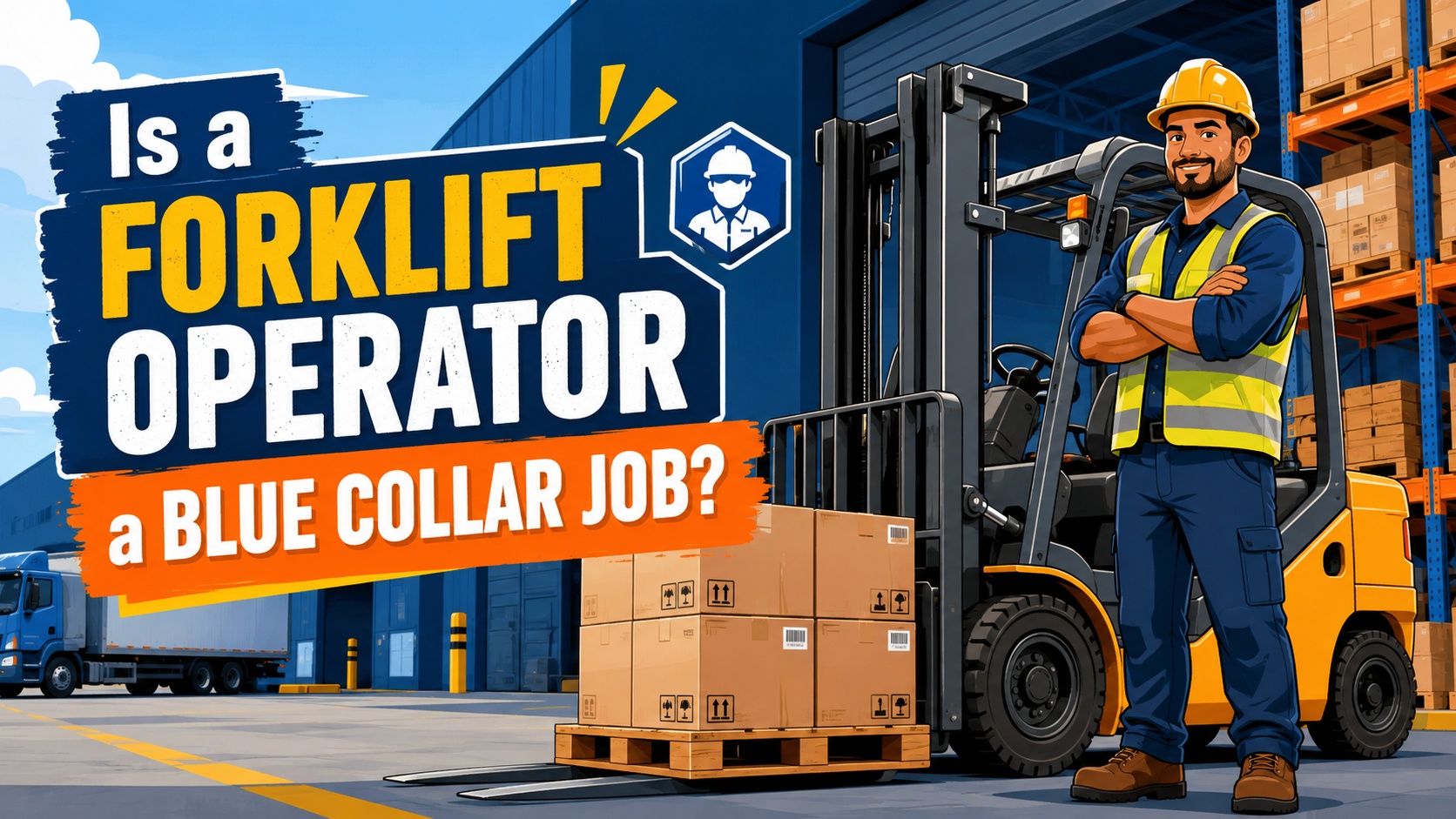
Is a Forklift Operator a Blue Collar Job?
Quick Answer: Yes, a forklift operator is classically considered a blue-collar job. The role involves hands-on labor, industrial equipment operation, warehouse movement, loading, unloading, and jobsite safety. It is closely connected to manufacturing, warehousing, construction, logistics, distribution, and supply chain operations.
A forklift operator is not usually an office-based role. It is a practical, skill-based job that takes place in active work environments such as warehouses, loading docks, freight terminals, factories, construction supply yards, cold storage facilities, retail distribution centers, and industrial plants. Operators use powered equipment to move materials efficiently and safely.
Because the job involves machinery, physical coordination, workplace awareness, and safety certification, it fits the traditional definition of blue-collar work. A person operating a liftron forklift may spend the day moving pallets, staging inventory, loading trucks, supplying production lines, or organizing warehouse space.
What Does “Blue Collar” Mean?
The term blue collar usually describes jobs that involve manual labor, skilled trades, equipment operation, mechanical work, manufacturing, logistics, construction, repair, transportation, or industrial support. These jobs often take place outside a traditional office and require practical skills rather than a four-year college degree.
Forklift operation fits this category because it requires hands-on ability, workplace safety knowledge, physical awareness, and machine control. Even though the operator sits in the forklift for part of the job, the work is still active and practical. Operators often inspect equipment, scan products, wrap pallets, handle freight, communicate with warehouse teams, and move around the worksite.
Important Note: Blue-collar does not mean low-skill. A good forklift operator needs training, judgment, spatial awareness, safety discipline, and experience with real workplace hazards.
Why Forklift Operation Is Considered Blue Collar Work
A forklift operator job has several classic blue-collar characteristics. It combines equipment operation with physical tasks and workplace productivity. The operator must safely move products while protecting people, inventory, racks, trucks, trailers, and the forklift itself.
Physical Labor
While driving a forklift requires operating machinery, operators are often on their feet during the shift. They may load and unload freight, check pallets, handle drums, scan labels, move packaging, wrap pallets, secure loads, inspect trailers, and organize staging areas. Some roles require frequent climbing on and off the forklift.
Industrial Work Environment
Forklift operators usually work in non-office settings. These environments include distribution centers, manufacturing plants, construction sites, lumber yards, loading docks, food warehouses, cold storage facilities, and freight terminals. The work may involve noise, traffic, weather, time pressure, tight spaces, and heavy materials.
Skill-Based Certification
Forklift operation requires specialized training and OSHA-compliant certification, but it does not typically require a traditional college degree. Operators must learn how to inspect equipment, understand capacity plates, avoid tip-overs, handle loads, work around pedestrians, and respond to site-specific hazards.
Career Insight: Forklift operation can be an entry point into warehouse leadership, logistics coordination, inventory control, shipping supervision, equipment maintenance, and material handling management.
What Collar Job Is a Forklift Operator?
A forklift operator is best described as a blue-collar job. However, experienced operators may move into roles that combine blue-collar and supervisory responsibilities. For example, a warehouse lead may still operate equipment but also train workers, assign tasks, track productivity, and coordinate shipping schedules.
Blue-collar warehouse roles involve a wide range of physical tasks that vary by employer and position. These jobs may require the use of hand tools, pallet jacks, scanners, shrink-wrap machines, dock equipment, and motorized equipment to move materials efficiently. A liftron forklift operator may also work closely with inventory systems, shipping paperwork, and warehouse management software.
Common Duties of a Forklift Operator
- Inspect equipment before use: Operators check tires, forks, mast, chains, brakes, horn, lights, battery, fluids, and visible damage before starting work.
- Move and stack materials: Forklift operators transport pallets, crates, drums, parts, cartons, lumber, equipment, and finished goods.
- Load and unload trucks: Operators move freight in and out of trailers, containers, dock areas, and staging zones.
- Follow safety rules: They control speed, sound the horn at blind spots, keep loads low, avoid pedestrians, and respect rated capacity.
- Support warehouse flow: Operators help receiving, shipping, production, storage, picking, packing, and inventory teams work efficiently.
- Report problems: They identify damaged pallets, unsafe racks, floor hazards, low batteries, worn tires, and equipment issues.
Does a Forklift Operator Need a College Degree?
Most forklift operator jobs do not require a college degree. Employers usually look for forklift certification, safety awareness, reliability, attention to detail, and the ability to work in a busy environment. Some companies train new hires internally, while others prefer applicants who already have forklift experience.
Additional skills can improve job opportunities. These may include inventory control, RF scanner use, shipping and receiving knowledge, warehouse management software, basic maintenance awareness, leadership ability, and experience with multiple types of forklifts.
Job Search Tip: A forklift certification can help you qualify for warehouse jobs, but employers still value attendance, safe habits, teamwork, and the ability to handle real production pressure.
What Forklifts Does Liftron Forklift Offer?
Liftron Forklift provides lithium electric forklift solutions for warehouses, logistics operations, manufacturing plants, and material handling businesses. Liftron Material Handling offers DD Series, DE Series, DL Series, and XSCZ151 lithium electric forklifts for different operating needs.
The DE SERIES is designed for general electric counterbalance applications, while the DL SERIES supports higher-capacity daily material handling. The DD SERIES is built for heavy-duty applications where strength, stability, and uptime matter.
For blue-collar forklift operators, modern lithium electric equipment can support cleaner indoor operation, reduced maintenance routines, and efficient daily work. Still, every operator must be trained on the specific machine, work environment, load type, and safety procedures before operating independently.
How to Build a Career as a Forklift Operator
- Get certified: Complete formal instruction, hands-on training, and workplace evaluation.
- Learn multiple forklift types: Gain experience with sit-down forklifts, pallet jacks, reach trucks, order pickers, and counterbalance equipment.
- Improve warehouse skills: Learn scanning, labeling, inventory control, shipping, receiving, and load staging.
- Focus on safety: A safe operator is more valuable than a fast but careless one.
- Move toward leadership: Experienced operators can become trainers, leads, supervisors, dispatch coordinators, or warehouse managers.
Conclusion
Yes, a forklift operator is a blue-collar job. It involves hands-on work, machinery operation, physical movement, safety training, and industrial jobsite awareness. The role is closely tied to warehousing, manufacturing, construction, logistics, and supply chain operations.
Although it may not require a college degree, forklift operation is a skilled and safety-sensitive career. With certification, experience, and strong work habits, a forklift operator can build a stable career and move into higher-responsibility roles in material handling and warehouse operations.
Add a review
Your email address will not be published. Required fields are marked *