
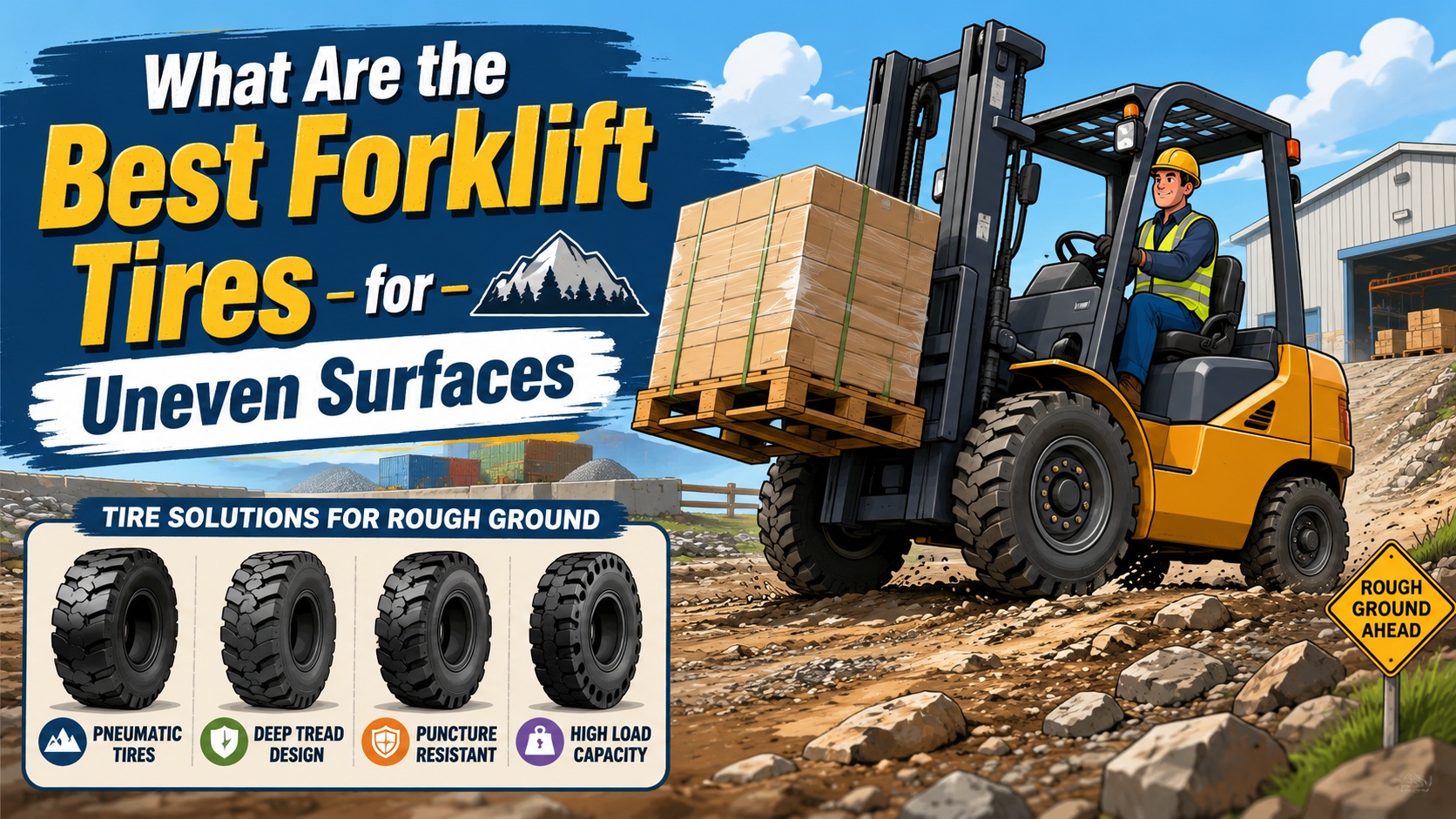
What Are the Best Forklift Tires for Uneven Surfaces?
Quick Answer: For uneven surfaces, the best forklift tires are pneumatic tires. They act like heavy-duty truck tires with deep, aggressive tread and air-filled, foam-filled, or solid interiors. These tires provide the shock absorption, stability, ground clearance, and grip needed to safely maneuver over gravel, dirt, rough asphalt, yard surfaces, and uneven terrain.
Uneven surfaces create challenges that smooth warehouse floors do not. A forklift may need to cross gravel, cracked pavement, packed dirt, outdoor yards, slopes, potholes, debris, wet areas, or temporary work zones. If the wrong tire is used, the machine may lose traction, vibrate heavily, damage loads, or become harder for the operator to control.
Choosing the right tire is not just about comfort. It affects braking, steering, load stability, operator fatigue, and long-term maintenance cost. Whether you operate an outdoor yard truck, construction site forklift, or a modern liftron forklift, the tire must match the actual surface and workload.
Why Uneven Surfaces Require Special Forklift Tires
Forklifts are designed to carry heavy loads, often with the load raised or positioned in front of the machine. This makes stability extremely important. On uneven ground, bumps and surface changes can shift the load, increase vibration, and reduce tire contact with the ground.
Pneumatic-style tires help solve these problems by increasing traction and improving shock absorption. Larger tire diameter can also provide better ground clearance, helping the forklift move over rough areas without scraping the undercarriage or becoming stuck.
Important Safety Note: Even the best tires cannot make unstable ground safe. Operators should still drive slowly, keep loads low, avoid sudden turns, and stay away from soft or collapsing surfaces.
Forklift Tire Selection Guide for Uneven Roads
There are several forklift tire options for uneven surfaces. The best choice depends on whether your priority is ride comfort, puncture resistance, traction, or low maintenance.
1. Air-Filled Pneumatic Tires
Air-filled pneumatic tires are one of the most common choices for rough outdoor surfaces. They are similar to truck tires and use air pressure to cushion the forklift over bumps. This helps reduce vibration, improves operator comfort, and protects loads from bouncing or shifting.
These tires are ideal for gravel roads, dirt paths, uneven asphalt, and outdoor material handling areas where shock absorption matters. However, they can be punctured by nails, sharp rocks, metal scraps, broken pallets, or construction debris. Operators should check air pressure regularly and inspect for cuts or leaks.
2. Solid Pneumatic Tires
Solid pneumatic tires look like air-filled tires but are made from thick solid rubber. They provide strong durability and puncture resistance, making them a smart choice for uneven surfaces with debris. Because they do not contain air, they cannot go flat from a puncture.
Solid pneumatic tires are commonly used in industrial yards, recycling areas, construction supply sites, manufacturing plants, and rough loading zones. They may not provide the same soft ride as air-filled tires, but they reduce downtime and can handle demanding environments.
3. Foam-Filled Pneumatic Tires
Foam-filled pneumatic tires are air-filled tires that have been filled with resilient foam. This gives the tire better puncture resistance while preserving some cushioning. They are a middle-ground option for operations that want the ride quality of pneumatic tires but need more protection from flats.
Foam-filled tires can be helpful in outdoor yards, rental fleets, or construction-related operations where sharp debris is possible but operator comfort is still important. They are usually heavier than air-filled tires and may cost more, but they can reduce flat-tire downtime.
4. Tread Types for Uneven Surfaces
Tread pattern is just as important as tire construction. Uneven surfaces usually require deep, aggressive tread that can grip loose material and channel mud or water away from the contact patch. Smooth tires are not ideal for gravel, dirt, wet outdoor areas, or rough yards.
For mixed indoor-outdoor work, choose tread that provides traction without damaging floors. For outdoor-only applications, deeper lug-style tread can improve grip on loose or rough ground.
Pro Tip: If your forklift works around nails, scrap metal, broken pallets, or sharp construction debris, solid pneumatic or foam-filled tires may be safer than standard air-filled tires.
How to Choose the Right Forklift Tires for Uneven Surfaces
- Inspect the surface: Identify whether the forklift works on gravel, dirt, rough asphalt, ramps, mud, debris, or mixed indoor-outdoor routes.
- Check the forklift data plate: Confirm the approved tire size, rim type, load rating, and manufacturer requirements before changing tires.
- Evaluate puncture hazards: If the site has nails, sharp rocks, metal scraps, or broken pallets, consider solid pneumatic or foam-filled options.
- Consider ride comfort: If operators drive long distances over rough ground, air-filled or foam-filled tires may reduce vibration and fatigue.
- Review load weight: Heavy loads require tires with the correct load capacity and stable sidewall support.
- Choose the right tread: Select deeper tread for loose outdoor surfaces and smoother tread only for clean, hard floors.
- Ask a qualified dealer: Before switching tire types, confirm compatibility with the forklift manufacturer or tire specialist.
Common Mistakes to Avoid
One mistake is using cushion tires on surfaces they were not designed for. Cushion tires are great for smooth indoor concrete, but they usually lack the ground clearance and shock absorption needed for uneven outdoor routes.
Another mistake is choosing tires only by price. Low-cost tires may wear quickly, reduce traction, or create more vibration. For uneven surfaces, durability and safety should matter more than the lowest upfront cost.
Selection Reminder: The right tire must match the forklift design, surface condition, load capacity, rim system, and daily duty cycle.
What Type of Tires Does the Liftron Forklift Use?
The liftron forklift lineup uses high-quality solid tires. The DE, DL, and DD series from Liftron Forklift are equipped with solid tires that deliver durability and stability in demanding operating environments.
Their puncture-resistant design helps reduce the risk of blowouts, lowers maintenance requirements, and supports consistent performance on rugged or busy surfaces. For facilities that value uptime and simplified tire maintenance, a liftron forklift can be a practical choice.
Before using any liftron forklift on uneven surfaces, confirm that the model, ground clearance, tire type, rated capacity, and work environment are appropriate for the task.
Conclusion
The best forklift tires for uneven surfaces are pneumatic-style tires, especially air-filled pneumatic, solid pneumatic, and foam-filled pneumatic tires. Air-filled tires provide excellent cushioning, solid pneumatics offer puncture resistance, and foam-filled tires combine added durability with some ride comfort.
For safe operation on gravel, dirt, rough asphalt, and rugged work areas, choose tires with proper tread, load rating, and forklift compatibility. The right tire improves traction, stability, comfort, and productivity on uneven ground.
Add a review
Your email address will not be published. Required fields are marked *