
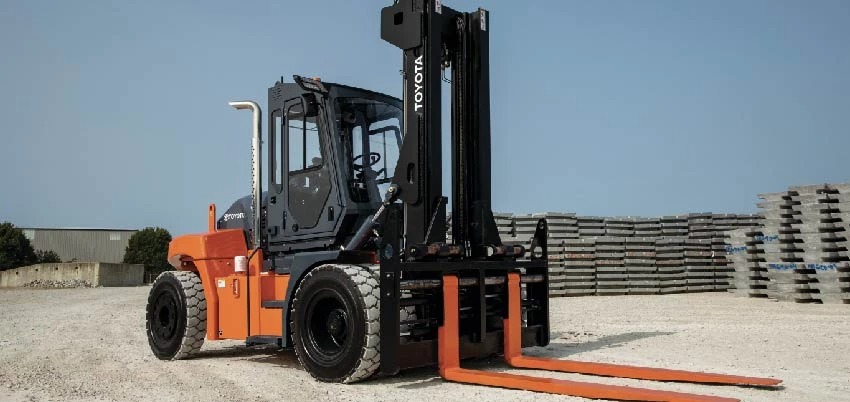
How Much Does a Toyota Forklift Weigh?
A standard Toyota forklift typically weighs between 6,000 and 10,000 lbs, with common 5,000-lb capacity models (like the 8FGU25) weighing approximately 7,800 to 8,600 lbs. Generally, forklifts weigh 1.5 to 2 times their lifting capacity, with electric models being heavier due to the battery. Understanding exact weights helps ensure safe operation and proper counterbalance.
Why Forklift Weight Matters
Forklift weight is not just a specification — it directly affects stability, traction, tipping risk, and overall safety. The battery or counterweight in the rear of the machine balances the load on the forks. If the forklift is too light for its rated capacity or the battery is replaced with a lighter one, the machine can become unstable. Knowing the exact weight of a Toyota forklift helps operators, fleet managers, and safety officers select the right model for the job and comply with manufacturer guidelines.
Common Toyota Forklift Weights by Model
Toyota offers a wide range of forklifts, and weights vary by capacity, power source, mast type, and options. Below are typical operating weights for popular 2026 models (without load):
| Model | Capacity | Power Source | Approx. Weight (lbs) |
|---|---|---|---|
| 8FGCU25 / 8FGU25 | 5,000 lb | Gas / LPG | 7,840 – 8,680 lbs |
| 8FBE18U | 3,500 lb | Electric | 4,990 lbs (with battery) |
| 8FBE20U | 4,000 lb | Electric | 5,400 lbs (without battery) |
| 8FDU30 | 6,000 lb | Diesel | 11,200 lbs |
| High-Capacity THD Series | 25,000 – 80,000+ lb | Diesel | 25,000 – 85,000+ lbs |
Factors Affecting Toyota Forklift Weight
1. Lifting Capacity
Heavier loads require a heavier counterweight. A 5,000 lb forklift is significantly lighter than a 15,000 lb model because the rear counterweight must balance the load on the forks.
2. Power Source
Electric forklifts are generally heavier than internal combustion models of the same capacity because of the large battery pack. However, lithium-ion electric forklifts can sometimes be lighter than older lead-acid versions while still providing excellent performance.
3. Mast Type and Height
Taller masts and triplex or quad masts add weight to the front of the machine, requiring a heavier rear counterweight for balance.
4. Tires and Options
Cushion tires are lighter than pneumatic tires. Additional options such as side shifters, fork positioners, or enclosed cabs also increase overall weight.
Electric vs Internal Combustion Forklift Weights
Electric Toyota forklifts are typically 10–20% heavier than gas or diesel models of the same capacity due to the battery. However, modern lithium-ion electric forklifts from Toyota and other manufacturers offer a better weight-to-performance ratio and lower operating costs. Many warehouses prefer electric models for indoor use because they produce zero emissions and run more quietly, even though they weigh more.
Is a Heavier Forklift More Expensive?
Not necessarily. While heavier forklifts often have higher initial purchase prices due to larger frames, stronger components, and bigger batteries, the long-term operating cost can be lower. Electric models, despite their higher upfront cost and greater weight, usually have much lower lifetime maintenance and energy costs compared to diesel or LPG forklifts. The extra weight of an electric forklift is mainly from the battery, which also serves as the counterweight, eliminating the need for additional ballast.
Conclusion
A standard Toyota forklift typically weighs between 6,000 and 10,000 lbs, with 5,000 lb capacity models commonly weighing 7,800–8,600 lbs. Weight varies by capacity, power source, mast configuration, and options. Understanding these weights helps ensure safe operation, proper counterbalance, and compliance with manufacturer specifications. Whether you need a compact electric model for indoor use or a heavy-duty diesel for outdoor work, choosing the right Toyota forklift means matching capacity and weight to your specific application.
Add a review
Your email address will not be published. Required fields are marked *