
Can Battery-Operated Forklifts Cause Breathing Problems?
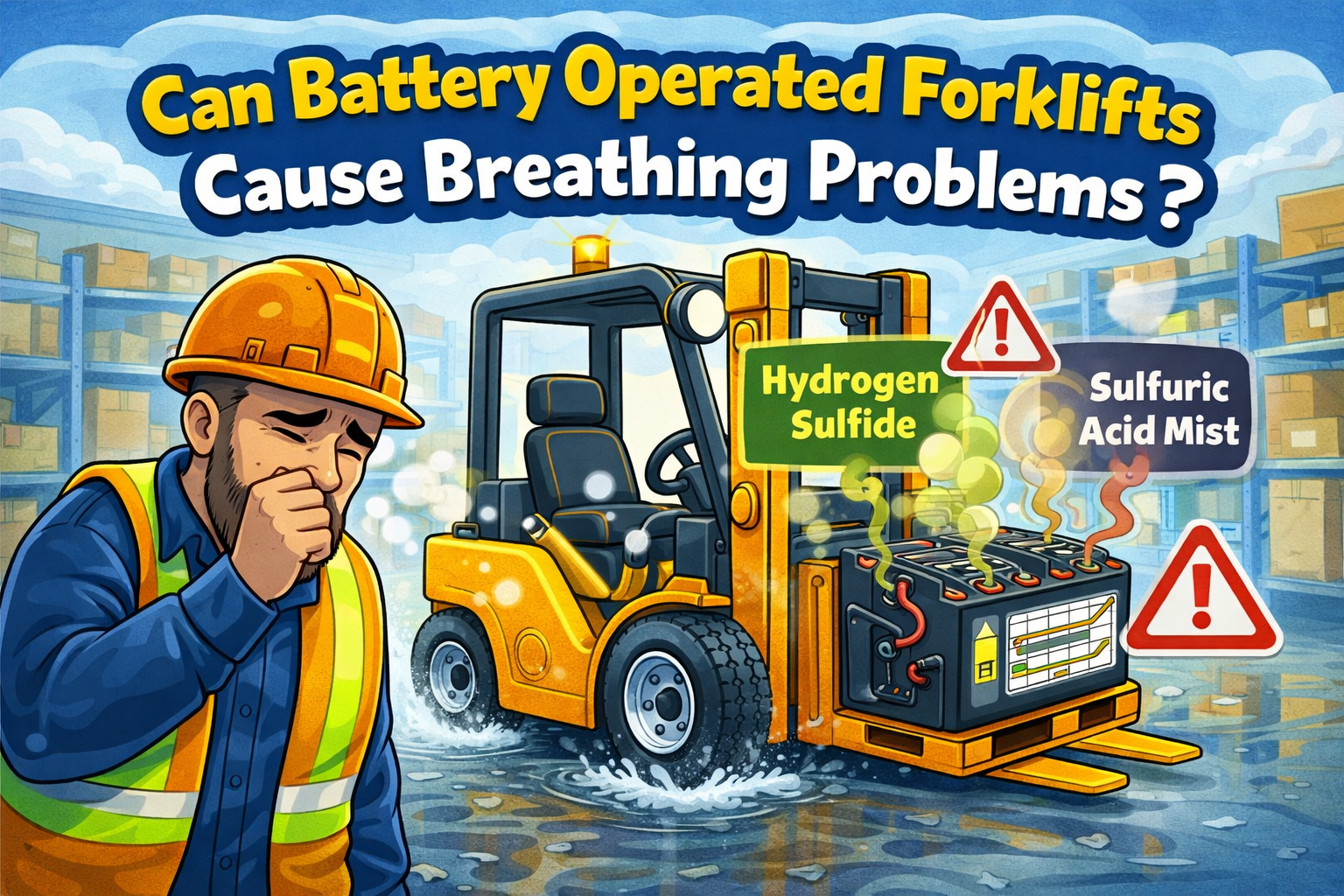
Yes, battery-operated (lead-acid) forklifts can cause breathing problems and severe respiratory irritation, particularly during the charging process. While electric forklifts have no tailpipe emissions, lead-acid batteries release hydrogen, oxygen, and acidic fumes that can settle at ground level, causing throat irritation, coughing, and, with long-term exposure, serious respiratory damage.
Why Charging Creates the Greatest Risk
The most dangerous time for breathing problems is during and immediately after charging lead-acid forklift batteries. As the battery charges, electrolysis breaks water into hydrogen and oxygen gases. These gases, along with sulfuric acid mist, are released through the vent caps. Hydrogen is lighter than air and rises, but in poorly ventilated areas it can accumulate near ceilings and create explosion risks. Acid mist is heavier and tends to stay at breathing height, directly irritating lungs and mucous membranes. Workers who spend hours near charging stations without proper ventilation frequently report sore throats, coughing, headaches, and eye irritation.
Key Causes of Breathing Problems
Hydrogen Sulfide Gas
Although pure hydrogen is the main gas, overcharging or damaged cells can produce trace hydrogen sulfide (H₂S), which smells like rotten eggs and is highly toxic even at low concentrations. Prolonged exposure damages the respiratory tract and can cause pulmonary edema.
Acid Mist Inhalation
Sulfuric acid mist forms tiny droplets that are easily inhaled. These droplets burn the lining of the nose, throat, and lungs, leading to chronic bronchitis-like symptoms in workers who are repeatedly exposed without respiratory protection.
Insufficient Ventilation
Many older warehouses have inadequate charging room ventilation. OSHA requires at least 1 cubic foot of fresh air per minute per square foot of charging area. When ventilation is poor, gases concentrate and create hazardous breathing zones at floor level where operators and pedestrians work.
What Are the Hazards Associated with Forklift Batteries?
Forklift batteries present multiple serious hazards beyond respiratory irritation:
- Chemical Burns: Sulfuric acid can cause severe skin and eye burns on contact.
- Explosion Risk: Hydrogen gas is highly flammable and can ignite from a single spark.
- Electrical Shock: High DC voltage (36V–80V) can cause serious shocks or arcs.
- Heavy Weight Hazards: Batteries weighing 800–4,000 lbs can crush workers during removal or installation.
- Thermal Runaway (Lithium): Damaged lithium packs can overheat and catch fire.
- Long-Term Health Effects: Chronic exposure to acid mist is linked to respiratory diseases and dental erosion.
Proper ventilation, PPE, and training are essential to mitigate these risks.
Prevention and Best Practices
To protect workers:
- Install dedicated charging rooms with mechanical exhaust ventilation that changes air at least 6 times per hour.
- Use hydrogen detectors with automatic alarms and shutdowns.
- Require NIOSH-approved respirators when working near charging batteries.
- Switch to lithium-ion forklift batteries whenever possible — they produce no hydrogen gas or acid mist during normal operation.
- Provide annual respiratory health screenings for workers in battery areas.
Conclusion
Battery-operated forklifts can indeed cause breathing problems, mainly from hydrogen gas and sulfuric acid mist released during charging of lead-acid batteries. While electric forklifts eliminate tailpipe emissions, the charging process introduces its own respiratory hazards if ventilation is inadequate. Transitioning to lithium-ion forklift batteries dramatically reduces these risks because they produce virtually no hazardous gases. Proper engineering controls, PPE, and training are essential for any facility still using lead-acid batteries.

Add a review
Your email address will not be published. Required fields are marked *