How to Change Hydraulic Hose on Forklift
Changing a forklift hydraulic hose requires depressurizing the system, removing the damaged hose, installing a matching replacement, and testing for leaks.

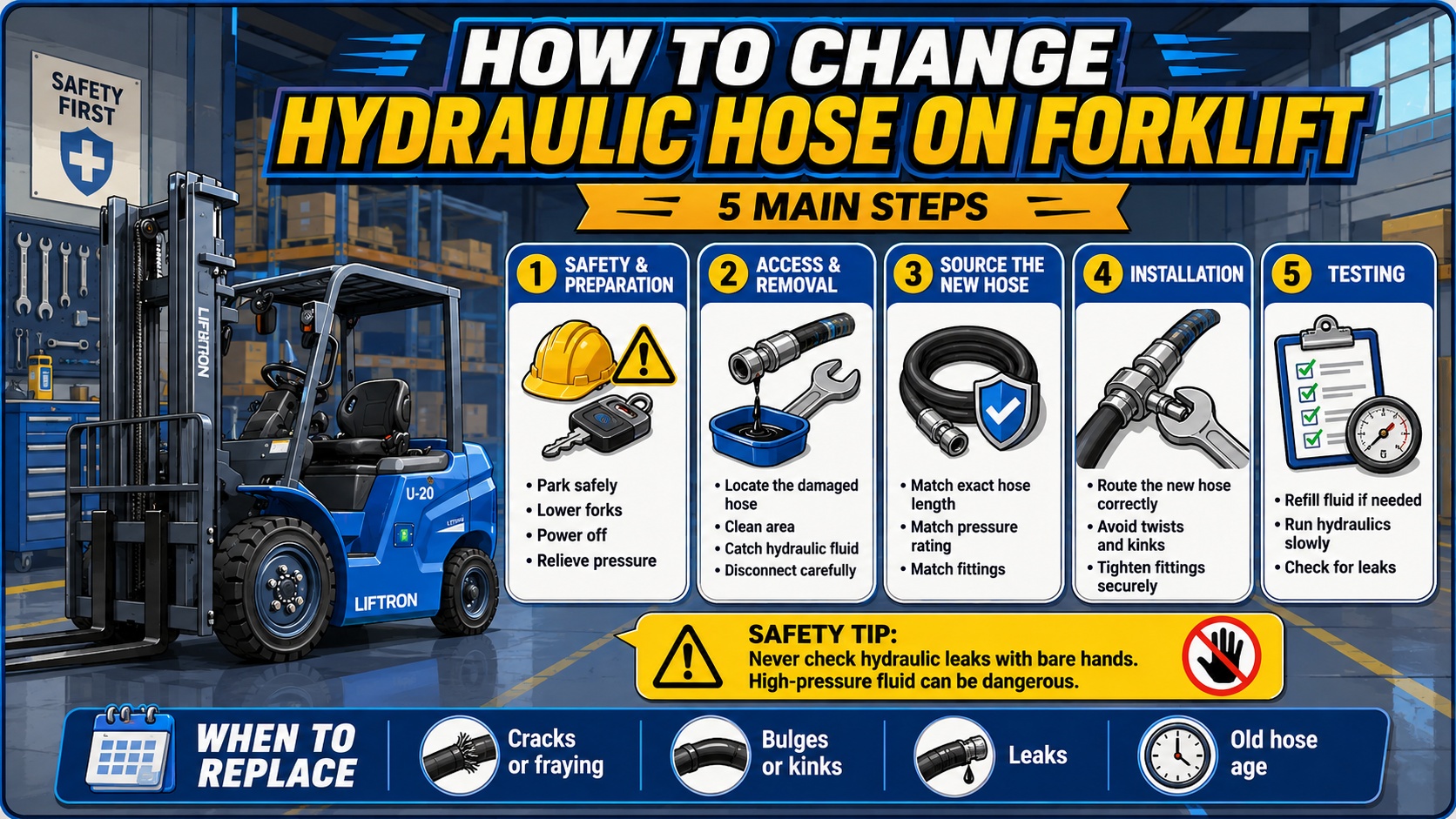
Changing a forklift hydraulic hose requires depressurizing the system, removing the damaged hose, installing a matching replacement, and testing for leaks.
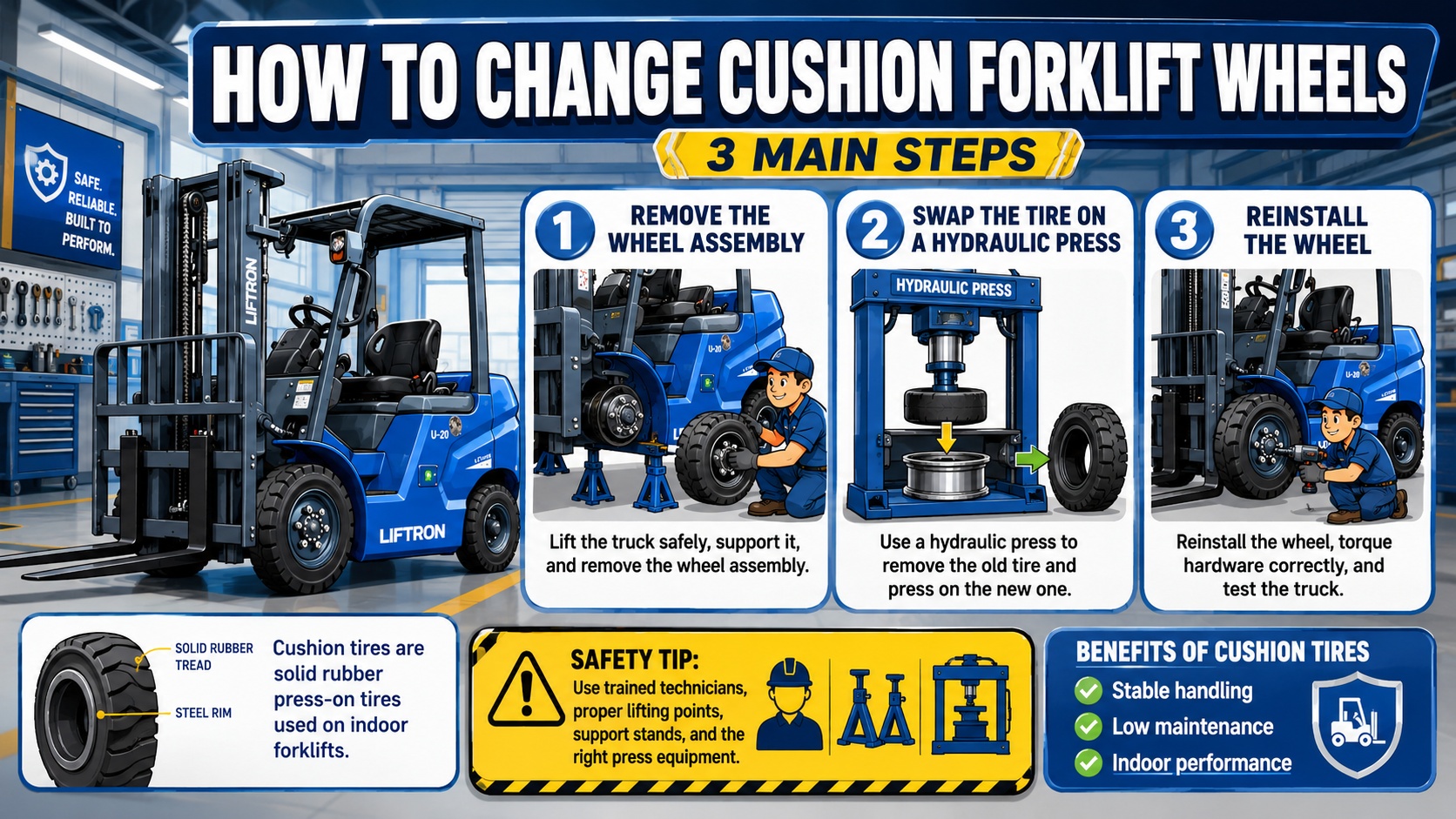
Changing cushion forklift wheels requires removing the wheel assembly, pressing off the old tire, pressing on the new tire, and reinstalling it safely.

Yes, a new employer must evaluate and certify you before you operate a forklift at their workplace.
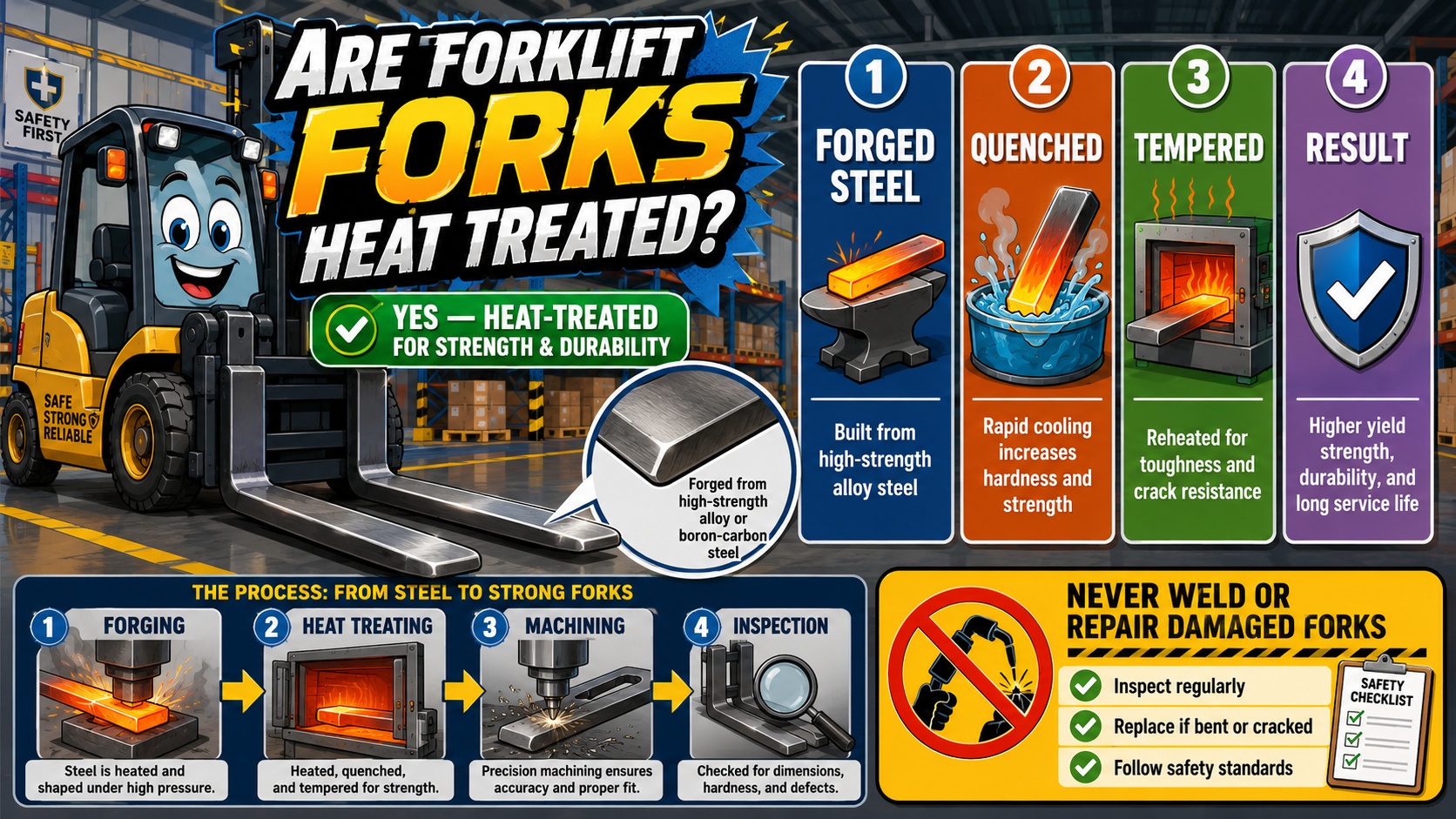
Yes, forklift forks are heat-treated to increase strength, hardness, durability, and resistance to bending when lifting heavy industrial loads.
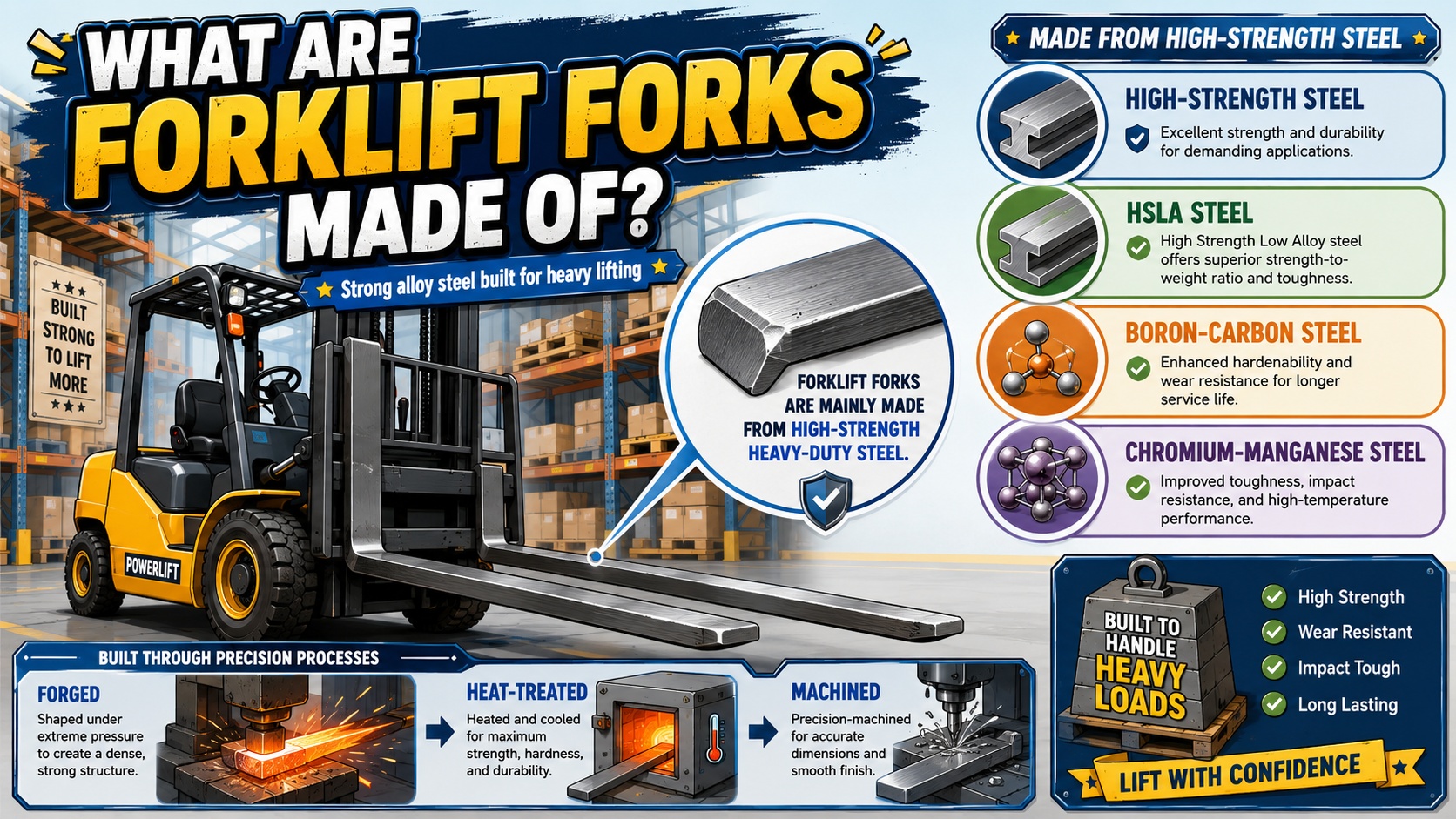
Forklift forks are made from high-strength steel designed to lift heavy loads safely, resist bending, and perform reliably in demanding work environments.
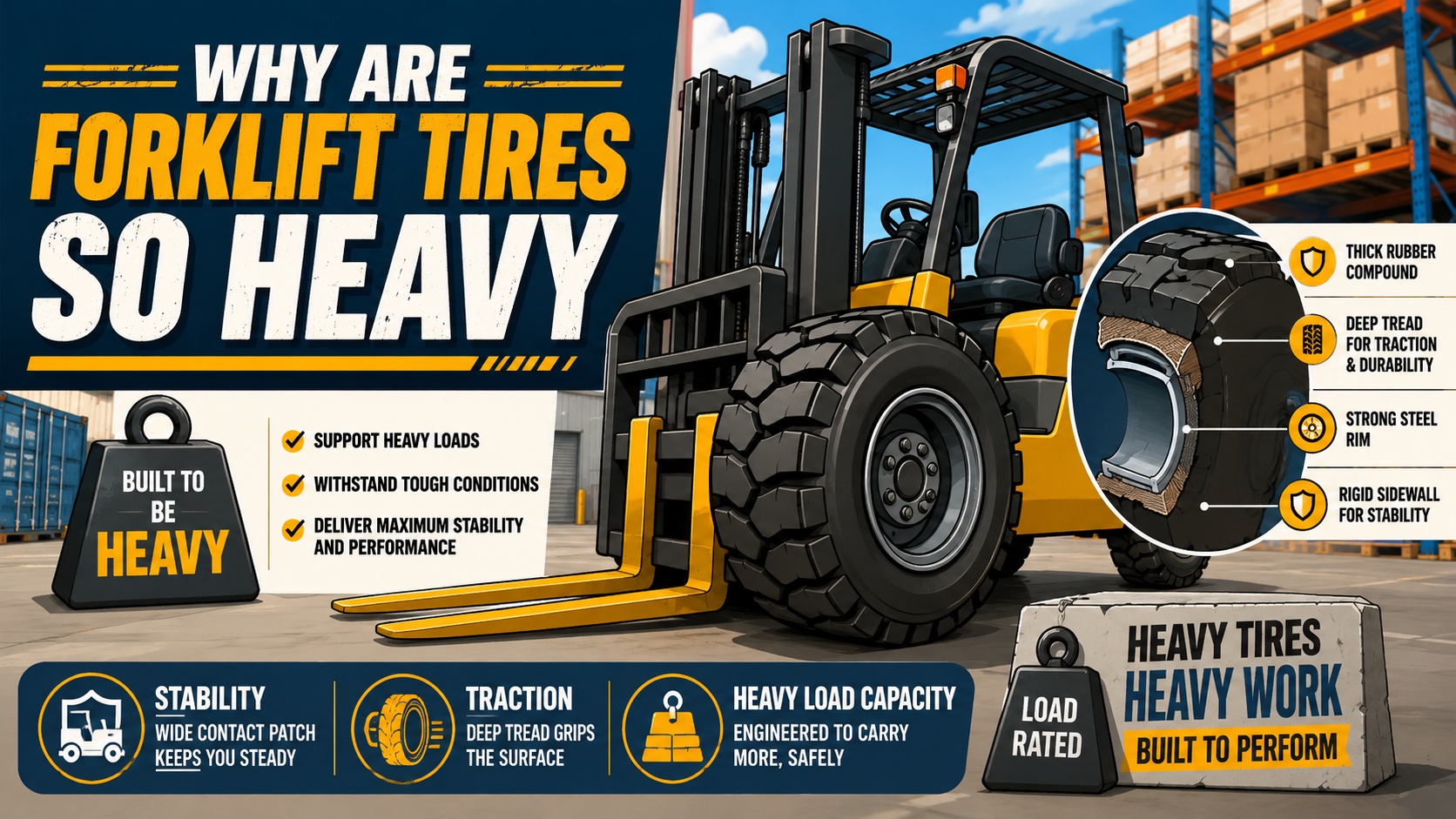
Forklift tires are heavy because they support massive loads, improve stability, absorb shock, and protect traction.
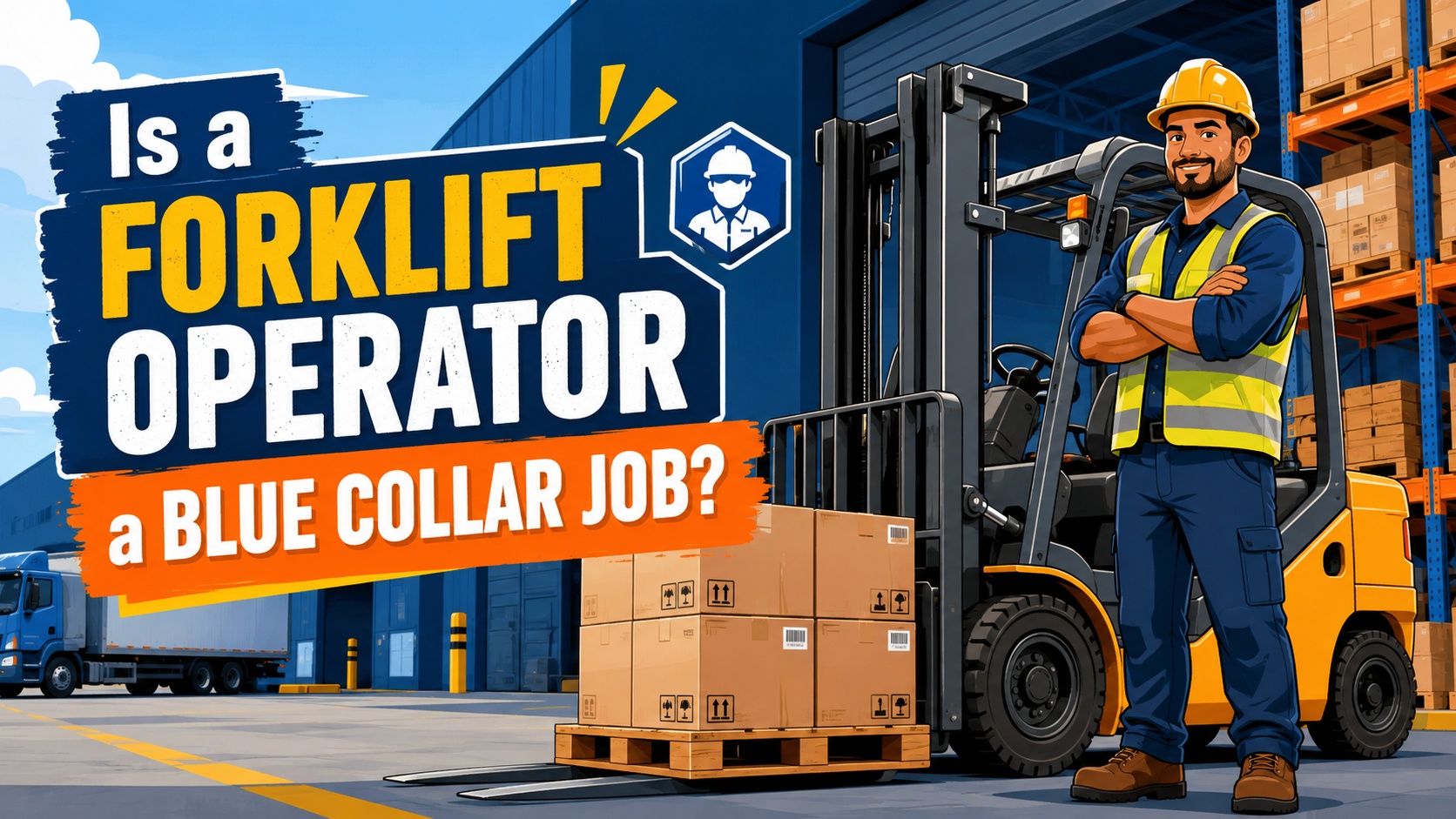
Yes, a forklift operator is a blue-collar job because it involves hands-on work, machinery, and industrial operations.
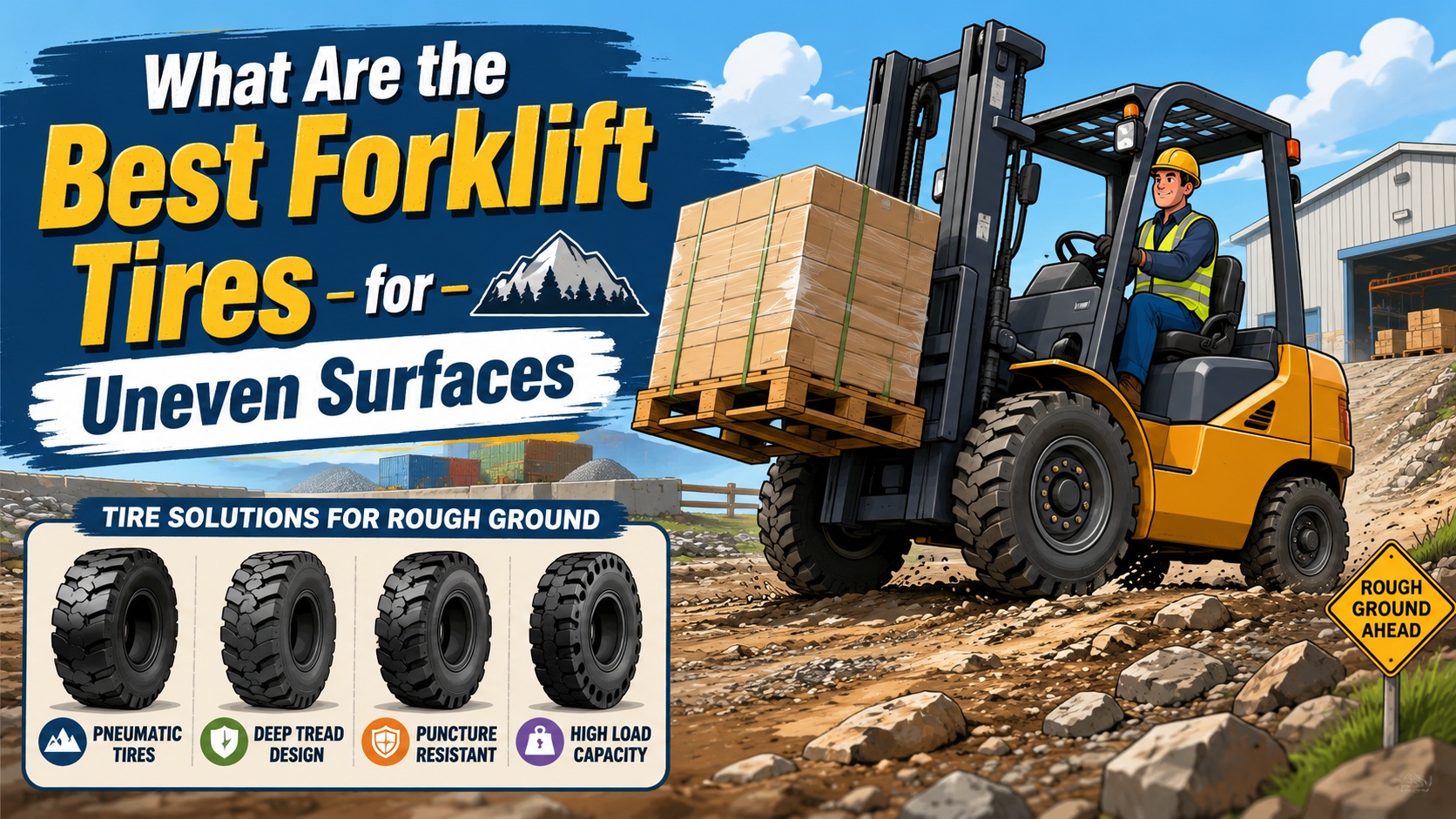
The best forklift tires for uneven surfaces are pneumatic-style tires with deep tread, shock absorption, and strong grip.
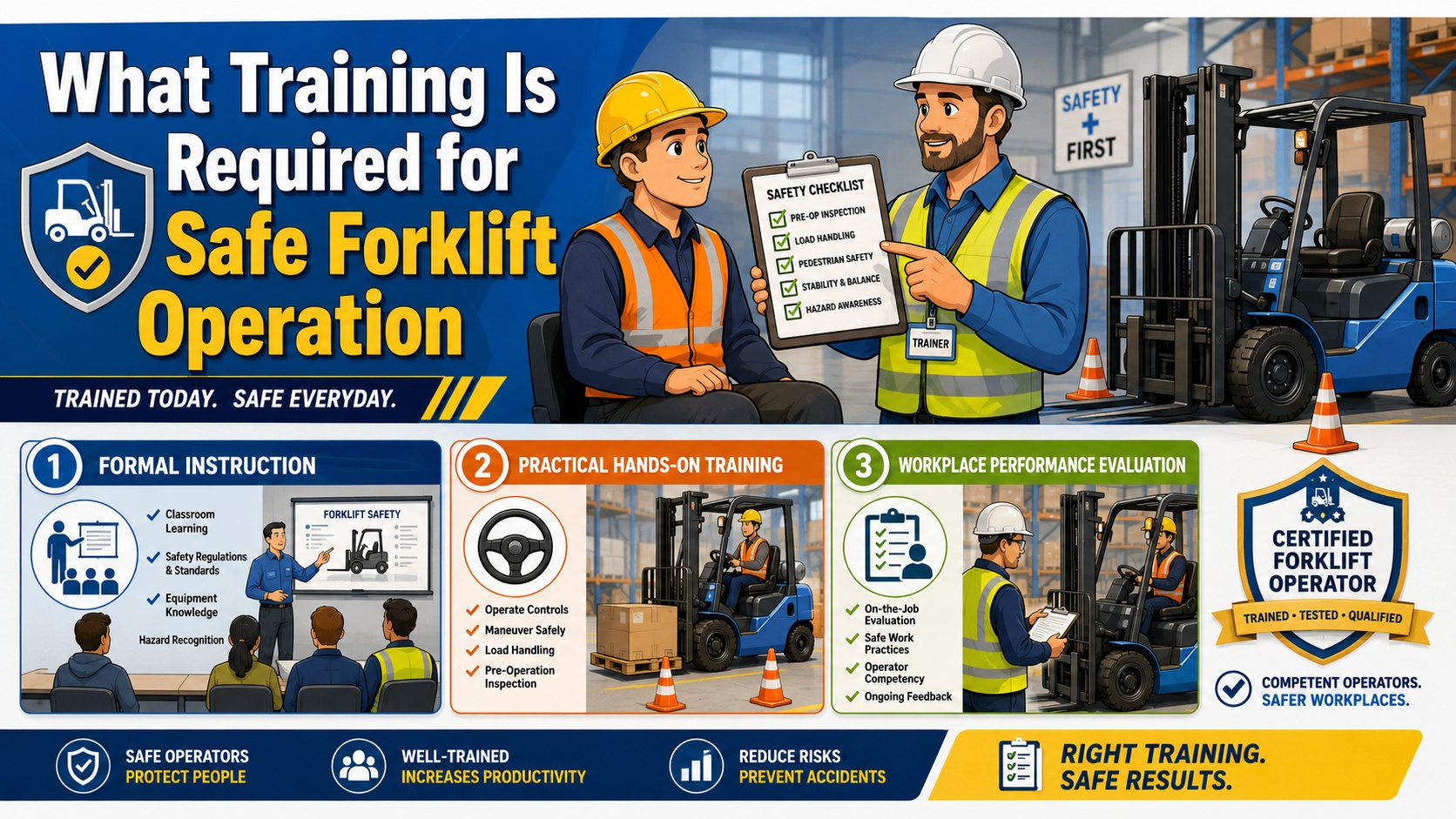
Safe forklift operation requires formal instruction, hands-on training, and workplace performance evaluation.
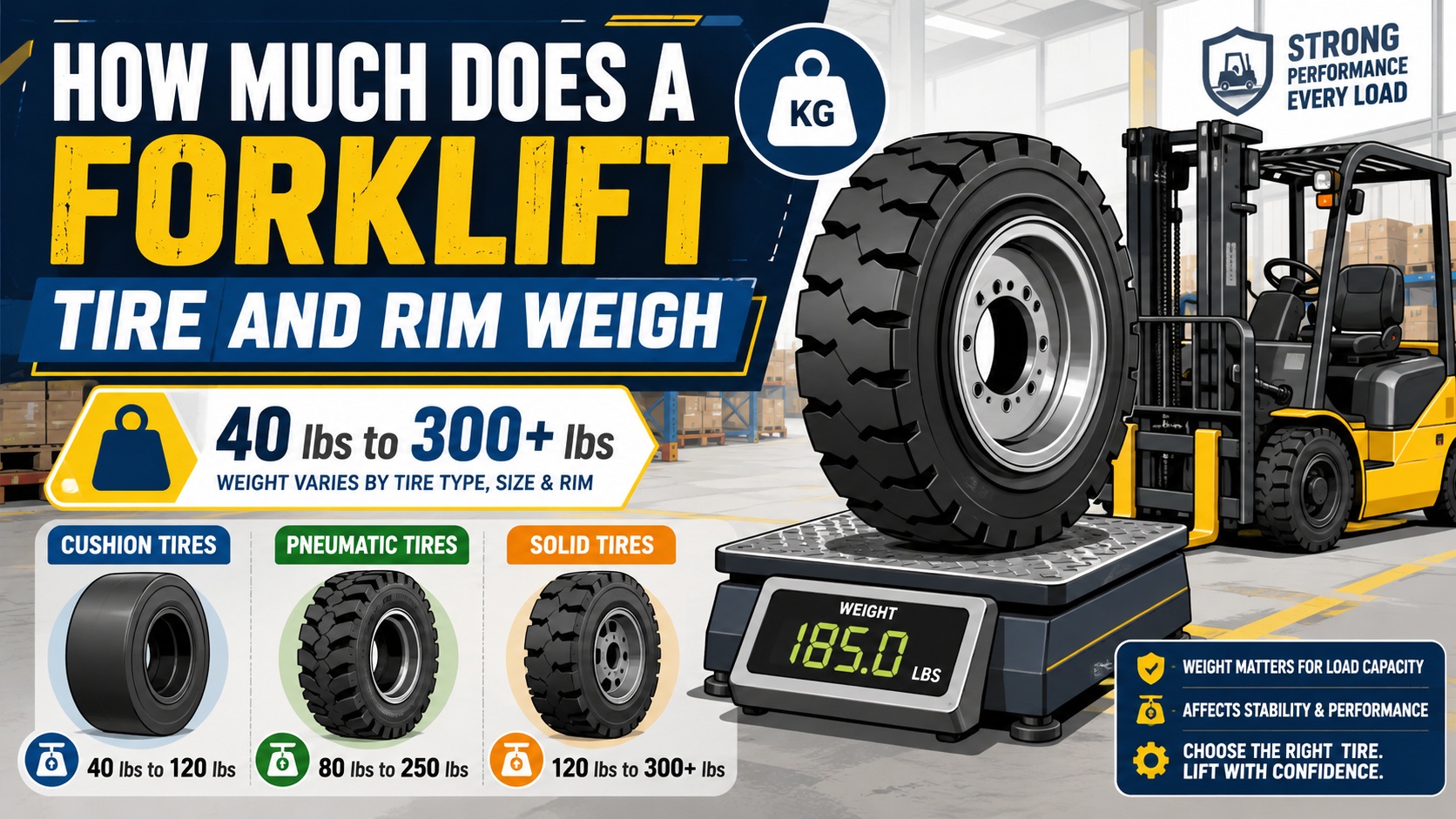
A forklift tire and rim assembly usually weighs 40 to 300+ lbs, depending on tire type, size, and rim design.