

how to know you need a new forklift
Fleets often overlook subtle warning signs until a breakdown forces an unplanned expense. Recognizing the difference between routine maintenance and a true replacement decision requires paying attention to performance trends, safety risks, and hidden costs that quietly erode your bottom line. Knowing precisely when to retire a lift truck protects productivity, worker safety, and warehouse efficiency.
Decreasing Reliability and Rising Repair Frequency
When your forklift begins spending more time in the shop than on the floor, it is no longer an asset—it becomes a liability. A single major component failure such as a motor, transmission, or hydraulic pump can cost more than 50% of a new unit’s price. Track repair frequency: if you are calling a technician more than once every three months for non-consumable parts, your machine has entered a high-cost cycle. Chronic breakdowns also disrupt workflow, forcing order picking and loading operations to pause unexpectedly.
The Hidden Cost of Repeated Repairs
Every repair carries direct labor and parts costs, but the hidden expenses are far larger. Downtime halts production lines, delays shipments, and requires overtime labor to catch up. A forklift that breaks down twice a month for four hours each time removes eight hours of operational capacity. Multiply that by your hourly labor rate and lost throughput, and the annual figure often exceeds the cost of a new electric model. When cumulative repairs approach 40% of replacement value within a single year, replacement is financially justified.
Noticeable Performance Decline and Power Loss
Does your forklift struggle on ramps that it previously climbed with ease? Has lifting speed become sluggish, or does the mast hesitate under rated loads? Performance degradation indicates worn hydraulic pumps, failing motors, or battery capacity loss. For internal combustion units, excessive smoke, rough idling, or frequent stalling signal engine wear that cannot be cost-effectively reversed. For electric models, a battery that no longer holds a full charge across an eight-hour shift forces mid-day charging breaks, cutting productivity by up to 20%.
Comparing Performance Against Modern Alternatives
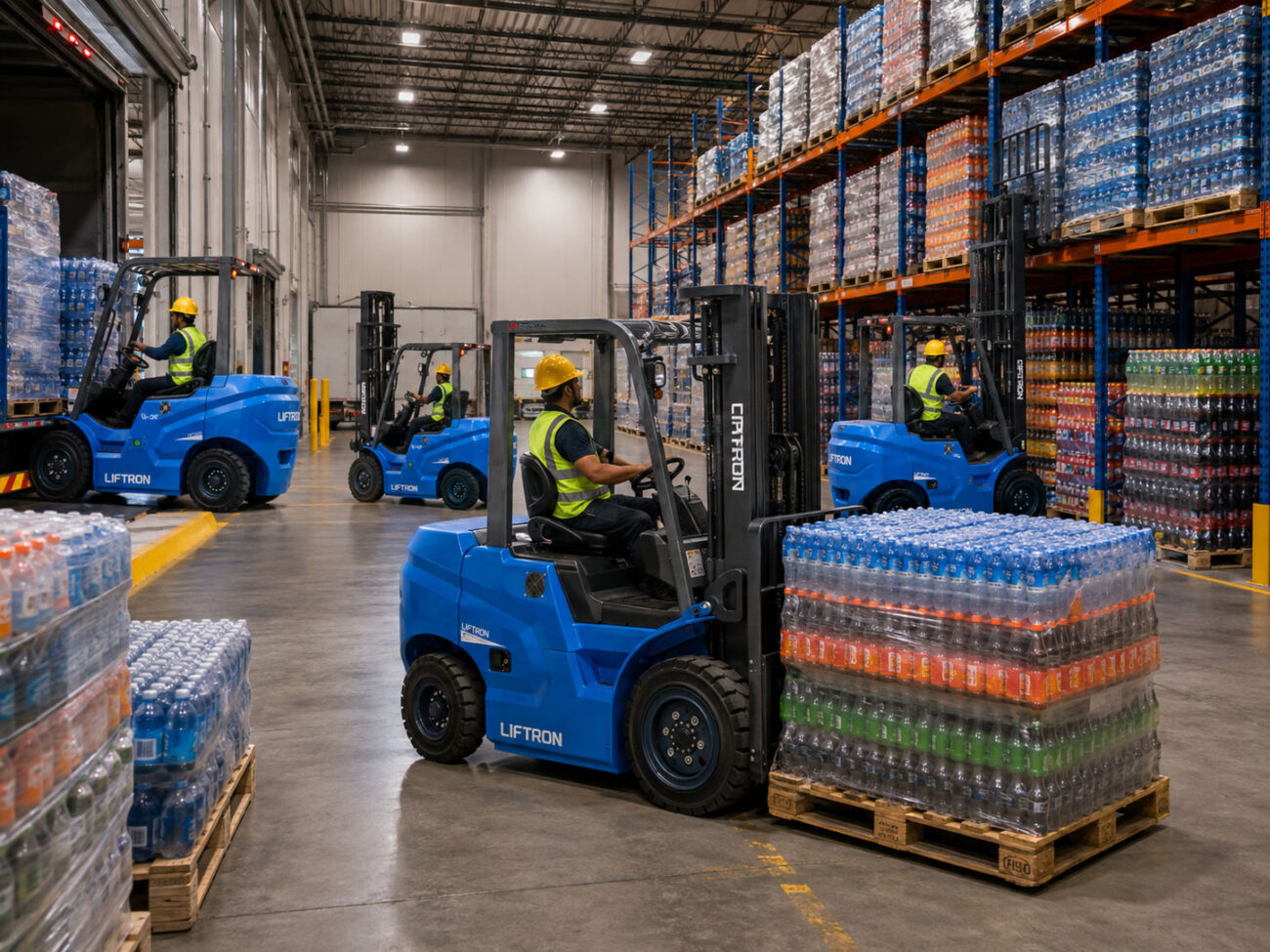
Modern electric forklifts like the Liftron DL SERIES offer instant torque, regenerative braking, and consistent power throughout the battery discharge curve. Older lead-acid units experience voltage drop as they discharge, slowing lift and travel speeds. If your current forklift takes noticeably longer to complete the same pallet cycle than a newer rental unit, your operational efficiency is silently fading. Timing your replacement against these performance benchmarks gives you a data-driven reason to upgrade.
Rising Safety Concerns and Operator Complaints
Operator feedback is one of the most valuable indicators for replacement. Frequent complaints about vibration, difficult steering, poor visibility, or uncomfortable seating reduce morale and increase accident risks. Worn brakes, delayed response from hydraulic controls, or leaking fluids create physical hazards that threaten both the driver and nearby workers. OSHA regulations also tighten each year; older forklifts often lack modern safety features like automatic speed control in turns, blue spotlights, or proximity sensors. Retrofitting these features on an old chassis costs substantial money and never delivers full integration.
When Maintenance Cannot Restore Safe Operation
If your maintenance records show repeated adjustments to the braking system, steering column play, or mast alignment, the structural integrity of the unit may be compromised. Cracks in the frame, excessive rust on the overhead guard, or deformation of the forks are immediate red flags. A catastrophic failure can cause serious injury, litigation, and fines that dwarf any replacement cost. Do not wait for an incident—proactively replace units that no longer meet current safety standards.
Increasing Energy Consumption and Operational Costs
Older forklifts are significantly less energy-efficient than modern counterparts. Internal combustion units consume more fuel per hour as engines lose compression and fuel injectors wear. Electric models with aging batteries require longer charge times and more frequent water top-ups, increasing labor and utility bills. Track your energy cost per pallet moved over six months; if that number has risen by more than 25% while throughput stayed flat, your equipment efficiency is the culprit. New electric models often pay for themselves through energy savings alone within two to three years.
Total Cost of Ownership Analysis
Perform a formal total cost of ownership comparison between your existing forklift and a replacement model. Include purchase price, maintenance, downtime, energy, operator wages, and residual value. When the replacement’s five-year total cost is lower than keeping the old unit for five more years, the decision is clear. This analysis frequently surprises fleet managers who underestimate downtime costs. Leading suppliers like Liftron Material Handling provide free fleet assessments to calculate these figures accurately, helping you avoid emotional attachment to aging equipment.
Technological Obsolescence and Feature Gaps
The material handling industry has shifted rapidly toward lithium-ion power, telematics, and integrated fleet management. Older forklifts cannot support real-time data collection on operator behavior, impact detection, or battery health monitoring. Without these insights, you are managing your fleet blindly, unable to identify inefficient operators or predict failures before they happen. Modern units also offer programmable performance modes that allow you to match power to specific applications, extending component life.
Benefits of Upgrading to Modern Electric Technology
Upgrading to a lithium-ion electric model such as the Liftron DL SERIES eliminates battery swapping, reduces charging time to under two hours, and delivers consistent power until the final 5% of charge. Opportunity charging during breaks keeps the forklift running continuously through multi-shift operations. With no emissions, these units are safe for indoor use in food processing or pharmaceutical warehouses. The integration of CAN-bus diagnostics allows your maintenance team to preempt failures, drastically reducing unplanned downtime.
Parts Availability and Dealer Support Challenges
When a manufacturer discontinues parts for your forklift model, every breakdown becomes a waiting game. Dealers may quote weeks of lead time for obsolete components, forcing you to rent temporary units at premium rates. Even if parts are still available, rising costs and longer delivery windows indicate the end of a product’s lifecycle. Contact your local dealer and ask how long they guarantee parts for your specific serial number. If the answer is vague or the parts catalog has been marked “last buy,” your forklift is effectively orphaned—replacement is the only financially sound option before a major failure occurs.
Matching Equipment Age to Asset Depreciation
Most forklifts are fully depreciated after five to seven years. Once depreciation ends, the tax benefits vanish while maintenance costs typically rise. Many companies hold forklifts for ten to fifteen years, but that prolonged ownership is rarely profitable. Consider your fleet’s average age: if more than 30% of units are older than eight years, you are likely carrying excess operating costs and elevated safety risks. A staggered replacement plan—replacing a portion of your fleet each year—avoids the capital shock of a full fleet turnover and keeps your average fleet age under six years.
Recognizing the Right Moment to Act
The optimal replacement point occurs when the combined cost of repairs, downtime, energy, and safety risk exceeds the annualized cost of a new unit. This threshold varies by application but typically falls between 8,000 and 12,000 operating hours for electric units and 10,000 to 15,000 hours for internal combustion models. Keep meticulous hour meter logs and review them quarterly. If you are uncertain, request a professional evaluation from a trusted dealer like Liftron Material Handling who can perform a comprehensive condition audit and provide a transparent cost comparison.
Planning Ahead for Seamless Transition
Do not wait for a breakdown to initiate the buying process. Lead times for new forklifts can stretch to several months depending on configuration and regional supply. Order your replacement while the current unit is still operational, then schedule the handover during a low-demand period. This allows you to sell or trade in the old unit while it still has residual value, further offsetting the purchase cost. A planned transition prevents downtime, keeps your operations smooth, and ensures your workforce can be trained on the new model before the old one is removed.
When you see multiple signs from this list—frequent repairs, rising energy costs, safety complaints, or parts scarcity—treat them as a clear signal. The money spent on a new forklift is not an expense; it is an investment in consistent productivity, lower risk, and a stronger competitive position. Trust the data, listen to your operators, and schedule a consultation with a reputable supplier today. Your warehouse efficiency depends on making this decision before circumstances force it upon you.
Add a review
Your email address will not be published. Required fields are marked *