
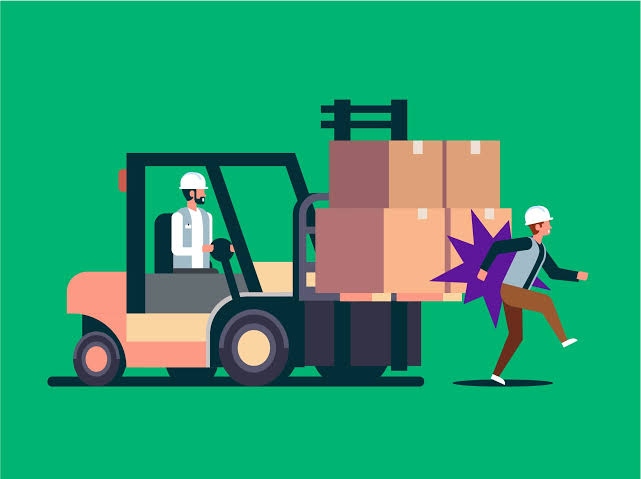
Where to Get Information on Forklift Safety Technologies
Why Reliable Safety Technology Information Matters
Forklift safety technology is developing quickly. Warehouses can now use cameras, radar, ultrasonic sensors, LiDAR, RFID tags, wearable devices, telematics, and artificial intelligence to help reduce collisions and unsafe operation.
However, marketing terms are not always standardized. Two products described as “pedestrian detection systems” may perform very differently. One may only sound an alarm, while another may distinguish people from objects and automatically reduce travel speed.
Before purchasing technology for a forklift, determine exactly what the system detects, how it responds, where it works, and what limitations apply.
1. Review Regulatory Guidelines
The Occupational Safety and Health Administration is the first source to consult in the United States. OSHA’s powered industrial truck standard, 29 CFR 1910.178, addresses forklift design, operation, maintenance, inspections, modifications, fueling, charging, and operator training.
Useful OSHA resources include:
- The Powered Industrial Trucks standards page
- The Powered Industrial Trucks eTool
- Operator-training guidance
- Pedestrian traffic recommendations
- Loading dock and trailer safety guidance
- Standard interpretation letters
OSHA information helps employers separate required practices from optional safety enhancements. For example, an AI camera may improve awareness, but it does not replace operator certification, daily inspections, traffic controls, safe-speed rules, or maintenance.
2. Use NIOSH Safety Research
The National Institute for Occupational Safety and Health publishes forklift incident investigations, daily inspection guidance, workplace recommendations, and injury-prevention materials.
NIOSH resources are valuable because they explain how real accidents occur. They can help managers identify whether a technology addresses an actual site hazard rather than simply adding another alarm.
NIOSH materials commonly examine risks such as:
- Workers being struck by moving equipment
- Operators losing control on ramps
- Forklift overturns
- Poor visibility and blind areas
- Missing inspections
- Unsafe pedestrian interaction
- Improper loading and unloading
Use these reports when preparing a hazard assessment or building a business case for new safety equipment.
3. Read Manufacturer Technology Overviews
Forklift manufacturers publish brochures, videos, manuals, case studies, and technical descriptions of their safety systems. These resources are useful for understanding whether a feature is factory integrated or installed as an aftermarket accessory.
Modern manufacturer technologies may include:
- AI pedestrian and object recognition
- Rear-view and 360-degree cameras
- LiDAR proximity detection
- Automatic travel-speed reduction
- Cornering speed control
- Stability assistance
- Load-height and weight monitoring
- Electronic operator access
- Impact detection and reporting
- Geofenced speed zones
When reviewing a manufacturer’s information, look beyond the product name. Check detection distance, field of view, minimum object size, environmental limitations, compatible truck models, and operator alert methods.
Common Forklift Safety Technologies
| Technology | Primary Function | Important Limitation |
|---|---|---|
| AI pedestrian detection | Distinguishes people from surrounding objects | Performance may change with lighting, clothing, or obstruction |
| LiDAR proximity sensor | Measures distance to objects around the truck | Mounting height and detection zone require careful setup |
| 360-degree camera | Provides a broader view around the forklift | The operator must still observe the travel path |
| Automatic speed control | Reduces speed in selected conditions or zones | Does not guarantee sufficient stopping distance |
| RFID or UWB proximity system | Detects tagged pedestrians, trucks, or fixed hazards | Untagged workers may not be detected |
| Blue or red warning light | Projects a visible warning near the forklift | May be less visible in bright environments |
| Telematics | Records impacts, access, use, and maintenance data | Requires proper review and response procedures |
| Stability assistance | Helps reduce certain instability risks | Cannot prevent every overturn or compensate for misuse |
4. Consult Specialized Safety Vendors
Independent vendors offer retrofit systems for mixed-brand fleets. Their solutions may include cameras, radar sensors, wearable tags, access-control keypads, speed limiters, impact monitors, and cloud-based analytics.
Ask potential vendors for:
- Written product specifications
- Compatible forklift models
- Installation requirements
- Detection-zone diagrams
- False-alarm testing information
- Environmental ratings
- Warranty and support terms
- Software and subscription fees
- Customer references
- A workplace demonstration
A supplier should also explain whether the system only warns the operator or actively controls the truck. Active braking or speed-control integration may require approval from the forklift manufacturer.
5. Ask Dealers and Service Providers
Authorized forklift dealers can explain which technologies are compatible with specific models and whether installation affects warranty coverage. They can also inspect the truck’s electrical system, overhead guard, controller, and mounting locations.
A dealer may help compare factory-installed systems with retrofit products. When evaluating a new electric forklift, ask which safety features are standard, optional, or compatible with external systems.
Request information about local service availability. A sophisticated sensor system provides limited value when replacement cameras, software support, or calibration services are unavailable.
How to Evaluate a Forklift Safety System
- Identify the hazard. Determine whether the main problem is pedestrian traffic, speeding, blind corners, impacts, unauthorized use, or instability.
- Review OSHA requirements. Confirm that existing training, inspection, and operating programs are compliant.
- Map the worksite. Record aisles, intersections, doors, racks, docks, lighting, and pedestrian routes.
- Define the desired response. Decide whether the system should warn, record, slow, or stop the truck.
- Compare detection methods. Evaluate cameras, LiDAR, radar, ultrasonic sensing, RFID, and UWB.
- Check compatibility. Confirm the system is approved for the truck model and power supply.
- Conduct an on-site demonstration. Test it with real workers, loads, lighting, dust, noise, and traffic.
- Measure false alarms. Excessive alerts may cause operators to ignore warnings.
- Train operators and pedestrians. Explain what the technology can and cannot do.
- Review performance data. Monitor impacts, alerts, near misses, and operator feedback after installation.
What Are the OSHA Guidelines for Forklift Safety?
OSHA’s principal general-industry forklift requirements appear in 29 CFR 1910.178. Employers must ensure that operators are trained and evaluated before independently operating powered industrial trucks.
Operator Training
Training must address the truck, workplace conditions, and applicable operating hazards. It generally includes formal instruction, practical training, and an evaluation of the operator’s workplace performance.
Refresher training is required when an operator:
- Operates unsafely
- Is involved in an accident or near miss
- Receives an unfavorable evaluation
- Is assigned a different type of forklift
- Works in a changed environment that affects safe operation
Each operator’s performance must be evaluated at least once every three years.
Pre-Operation Inspections
Forklifts must be examined before being placed in service. When equipment is used continuously, it should be examined after each shift. A truck with a condition that adversely affects safety must not remain in service.
Safe Travel and Pedestrian Protection
Operators should maintain a clear view of the direction of travel, observe speed limits, slow down at intersections, sound the horn where vision is obstructed, and yield to pedestrians.
Where possible, employers should separate pedestrian routes from forklift traffic through barriers, marked walkways, controlled crossings, and traffic-management procedures.
Load Handling
Loads must remain within the forklift’s rated capacity, be stable and safely arranged, and be carried at a low travel height. Operators should avoid sudden braking, sharp turns, and traveling with an elevated load.
Parking
When a forklift is unattended, the forks or load-engaging means should be fully lowered, controls neutralized, power shut off, and brakes set. Additional wheel blocking may be necessary when parked on an incline.
Technology Does Not Replace Basic Controls
Advanced technology should support a complete safety program built around the hierarchy of controls.
| Safety Layer | Example |
|---|---|
| Physical separation | Barriers, guardrails, separate doors, and pedestrian walkways |
| Engineering controls | Proximity sensors, cameras, speed controls, and warning lights |
| Administrative controls | Traffic plans, right-of-way rules, signs, and shift procedures |
| Training | Operator certification and pedestrian awareness instruction |
| Inspection and maintenance | Daily checks, repairs, calibration, and software updates |
Separating pedestrians from forklifts is usually more reliable than depending entirely on an alarm. Technology should strengthen physical controls and safe procedures rather than replace them.
Questions to Ask Before Purchasing
- Does the system detect people, objects, or only electronic tags?
- What is its field of view and detection distance?
- Does it warn the operator or automatically slow the truck?
- Can it work in darkness, dust, rain, cold, or direct sunlight?
- How often does it need calibration?
- Does installation require manufacturer approval?
- Can the detection zones be adjusted?
- What data does the system collect?
- Are software subscriptions required?
- Who provides local installation and repairs?
Conclusion
The best places to obtain information about forklift safety technologies are OSHA, NIOSH, forklift manufacturers, authorized dealers, professional safety organizations, and specialized technology vendors.
Begin with OSHA regulations and workplace guidance. Then compare AI pedestrian detection, LiDAR proximity sensing, 360-degree cameras, speed controls, access systems, warning lights, stability assistance, and telematics according to the hazards in your facility.
Before adding technology to a forklift, verify compatibility, request technical documentation, perform an on-site demonstration, and train everyone who works near the equipment.
The most effective solution combines technology with physical separation, qualified operators, daily inspections, preventive maintenance, and a well-designed traffic-management program.
Add a review
Your email address will not be published. Required fields are marked *