
when was the first forklift invented
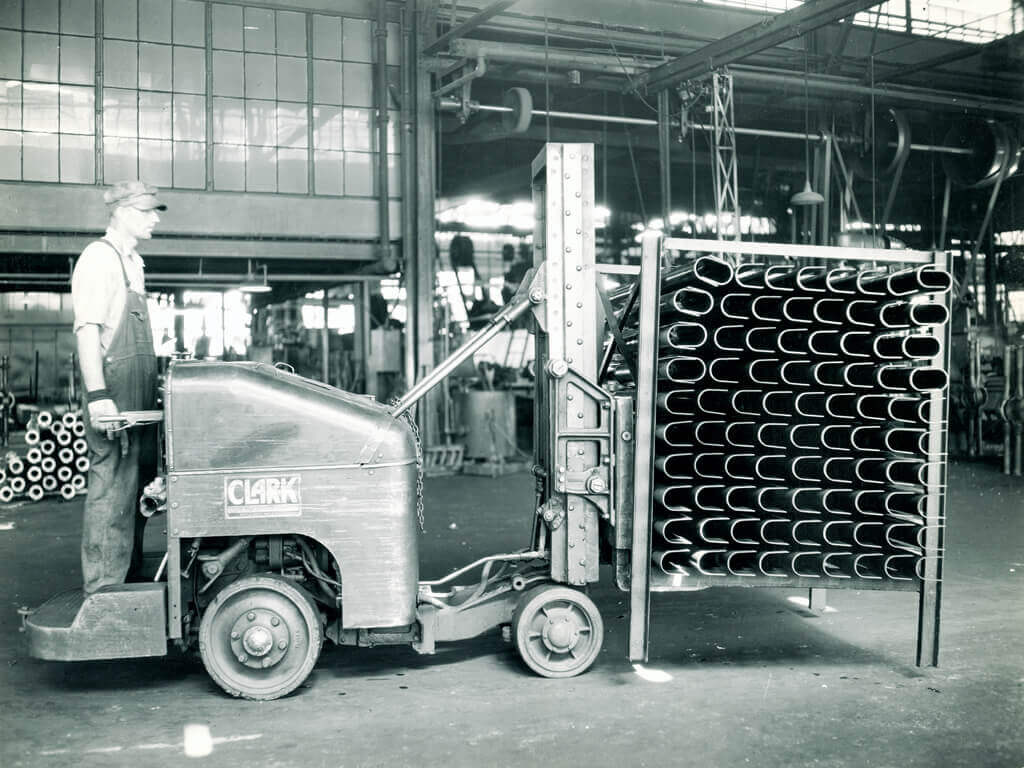
Tracing the origins of material handling equipment leads to a pivotal question: when was the first forklift invented? The first motorized forklift is generally credited to the Clark Equipment Company in 1917, though earlier hand-operated lift trucks existed in the 19th century.
Early Beginnings: The Hand-Operated Lift Truck
Before motorized forklifts, warehouses relied on basic lift trucks. In 1887, a two-wheeled hand truck was patented, but the true precursor emerged in 1906 when the Pennsylvania Railroad introduced battery-powered platform trucks for luggage. By 1917, Clark’s Tructractor—a powered industrial truck with a lift mechanism—became the first widely recognized forklift. These early models were crude but essential during World War I for moving military supplies.
The Critical Innovation: The Hydraulic Lift (1920s)
In 1923, Yale & Towne Manufacturing introduced the first forklift with a hydraulic lifting system, replacing manual winches. This innovation allowed loads to be lifted vertically, not just tilted. By 1929, the Towmotor Company (later merged with Caterpillar) launched the first sit-down rider forklift, dramatically improving operator control. The 1940s saw further refinements, including the first counterbalanced design, which remains the standard for modern forklifts today.
Post-War Boom and Standardization
The 1950s and 1960s brought mass adoption. The introduction of pneumatic tires and improved batteries expanded forklift use to outdoor applications. Companies like Liftron Material Handling emerged to meet growing global demand for efficient warehouse logistics. Meanwhile, the 1970s saw the rise of electric forklifts with solid-state controls, offering quieter operation and zero emissions. This era set the stage for today’s advanced models like the Liftron DL SERIES, which combines lithium-ion technology with compact design.
Key Milestones in Forklift Evolution
| Year | Innovation | Impact |
|---|---|---|
| 1887 | First manually operated lift truck | Basic load raising |
| 1917 | Clark Tructractor (first powered model) | Motorized lifting |
| 1923 | Yale hydraulic lift fork truck | Vertical load stability |
| 1929 | Townotor sit-down rider forklift | Operator comfort and control |
| 1950s | Pneumatic tires & high-lift masts | Outdoor & heavy-duty use |
| 2020s | Lithium-ion battery integration | Longer runtime, faster charging |
Why the 1917 Date Matters
While earlier devices existed, the 1917 forklift is considered the first true forklift because it combined a three-wheel chassis, an electric-powered lift, and a driver-operated steering tiller. This design directly led to modern warehousing concepts like palletized storage. Without this invention, global supply chains would lack the efficiency we rely on today.
Modern Forklift Categories
- Electric forklifts: Best for indoor use with zero emissions. Models like the Liftron DL SERIES offer advanced lithium-ion batteries.
- Internal combustion forklifts: Powered by diesel or LPG, ideal for heavy outdoor loads.
- Rough terrain forklifts: Designed for construction sites with large pneumatic tires.
- Order pickers and pallet jacks: Specialized for warehouse narrow aisles.
The Rise of Lithium-Ion Technology
Today, the forklift industry is shifting toward lithium-ion power. The Liftron Material Handling team highlights that lithium-ion batteries offer 2-3 times longer lifespan than lead-acid, plus opportunity charging without memory effect. The Liftron DL SERIES is a prime example, featuring a compact frame, zero maintenance, and fast charging for multi-shift operations. This technology reduces total cost of ownership and supports sustainable logistics.
Wrapping Up the History
From manual lift trucks in the 1800s to today’s intelligent electric forklifts, the question “when was the first forklift invented” reveals a journey of continuous improvement. The 1917 Clark Tructractor remains the benchmark, but innovations from manufacturers like Liftron Material Handling continue to push boundaries. Understanding this history helps buyers appreciate modern features like regenerative braking, telematics, and ergonomic controls.
Add a review
Your email address will not be published. Required fields are marked *