
Where Not to Park a Forklift Truck
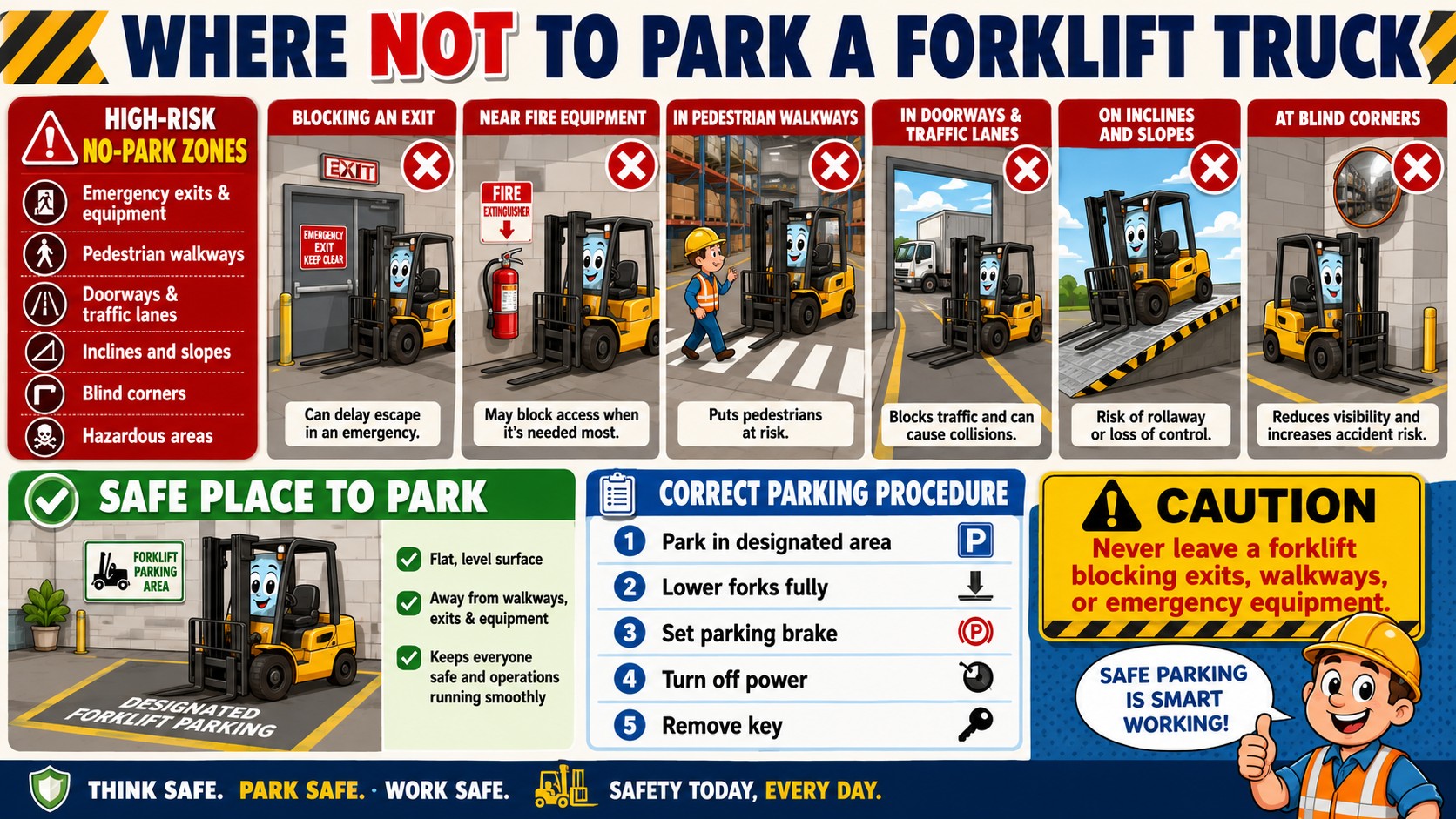
A forklift must always be parked in approved zones. Improper parking can block emergency exits, create collision risks, or cause equipment damage, especially in busy industrial environments where traffic flow is constant.
Quick Answer: Never park a forklift in unauthorized or high-traffic areas such as exits, ramps, or pedestrian pathways. Safe parking is a core OSHA requirement.
High-Risk No-Park Zones
There are several critical areas where a forklift should never be parked due to safety hazards and operational risks.
Emergency Exits & Equipment
Blocking fire extinguishers, alarms, or emergency doors can delay evacuation during emergencies.
Pedestrian & Traffic Areas
Parking in walkways increases collision risks between workers and moving equipment.
Inclines and Slopes
Forklifts can roll or tip if not properly secured with wheel chocks.
Unstable Ground
Soft or uneven surfaces may cause sinking or imbalance of the forklift.
Hazardous Areas
Never park near flammable materials, chemicals, or high-risk industrial zones.
Blind Corners
Parking in hidden visibility zones increases collision probability with moving vehicles.
Warning: Improper parking of a forklift is one of the most common causes of warehouse accidents and OSHA violations.
OSHA Unattended Vehicle Rules
OSHA requires that when a forklift is left unattended, operators must fully lower forks, set parking brakes, and remove keys to prevent unauthorized use or movement.
Where Is a Safe Place to Park a Forklift?
A safe parking zone is a designated area that is clearly marked, flat, and away from pedestrian or vehicle traffic. These zones are typically located in warehouse corners or designated equipment parking bays.
Correct Forklift Parking Procedure
- Slowly bring the forklift to a complete stop in a designated parking zone.
- Lower the forks completely to the ground.
- Set the parking brake firmly to prevent movement.
- Turn off the engine and remove the key.
- Ensure the forklift is not blocking any emergency access routes.
Table: Where NOT to Park a Forklift
| No-Park Zone | Risk Level | Why It Is Dangerous |
|---|---|---|
| Emergency Exits | Critical | Blocks evacuation routes |
| Pedestrian Walkways | High | Increases collision risk |
| Inclines | High | Risk of rolling or tipping |
| Blind Corners | Medium | Reduces visibility and safety |
| Hazardous Zones | Critical | Fire or chemical exposure risk |
Why Proper Forklift Parking Matters
Correct parking of a forklift ensures smooth workflow, prevents accidents, and helps maintain OSHA compliance. Poor parking practices can lead to serious injuries, equipment damage, and operational downtime.
Best Practices for Forklift Parking Safety
To improve workplace safety, operators should follow standardized parking procedures and receive regular training.
- Always use designated forklift parking zones
- Never leave forklifts running unattended
- Ensure forks are fully lowered before leaving
- Keep parking areas clearly marked and clean
- Follow OSHA forklift safety guidelines at all times
Conclusion
Understanding where not to park a forklift is essential for maintaining safety and efficiency in any industrial environment. Avoiding high-risk zones such as exits, ramps, and pedestrian paths ensures safer operations and reduces workplace accidents. Proper training and disciplined parking habits are key to safe forklift operations.
Add a review
Your email address will not be published. Required fields are marked *