
How to Change Hydraulic Hose on Forklift
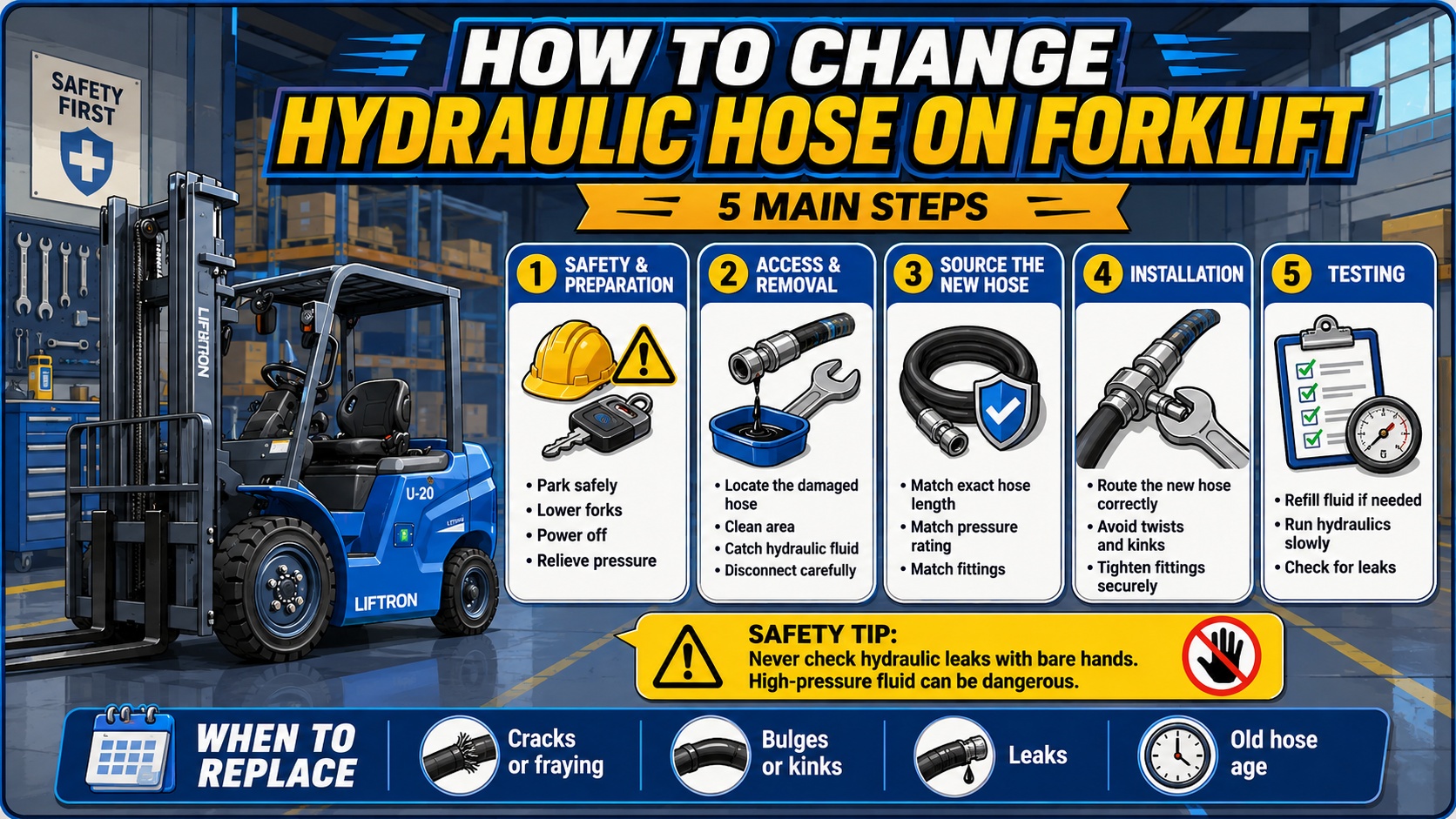
Quick Answer: To change a hydraulic hose on a forklift, park the truck safely, lower the forks, relieve hydraulic pressure, disconnect the damaged hose while catching fluid, source a new hose with the exact length, pressure rating, and fittings, then install and test it carefully before returning the forklift to service.
A forklift hydraulic hose carries high-pressure fluid to critical systems such as the mast, lift cylinders, tilt cylinders, side shifters, and other hydraulic attachments. When a hose becomes cracked, frayed, leaking, or swollen, it can create serious safety risks. A failed hose may cause loss of lifting control, sudden load movement, hydraulic fluid spray, equipment downtime, or contamination of the work area.
Whether you operate a diesel forklift or an electric forklift, hydraulic hose maintenance is essential for safe and efficient material handling. Replacing a forklift hydraulic hose requires careful preparation, the right replacement part, and a controlled testing process. Standard forklift replacement hoses typically cost between $150 and $400, depending on hose length, fittings, pressure rating, and local service labor.
When Should You Replace a Forklift Hydraulic Hose?
Forklift hydraulic hoses should be inspected regularly and replaced before they fail. A good maintenance rule is to inspect hydraulic hoses every three months, or more often in harsh environments with heat, dirt, chemicals, sharp edges, or heavy vibration. Many hoses should be replaced every 4 to 5 years in demanding service, even if no major leak is visible.
| Warning Sign | What It Means | Recommended Action |
|---|---|---|
| Cracks, fraying, or exposed wire braid | The outer cover is damaged and the hose strength may be reduced | Replace immediately |
| Bulges, blisters, or kinks | The hose structure may be weakened or restricted | Remove from service and replace |
| Fluid weeping or spraying | The hose or fitting is leaking under pressure | Stop operation and repair safely |
| Old manufacturing date | Rubber can degrade even with limited use | Replace if the hose is beyond its safe service age |
Important Safety Tip: Never check a hydraulic leak with your bare hand. High-pressure hydraulic fluid can penetrate skin and cause a serious medical emergency.
Tools and Supplies Needed
Before starting the job, gather all tools and materials. Having the correct supplies ready reduces downtime and helps prevent contamination of the hydraulic system. The replacement hose should match the original hose specifications exactly, including pressure rating, diameter, length, end fittings, bend radius, and routing requirements.
| Item | Purpose | Why It Matters |
|---|---|---|
| Wrenches and line tools | Loosen and tighten hydraulic fittings | Helps avoid damaging fittings |
| Drain pan and absorbent pads | Catch hydraulic fluid | Keeps the work area clean and safe |
| Replacement hydraulic hose | Restores safe hydraulic function | Must match the original specifications |
| Caps and plugs | Cover open ports and hose ends | Prevents contamination |
| Hydraulic fluid | Refills the system if needed | Must match the forklift manufacturer’s requirement |
Step-by-Step Replacement Process
Replacing a forklift hydraulic hose is a mechanical repair that should be performed by a trained technician. The following steps explain the general process, but always follow the forklift service manual and company safety procedures.
- Safety and Preparation: Park the forklift on a level surface, lower the forks fully, set the parking brake, turn off the power, and remove the key. For an electric model, follow lockout procedures and make sure the machine cannot be started during service.
- Relieve Hydraulic Pressure: Move the hydraulic controls several times after shutdown to release trapped pressure. This helps reduce the risk of sudden fluid spray when fittings are loosened.
- Access and Removal: Locate the damaged hose, clean the area around the fittings, place a drain pan underneath, and carefully loosen the fittings. Cap or plug open ports to prevent dirt from entering the hydraulic system.
- Sourcing the New Hose: Take the old hose to a qualified hydraulic hose supplier or service center. The new hose should be crimped to exact specifications, including pressure rating, fitting type, length, and hose diameter.
- Installation: Route the new hose the same way as the original. Avoid sharp bends, twisting, rubbing points, pinch areas, or contact with hot surfaces. Tighten fittings correctly without over-torquing.
- Testing: Refill hydraulic fluid if needed, start the forklift, and operate the hydraulic functions slowly. Check for leaks, abnormal movement, hose rubbing, and proper lift or tilt performance before returning the forklift to service.
Maintenance Note: A hose that looks similar may not be safe. Always match the correct pressure rating, fitting style, hose diameter, length, and hydraulic fluid compatibility.
Common Mistakes to Avoid
Hydraulic hose replacement can go wrong if the hose is incorrectly routed, poorly crimped, under-rated, or contaminated. Even small mistakes can cause leaks, pressure loss, or premature hose failure.
- Do not reuse damaged fittings: Worn or cracked fittings can leak even with a new hose.
- Do not twist the hose: Twisting reduces hose life and can cause early failure under pressure.
- Do not ignore abrasion points: A hose rubbing against metal can wear through quickly.
- Do not use the wrong fluid: Incorrect hydraulic fluid can damage seals, hoses, and components.
- Do not skip leak testing: Always test slowly and inspect carefully before using the forklift with a load.
How Often Should Forklift Hydraulic Hoses Be Replaced?
Hydraulic hose service life depends on working conditions, hose quality, temperature, chemical exposure, vibration, pressure cycles, and maintenance habits. As a general guideline, many forklift hydraulic hoses should be replaced every 4 to 5 years in regular industrial use. Even if the forklift is not used often, rubber can degrade over time. Hoses that are 5 to 10 years past the manufacturing date should be replaced even if they appear acceptable.
Safety Reminder: If a hose is leaking, bulging, cracked, or exposing wire braid, do not wait for scheduled maintenance. Replace it immediately.
Hydraulic Hose Maintenance for Liftron Electric Forklifts
Modern Liftron lithium-ion forklifts are designed for reliable, efficient material handling. The DE SERIES, DL SERIES, and DD SERIES are built for demanding warehouse and industrial applications where uptime, safe lifting, and low maintenance are important.
For any electric forklift, hydraulic hose inspection should be part of a routine maintenance program. Operators should look for leaks around the mast, lift cylinders, tilt cylinders, hose reels, and attachments. Keeping hoses clean, correctly routed, and protected from abrasion helps extend service life and reduce unexpected downtime.
Conclusion
Changing a hydraulic hose on a forklift requires safe shutdown, pressure relief, careful hose removal, exact hose replacement, correct installation, and controlled testing. The hose must match the original specifications and should be crimped by a qualified hydraulic hose provider. Regular inspection every three months can help identify cracks, fraying, bulges, leaks, and aging before failure occurs. For businesses operating an electric forklift, timely hydraulic hose replacement supports safer lifting, better uptime, and more reliable daily performance.
Add a review
Your email address will not be published. Required fields are marked *