
How to Bleed Brakes on a Yale Forklift: Step-by-Step 2026 Guide
Bleeding Yale forklift brakes involves removing air from the hydraulic system by pumping the brake pedal while opening bleeder valves at each wheel, starting furthest from the master cylinder. Use a clear hose on the bleeder valve, submerged in brake fluid, to prevent air re-entry, filling the reservoir as needed.
Why Bleeding Brakes Is Critical on Yale Forklifts
Air in the brake lines causes a soft or spongy pedal, longer stopping distances, and reduced braking power — all dangerous in a busy warehouse. Yale forklifts use hydraulic brake systems that can trap air after repairs, fluid changes, or long periods of inactivity. Regular bleeding restores firm pedal feel and full stopping power. Most Yale service manuals recommend bleeding the brakes every 1,000–2,000 hours or whenever the pedal feels soft.
Preparation and Safety
Safety comes first. Park the forklift on a flat, level surface with the parking brake engaged and wheels chocked. Wear safety glasses and gloves — brake fluid is corrosive. Use only DOT 3 or DOT 4 brake fluid specified for your Yale model (check the operator’s manual). Never mix fluid types. Gather tools: box-end wrenches or flare-nut wrenches (usually 10mm or 12mm), a clear plastic hose, a catch container, and fresh brake fluid.
Locate Bleeders: Yale forklifts typically have one bleeder screw per wheel cylinder or caliper. Start with the wheel farthest from the master cylinder (usually the rear passenger side on most models) and work toward the closest wheel.
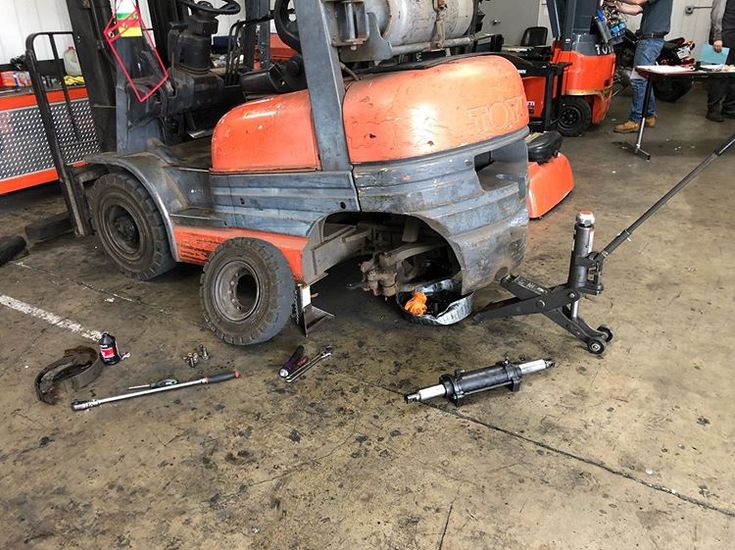
Safety Note: Never work under a raised forklift unless properly supported on jack stands. Disable the power source (disconnect battery on electric models or shut off fuel on propane/diesel).
The Bleeding Process (Two-Person Method)
The two-person method is the most reliable and safest way to bleed Yale forklift brakes.
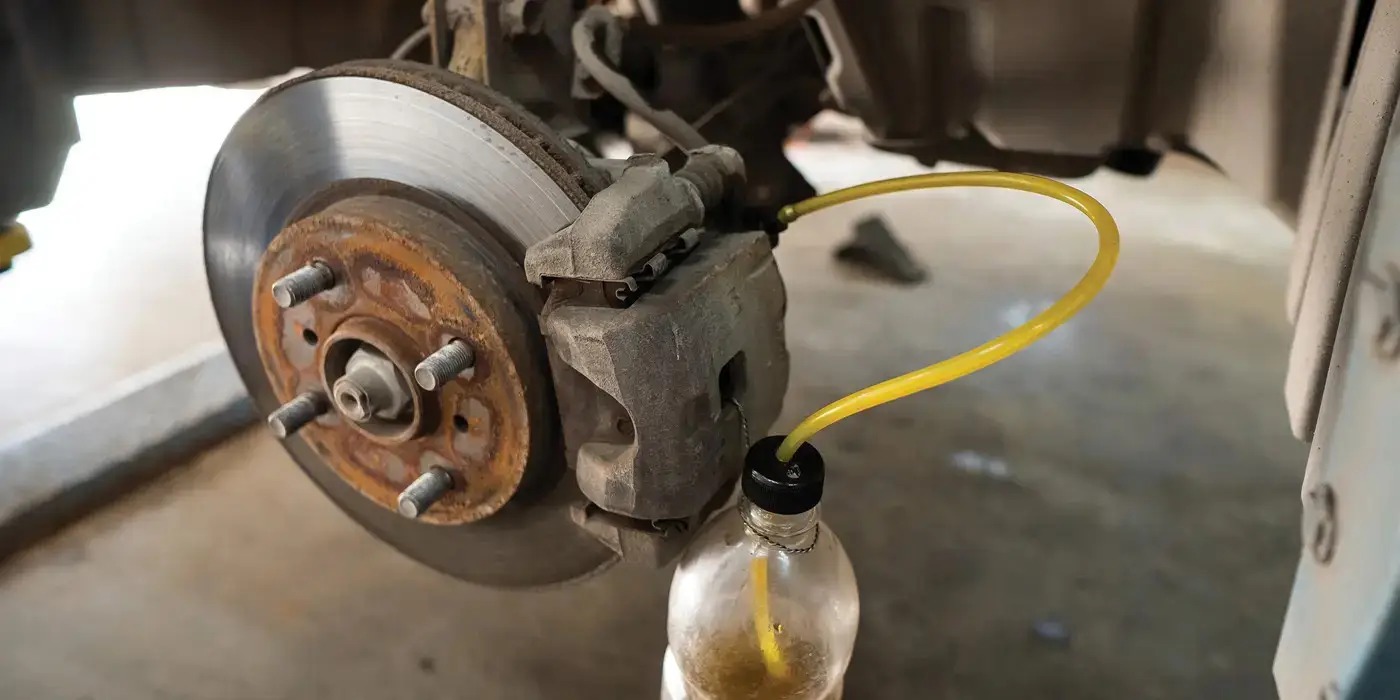
- Prep Wheel: Clean dirt from the bleeder valve. Attach a clear plastic hose to the bleeder screw and submerge the other end in a container of fresh brake fluid.
- Pump and Hold: The second person pumps the brake pedal 5–6 times, then holds it firmly down.
- Open Valve: The first person opens the bleeder valve ¼ to ½ turn. Old fluid and air bubbles will flow out through the hose. Close the valve before the pedal reaches the floor.
- Repeat: The second person releases the pedal slowly, then pumps and holds again. Repeat until the fluid runs clear and bubble-free (usually 5–10 cycles per wheel).
- Next Wheel: Move to the next wheel in sequence (farthest to closest). Keep the master cylinder reservoir topped up at all times — never let it run dry.
Finishing Up
After bleeding all wheels, pump the brake pedal several times to build pressure. Top off the reservoir to the correct level. Reinstall any protective caps on bleeder valves. Test the brakes in a safe, open area: the pedal should feel firm with no sponginess. Drive slowly and perform several controlled stops to verify full braking power. Recheck fluid level after the test drive and top off if needed.
Do You Bleed Brakes with the Reservoir Cap On or Off?
Always bleed brakes with the reservoir cap OFF (or loose). This prevents vacuum from forming and allows air to escape freely while you add fluid as needed. Some technicians loosely place the cap to keep debris out, but never tighten it during the bleeding process. After bleeding is complete and the system is pressurized, reinstall and tighten the cap properly.
Common Mistakes to Avoid
Never let the reservoir run dry — this introduces more air. Avoid using old or contaminated brake fluid. Do not overtighten bleeder valves; they can strip easily. If the pedal still feels soft after bleeding, there may be a leak or a failing master cylinder that requires professional diagnosis.
Conclusion
Bleeding the brakes on a Yale forklift is a straightforward maintenance task that restores safe, firm braking performance. Following the correct sequence — starting farthest from the master cylinder, using fresh fluid, and keeping the reservoir topped up — ensures excellent results. Perform this service whenever the pedal feels spongy or after any brake work. Proper brake maintenance keeps operators safe and prevents costly downtime.


Add a review
Your email address will not be published. Required fields are marked *