
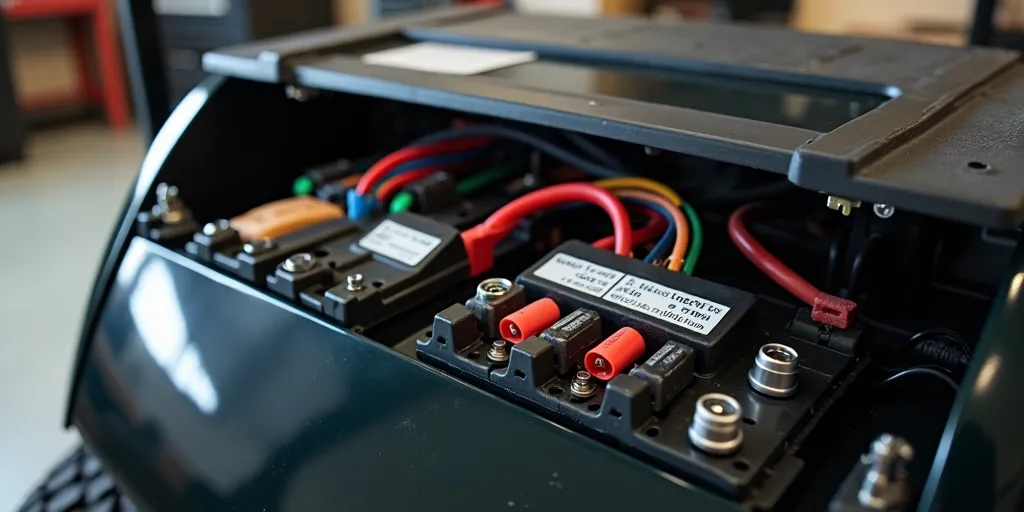
How to Wire Accessories on a Tomberlin Golf Cart: Tools, Safety, and Pro Tips
Plan your circuit, pull power from a fused 12V source, protect every run, then test methodically—clean wiring makes your Tomberlin upgrades safer and smarter.
Adding lights, a horn, USB chargers, or a sound bar to your Tomberlin is straightforward if you follow a clean electrical plan. The core idea is simple: use a dedicated 12V supply, fuse every accessory, route wires safely, and verify grounds. Whether your build is basic or ambitious, the steps below will help you wire accessories on your Tomberlin golf cart like a pro.
What Tools and Materials Are Needed to Wire Accessories on a Tomberlin Golf Cart?
- Power & protection: 12V source (factory accessory harness or DC-DC converter/voltage reducer sized for your load), inline blade fuses or a fused distribution block, and optional relays (30/40A) for high-draw devices.
- Wiring: Primary wire in appropriate gauges (16 AWG for low-draw LEDs, 14–12 AWG for horns/sound bars, 10 AWG for long, high-draw runs). Red for positive, black for ground for easy service.
- Connectors: Heat-shrink butt splices, ring/spade terminals, waterproof Deutsch or Weather-Pack connectors for exposed areas, switch connectors, and a ground bus bar.
- Protection & management: Split loom, PET braid, rubber grommets, cable clamps, zip ties, adhesive mounts, and dielectric grease.
- Switching & control: Lighted rocker switches or OE-style blanks, relay sockets, and labeled legends.
- Tools: Quality ratcheting crimper, wire stripper, heat gun, multimeter (with continuity and DC voltage), test light, drill with step bit (for switches/grommets), torque driver, and panel tools.
- Docs: Tomberlin wiring diagram (model-specific), accessory instructions, and a simple circuit sketch.
Planning the Circuit (Before You Touch a Wrench)
- Map loads: List each accessory and its amp draw. Sum the maximum simultaneous current to choose the right DC-DC converter (or confirm your factory 12V accessory bus has headroom).
- Choose distribution: A small fused 12V block near the converter/battery bay keeps circuits tidy and individually protected.
- Select wire gauge: Use a voltage-drop calculator; keep drop <3% for lighting/audio. Longer runs need heavier wire.
- Identify ignition logic: Decide which items should turn off with the key. Use a relay triggered by a key-on signal to feed your fuse block if desired.
- Ground strategy: Star-ground to a common ground bus near the 12V source for fewer gremlins.
Step-by-Step Wiring Procedure
- Disable power: Park on level ground, set the brake. Turn key OFF. If equipped, switch to Tow/Maintenance. Disconnect the main negative lead to eliminate accidental shorts.
- Mount the 12V source: If your Tomberlin has a factory 12V harness, verify capacity. Otherwise, mount a DC-DC converter (e.g., 36/48V → 12V) to a solid, ventilated surface. Use ring terminals and lock washers.
- Add a fuse block: Install a covered blade fuse block close to the 12V source. Feed it with appropriately sized wire and a main inline fuse sized 125–150% of your total expected load.
- Run the accessory leads: Route positive and ground in loom along factory paths (roof struts, frame rails). Avoid moving parts and heat. Pass through bulkheads with grommets only.
- Install switches & relays: Drill switch openings where accessible. For higher-draw loads (light bars, compressors, sound bars), use a relay: key-on (or switch) → relay coil; fused 12V → relay → accessory.
- Terminate correctly: Strip to correct length, crimp with a ratcheting tool, heat-shrink for strain relief, and apply dielectric grease on exposed connectors. Use ring terminals on fuse/ground blocks.
- Label everything: Label each fuse and wire at both ends (e.g., “Front LED 10A”, “Horn 15A”). Service will be faster and safer later.
- Reconnect & stage fuses: Reconnect the main negative. Insert fuses one circuit at a time to localize issues, starting with the smallest loads.
How Can You Ensure the Wires Are Connected Securely?
- Use the right crimp tool: A ratcheting crimper produces consistent, gas-tight crimps. Tug-test every terminal.
- Heat-shrink & seal: Use adhesive-lined heat-shrink butt splices in wet areas. Seal connectors pointing downward to shed water.
- Strain relief: Clamp harnesses every 8–12 inches. Leave a small service loop at switches and devices so wires aren’t taut.
- Protect edges: Any metal pass-through requires a grommet. Add additional loom where abrasion is possible.
- Ground like a pro: Run grounds back to a common ground bus. Avoid random chassis bolts that can corrode and introduce resistance.
- Torque & re-check: Tighten ring terminals to spec and re-check after the first few hours of use.
Why Follow Manufacturer Instructions and Safety Guidelines?
Tomberlin’s documentation and your accessory manuals specify wire gauges, fuse sizes, connection points, and safe routing that protect the vehicle and occupants. Following them:
- Prevents damage: Correct fusing and wire sizes avert overheated conductors, melted insulation, and controller faults.
- Preserves system integrity: Using approved key-on signals and ground points avoids nuisance CAN/logic errors on modern carts.
- Protects warranties: Proper installation records and parts keep warranty coverage intact.
- Improves diagnostics: Standard wire colors and labeled circuits make future troubleshooting faster.
Testing & Commissioning Checklist
- Continuity & polarity: With fuses pulled, confirm no shorts to ground and correct polarity at each connector.
- Fuse in, device off: Insert the fuse, verify there’s no current draw with the switch off (check with multimeter clamp or in-line meter).
- Function test: Switch on the accessory; verify voltage under load. Watch for flicker or voltage sag—both hint at undersized wiring or poor grounds.
- Key-on logic: Confirm devices that should follow the ignition do so, and that memory devices (e.g., stereos) retain settings if desired.
- Final inspection: Drive over mild bumps and turns; listen for rattles, check for chafe points, and feel wires/relays for excess heat.
Quick Reference: Fusing & Wire Gauge
| Accessory | Typical Fuse | Suggested Wire | Notes |
|---|---|---|---|
| LED light bar (single) | 10–15A | 14–12 AWG | Use relay for >10A loads |
| Horn | 15A | 14–12 AWG | Relay recommended for snappy tone |
| USB/12V outlets | 5–10A | 16–14 AWG | Key-on feed prevents parasitic draw |
| Sound bar | 15–30A | 12–10 AWG | Direct line from fuse block with relay |
Bottom Line
Successful accessory wiring comes down to three habits: plan a fused 12V distribution with adequate capacity, build neat and secure harnesses, and test each circuit methodically. Follow Tomberlin and accessory instructions, size your wires and fuses correctly, and protect every run. The result is reliable power, quiet harnesses, and accessories that work perfectly—every ride.




Add a review
Your email address will not be published. Required fields are marked *