
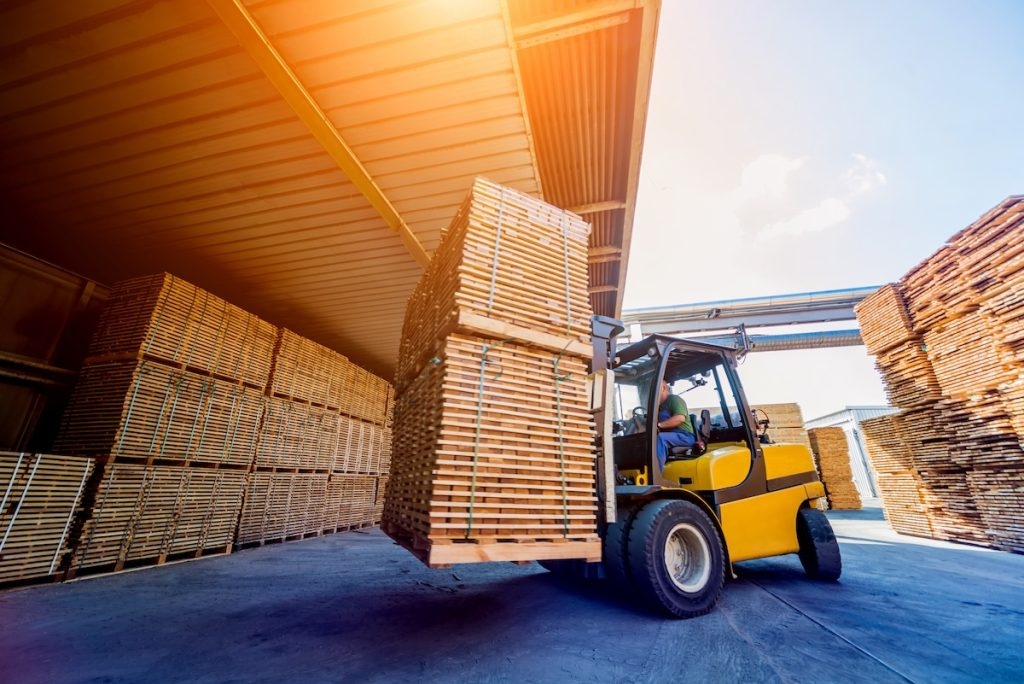
Is There a Minimum Load Weight for Forklifts?
Quick Answer: There is no minimum load weight for operating a forklift. A forklift can lift a light box, empty pallet, small container, or partial load as long as the load is stable, properly positioned, secured when needed, and does not exceed the truck’s rated capacity or safe load center.
Is There a Minimum Load Weight for Forklifts?
No, there is no standard minimum load weight that a forklift must carry. Forklifts are designed with a maximum rated capacity, not a minimum load requirement. This means the key safety concern is not whether the load is too light, but whether it is properly balanced, secured, visible, and handled according to the forklift’s data plate.
For example, a warehouse operator may use forklifts to move a heavy pallet of product one moment and an empty pallet or lightweight container the next. Both tasks can be safe if the operator follows correct procedures. The weight does not need to reach a minimum threshold before the forklift can be used.
However, light loads still require attention. A load that weighs only a few pounds can fall, slide, tip, block visibility, or become unstable if it is poorly positioned. Lightweight items may also shift more easily when the forklift turns, brakes, or travels over uneven flooring.
Why Forklifts Have Maximum Capacity, Not Minimum Capacity
Forklift safety is built around rated capacity and load center. The manufacturer provides a maximum lifting capacity based on the truck design, counterweight, mast, forks, tires, and stability limits. This maximum capacity tells the operator how much weight the forklift can safely lift at a specific load center and lift height.
A minimum weight rating is generally unnecessary because carrying a lighter load does not overload the machine. In fact, a forklift with no load is common during normal travel. Operators often drive empty between tasks, reposition the truck, or move empty pallets. The forklift does not need a load to remain functional.
The bigger issue is stability. Even a light load can create a hazard if it is oversized, off-center, unsecured, or carried too high. Safe operation depends on load control, not simply load weight.
Light Loads Still Need Safe Handling
Some operators assume that light loads are automatically safe. That is not always true. A light but tall stack of cardboard boxes may fall if it is not wrapped. A light plastic bin may slide on smooth forks. A small item may fall between the forks if it is not placed on a pallet or platform. A light but wide load may create visibility problems or strike racks and doorways.
This is why operators should treat every load with care, even when it is far below the forklift’s rated capacity. Modern warehouse forklifts are efficient tools, but safe load handling still depends on operator judgment.
Important Safety Tip: A light load can still be unsafe if it is unstable, poorly centered, loosely stacked, or not supported by the forks. Always inspect the load before lifting.
Key Factors When Handling Light or Partial Loads
| Factor | Why It Matters | Safe Practice |
|---|---|---|
| Center of Gravity | Even a light load can tip or slide if the weight is unevenly distributed. | Center the load and keep the heaviest part closest to the mast. |
| Data Plate | The data plate shows rated capacity, load center, mast limits, and attachment details. | Check the plate before lifting unfamiliar loads or using attachments. |
| Overcompensating | Operators may drive too fast or turn sharply because the load feels “easy.” | Drive smoothly, keep loads low, and avoid sudden stops or turns. |
| Visibility | Light loads can still be bulky enough to block the operator’s view. | Travel in reverse if forward visibility is blocked and conditions allow. |
| Security | Loose items can fall even when they are not heavy. | Use shrink wrap, straps, bins, pallets, or load supports when needed. |
Center of Gravity and Light Loads
The center of gravity is the point where the load’s weight is balanced. With heavy loads, operators often pay close attention to center of gravity because tipping risk is obvious. With light loads, they may become careless. This is a mistake.
A light load with an awkward shape can still be hard to control. For example, a long empty pipe rack, a lightweight but tall display stand, or a partially filled container may shift unexpectedly. The operator should make sure the load is centered on the forks and supported across a stable surface.
Check the Data Plate
The forklift data plate is the official guide for rated capacity. It shows how much the truck can lift under specific conditions. Even though there is no minimum load weight, the data plate still matters because it shows maximum capacity, load center, mast height, and attachment limitations.
If a forklift is equipped with attachments such as fork extensions, clamps, side shifters, or platforms, the rated capacity may be reduced. Always use the data plate and manufacturer instructions when handling unusual loads.
Avoid Overcompensating with Light Loads
Operators sometimes become too relaxed when moving light loads. They may drive faster, brake harder, lift higher, or turn sharply because the load does not feel heavy. This can still create a hazard. A lightweight pallet can slide, fall, or strike a pedestrian if handled carelessly.
Safe forklift operation should remain consistent regardless of load weight. The load should be carried low, the mast should be tilted slightly back when appropriate, and the operator should travel at a controlled speed.
Visibility and Load Security
Visibility is not only a problem with heavy loads. A light load can still block the operator’s view if it is tall, wide, or poorly stacked. If the operator cannot see forward clearly, they should use safe alternative travel methods, such as traveling in reverse when appropriate or using a spotter in complex areas.
Load security is also essential. Loose items should be secured before movement. Empty containers, foam packaging, lightweight cartons, plastic bins, or partial pallets can shift quickly if the forklift crosses floor joints, dock plates, ramps, or uneven surfaces.
Step-by-Step: How to Handle Light Loads Safely
- Inspect the load: Check whether the load is stable, centered, supported, and free from loose items.
- Position the forks correctly: Spread the forks to support the load evenly and insert them fully when possible.
- Secure the load if needed: Use wrap, straps, pallets, bins, or containers for items that may slide or fall.
- Keep the load low: Travel with the load close to the ground and raise it only when stacking or placing.
- Drive smoothly: Avoid sudden braking, fast turns, rough surfaces, and quick mast movements.
What Are the 10 Common Forklift Type Classifications?
Forklifts come in many designs for different applications. The best type depends on load weight, lift height, aisle width, ground surface, indoor or outdoor use, and power source. Below are ten common forklift classifications often used in warehouses, logistics, manufacturing, construction, and material handling.
| Forklift Type | Main Use | Typical Application |
|---|---|---|
| Counterbalance Forklift | General lifting and pallet handling | Warehouses, docks, manufacturing plants |
| Electric Forklift | Clean indoor material handling | Food storage, retail warehouses, distribution centers |
| Internal Combustion Forklift | Outdoor or heavy-duty operation | Yards, lumber, construction, industrial sites |
| Reach Truck | High racking and narrow aisles | Warehouse storage and distribution centers |
| Order Picker | Picking individual items from racks | E-commerce, retail fulfillment, parts storage |
| Pallet Jack | Short-distance pallet movement | Retail, docks, small warehouses |
| Walkie Stacker | Light-duty stacking | Small warehouses and backrooms |
| Rough Terrain Forklift | Outdoor uneven-surface lifting | Construction sites, farms, gravel yards |
| Telehandler | Extended reach lifting | Construction, agriculture, outdoor material handling |
| Side Loader | Long-load handling | Lumber, pipe, steel, long material storage |
Do Forklift Types Affect Minimum Load Weight?
Different forklift types have different maximum capacities, operating environments, and stability characteristics, but they still do not usually have a minimum load weight requirement. A reach truck, counterbalance forklift, pallet jack, or electric forklift can all move light loads if the load is secure and the equipment is used correctly.
The important question is whether the equipment is appropriate for the load shape, route, surface, and placement height. For example, using a large outdoor forklift to move a tiny item may be inefficient, while using a pallet jack or walkie stacker may be more practical. But from a safety standpoint, the issue is safe handling rather than minimum weight.
Why Choosing the Right Equipment Still Matters
Even without a minimum weight requirement, selecting the right equipment matters. Overusing a large forklift for very small loads may waste energy and create unnecessary traffic risk in tight areas. Using compact electric forklifts in warehouses can improve efficiency when loads are light, frequent, and palletized.
The best machine is the one that safely handles the load while fitting the aisle, floor, lift height, and workflow. In some cases, a pallet jack or stacker may be more efficient than a full-sized forklift for very light loads.
Final Answer
There is no minimum load weight for forklifts. A forklift can safely move light loads, partial pallets, empty pallets, small containers, or objects weighing only a few pounds as long as the load is stable, secure, properly supported, and handled within the forklift’s rated limits. Operators should still check the data plate, control the center of gravity, avoid overconfidence, maintain visibility, and secure loose loads. Forklift safety depends on stability and proper handling, not on meeting a minimum load weight.


Add a review
Your email address will not be published. Required fields are marked *