
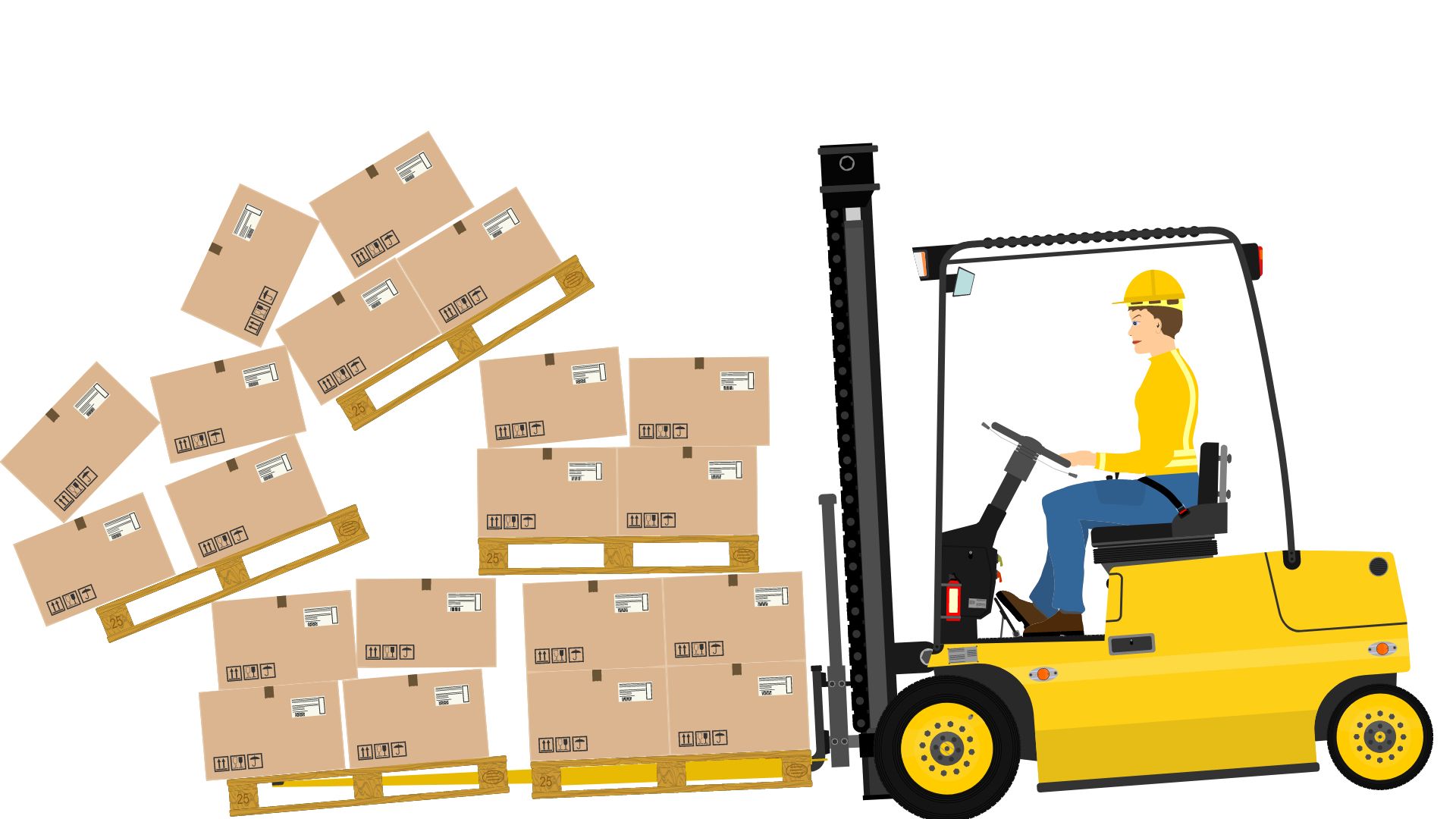
What Forklift Component Keeps the Load from Falling?
Quick Answer: The primary component that keeps a load from falling backward toward the operator is the load backrest extension. It sits behind the forks and helps stop loose, tall, or unstable loads from sliding rearward. The mast tilt, fork carriage, forks, and overhead guard also support safer load handling, but the load backrest is the key component designed to reduce rearward load fall risk.
What Is the Load Backrest Extension?
The load backrest extension is the vertical frame mounted behind the forks on the forklift carriage. It creates a protective barrier between the load and the operator area. When a load is stacked high, unstable, loose, or not fully secured, the backrest helps prevent cartons, pallets, lumber, drums, or other materials from sliding backward toward the operator.
On many warehouse forklifts, the load backrest looks like a steel grid or vertical frame above the fork carriage. Its job is not to hold the entire weight of the load like the forks do. Instead, it helps support and contain the load when the mast is tilted back or when the load shifts during lifting, lowering, braking, or travel.
The load backrest is especially important when carrying tall palletized goods, stacked boxes, bagged materials, shrink-wrapped loads, or irregular items. Without it, part of the load may have a clearer path to fall toward the operator compartment.
Main Components That Help Keep the Load Stable
A forklift uses several components together to stabilize the load. No single part replaces safe operation. The load backrest helps prevent rearward movement, the forks support the load from below, the carriage holds the forks, the mast raises and lowers the assembly, and mast tilt helps cradle the load.
| Component | Main Function | How It Helps Prevent Falling Loads |
|---|---|---|
| Load Backrest Extension | Creates a vertical barrier behind the load | Helps prevent loose or tall loads from falling backward toward the operator |
| Forks | Support the load from underneath | Carry the pallet or material when properly inserted and spaced |
| Fork Carriage | Holds and positions the forks | Keeps forks aligned and connected to the lifting system |
| Mast Tilt | Tilts the mast forward or backward | Allows the operator to tilt the load slightly back for better stability during travel |
| Overhead Guard | Protects the operator from certain falling objects | Provides overhead protection, but does not replace the load backrest |
| Load Capacity Data Plate | Shows rated capacity and load center limits | Helps prevent overloads that can cause instability or dropped loads |
Important Safety Note: The overhead guard is not designed to catch every falling load. Operators should never rely on the overhead guard as the primary protection against unstable loads. Proper load placement, a load backrest, and safe handling are essential.
Load Backrest Extension
The load backrest extension is the most direct answer to the question: “What forklift component keeps the load from falling?” It is required when the type of load presents a hazard of falling backward onto the operator. This is why operators should inspect the backrest during daily checks and report missing, damaged, loose, or bent backrest structures.
If the load backrest has been removed, damaged, or modified, the forklift may not be suitable for certain loads. Employers should review the load type, the manufacturer’s guidance, and OSHA requirements before operating without a backrest.
Mast Tilt
Mast tilt helps stabilize the load by allowing the operator to tilt the mast backward slightly after lifting the load. This helps cradle the pallet against the backrest and reduces the chance that the load will slide forward or backward during slow travel.
However, mast tilt must be used carefully. Excessive tilt, tilting while raised high, or tilting unstable loads too quickly can create new hazards. Operators should normally travel with the load low and tilted slightly back, then level the forks carefully when placing the load.
Fork Carriage and Forks
The fork carriage supports the forks and connects them to the mast. If the carriage is damaged, cracked, loose, or misaligned, the load may not be supported evenly. Forks must also be in good condition. Bent forks, cracked heels, uneven fork height, missing locking pins, or badly worn fork surfaces can all increase the risk of load shift or load drop.
Operators should fully insert forks under the load whenever possible, space the forks properly, and avoid lifting with only the fork tips. A stable load begins with correct fork placement.
Overhead Guard
The overhead guard is designed to help protect the operator from certain falling objects. It is an important safety feature on many forklifts, but it should not be misunderstood. It is not a substitute for safe stacking, proper load security, or the load backrest extension.
The overhead guard may help reduce injury risk from smaller falling materials, but large, heavy, or unstable loads can still be dangerous. Operators must keep the load stable rather than depending on the guard to stop a falling pallet.
What Should the Forklift Operator Do to Stabilize the Load and Lift?
The operator plays the most important role in preventing falling loads. Even the best equipment cannot compensate for unsafe handling, overloading, poor pallet condition, fast turns, or incorrect fork placement. Before lifting, the operator should check whether the load is stable, centered, within capacity, and properly supported.
- Inspect the load: Check whether the pallet is damaged, the load is leaning, or boxes are loose, crushed, or unevenly stacked.
- Check the data plate: Confirm the load weight, load center, attachment limits, and rated lifting capacity.
- Position the forks correctly: Spread the forks wide enough for stability and insert them fully under the pallet.
- Lift slowly and tilt back: Raise the load only enough to travel safely, then tilt slightly back to cradle it against the load backrest.
- Travel carefully: Keep the load low, avoid sharp turns, brake smoothly, and never travel with an elevated load unless positioning.
Common Causes of Falling Forklift Loads
Falling loads usually happen because several small mistakes combine. A pallet may be damaged, the load may be stacked unevenly, the operator may brake too quickly, or the forklift may turn sharply with the load raised. Load security should be checked before the truck moves.
| Cause | Why It Is Dangerous | Prevention |
|---|---|---|
| Damaged pallet | Boards or blocks can break under load | Reject broken pallets before lifting |
| Unstable stacking | Loose items can slide or collapse | Restack, strap, shrink-wrap, or secure the load |
| Load too high | Raises center of gravity and reduces stability | Travel with loads low and only raise when placing |
| Incorrect fork position | Load may be unevenly supported | Center the forks and insert them fully |
| Sudden braking or turning | Load can shift or fall from inertia | Drive slowly and smoothly |
| Missing backrest | Rearward load movement is less controlled | Use a load backrest when load type creates a hazard |
What Can Cause a Load to Fall Off a Pallet Jack?
A load can fall off a pallet jack for many of the same reasons it can fall from a forklift: poor pallet condition, unstable stacking, uneven weight distribution, sudden movement, sharp turns, slopes, floor defects, or incorrect fork placement. Pallet jacks operate closer to the ground, but unstable loads can still fall and injure feet, legs, hands, or nearby pedestrians.
Workers should inspect pallets, keep loads centered, push or pull smoothly, avoid ramps unless equipment is rated for them, and secure loose loads before movement. Heavy or tall loads should be handled with extra caution, especially in narrow aisles or crowded areas.
Why the Load Backrest Is Not Enough by Itself
The load backrest is important, but it does not make every load safe. If the load is too heavy, too tall, loose, wet, damaged, or poorly stacked, it can still shift or fall. If the operator raises the load too high while traveling or turns too fast, the entire forklift can become unstable.
For modern warehouse operations, properly maintained forklifts, trained operators, accurate load data, and safe handling procedures all work together to prevent falling loads.
Daily Inspection Items Related to Load Safety
Operators should inspect load-handling components before use. The forks should not be cracked, bent, or excessively worn. The load backrest should be secure and undamaged. The mast should lift smoothly. The carriage should not be loose or damaged. Warning labels and the data plate should be readable.
If any load-handling component is defective, the forklift should be removed from service until repaired. Continuing to use damaged forks, a loose carriage, or a missing backrest can increase the risk of falling loads and serious injuries.
Final Answer
The main forklift component that keeps a load from falling backward toward the operator is the load backrest extension. It works with the forks, fork carriage, mast tilt, overhead guard, and data plate to support safe load handling. Operators should stabilize loads by inspecting the pallet, checking capacity, inserting forks fully, tilting the mast slightly back, keeping the load low, and driving smoothly. If the load type creates a rearward falling hazard, the forklift should be equipped with a proper vertical load backrest extension.


Add a review
Your email address will not be published. Required fields are marked *