
How to Bleed Toyota Forklift Brakes – Complete 2026 Guide
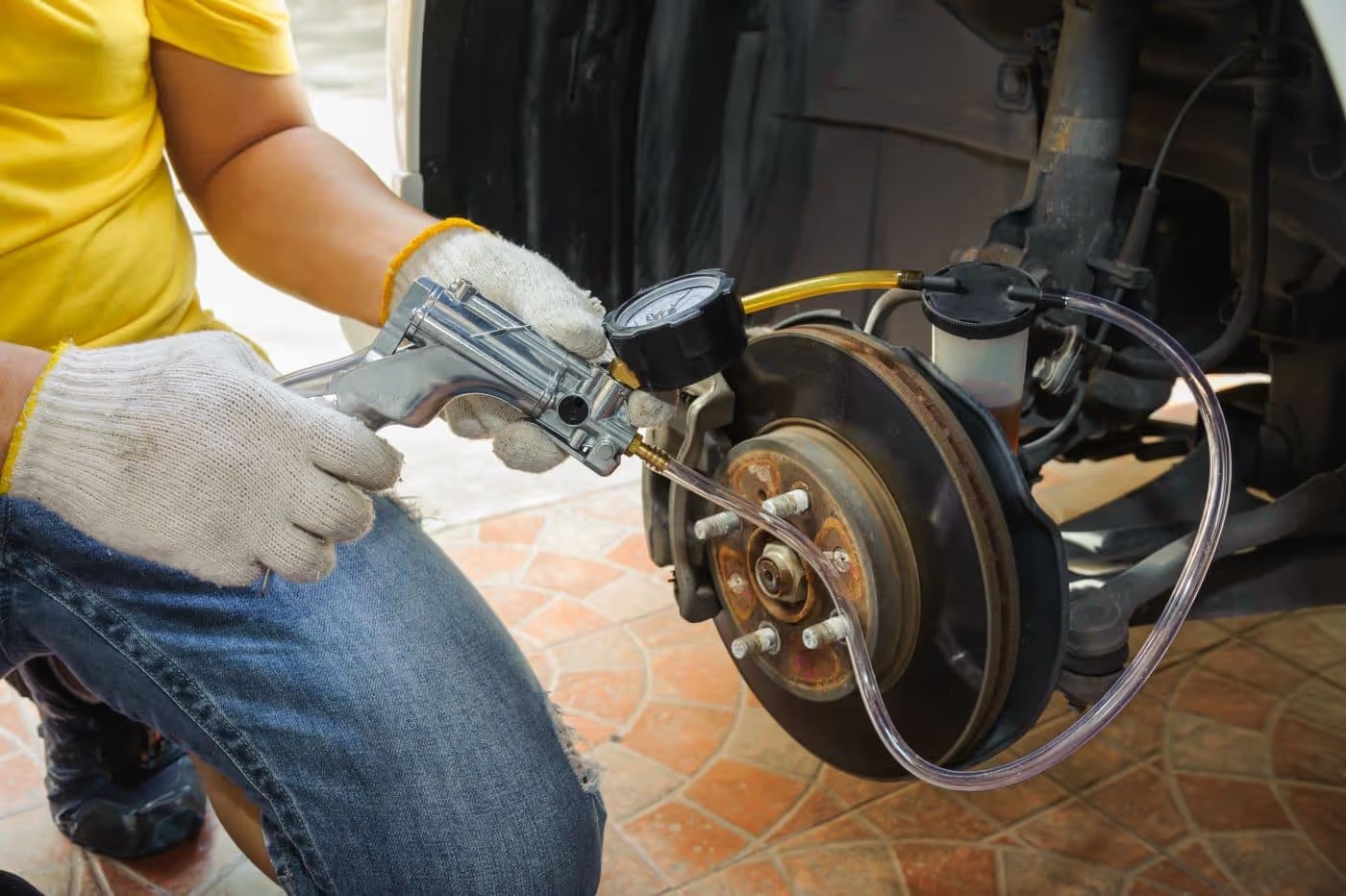
Bleeding Toyota forklift brakes requires a two-person team or a vacuum bleeder to remove air from the hydraulic system, ensuring a firm pedal. Start at the wheel furthest from the master cylinder, typically bleeding the rear wheels first, followed by the front, while keeping the reservoir full to prevent drawing in more air.
Why Bleeding Brakes Is Important
Air trapped in the brake hydraulic system causes a spongy pedal, longer stopping distances, and reduced safety. Toyota forklifts use a hydraulic brake system that must be completely free of air for reliable operation. Bleeding removes air bubbles and restores firm pedal feel. This maintenance task is especially important after brake repairs, fluid changes, or long periods of inactivity.
Toyota Forklift Brake Bleeding Process
1. Fill the Reservoir
Park the forklift on level ground, lower the forks, set the parking brake, and turn the key off. Locate the brake fluid reservoir (usually near the master cylinder under the floor plate or behind the seat). Clean the cap and fill with the correct DOT 3 or DOT 4 brake fluid to the MAX line. Keep the reservoir topped up throughout the process — never let it drop below the MIN line.
2. Order of Bleeding
Always bleed brakes in the correct order, starting farthest from the master cylinder and working closer. For most Toyota forklifts this is: Rear right wheel → Rear left wheel → Front right wheel → Front left wheel. This sequence pushes air toward the master cylinder and out of the system.
3. Attach Hose
Locate the bleeder screw on each wheel cylinder or caliper. Attach a clear plastic hose to the bleeder screw and route the other end into a clean catch container. The clear hose lets you see when air bubbles stop and only clean fluid flows.
4. Pump and Hold
Have a helper sit in the operator seat and pump the brake pedal slowly and firmly 5–10 times, then hold it down with firm pressure. Do not release the pedal until the bleeder screw is closed.
5. Open Bleeder
While the pedal is held down, open the bleeder screw ¼ to ½ turn with a wrench. Fluid (and air bubbles) will flow out through the hose. When the flow slows and no bubbles appear, close the bleeder screw tightly. Instruct your helper to release the pedal slowly, then repeat the pump-and-hold step.
6. Repeat
Repeat the pump-hold-open-close cycle at each wheel until only clear, bubble-free fluid flows from the hose. Check and top off the reservoir after each wheel. The entire process usually takes 30–60 minutes.
7. Inching Pedal (If Equipped)
Some Toyota models have a separate inching pedal that works with the brake system. Bleed the inching circuit the same way after completing the main brakes to ensure full hydraulic response.
Troubleshooting Tips
Reverse Bleeding
If standard bleeding does not remove all air, try reverse bleeding. Attach a vacuum bleeder or syringe to the bleeder screw and pull fluid from the reservoir through the system. This method is very effective at removing stubborn air pockets.
Pedal Pressure
If the pedal still feels spongy after bleeding, repeat the process and check for leaks at hoses, fittings, or wheel cylinders. A leaking master cylinder may require replacement.
Blocked Screws
Stubborn or seized bleeder screws can be freed with penetrating oil. Never force a stuck screw — apply heat carefully if needed and replace the screw if damaged.
Safety Precautions
Work in a well-ventilated area. Wear safety glasses and gloves. Never use old or contaminated brake fluid. Dispose of used fluid properly. After bleeding, test the brakes in a safe open area before returning the forklift to service. If the pedal remains soft, do not operate the forklift — have it inspected by a certified technician.
Conclusion
Bleeding Toyota forklift brakes is a straightforward but critical maintenance task that restores firm pedal feel and ensures safe stopping power. Following the correct sequence, keeping the reservoir full, and using clean fluid will remove air from the system. Regular brake bleeding after repairs or fluid changes keeps your forklift operating safely and efficiently. For operations seeking lower maintenance and smoother performance, modern electric forklifts offer significant advantages with sealed systems and fewer hydraulic components.

Add a review
Your email address will not be published. Required fields are marked *