
Do Forklift Batteries Bubble When Charging?
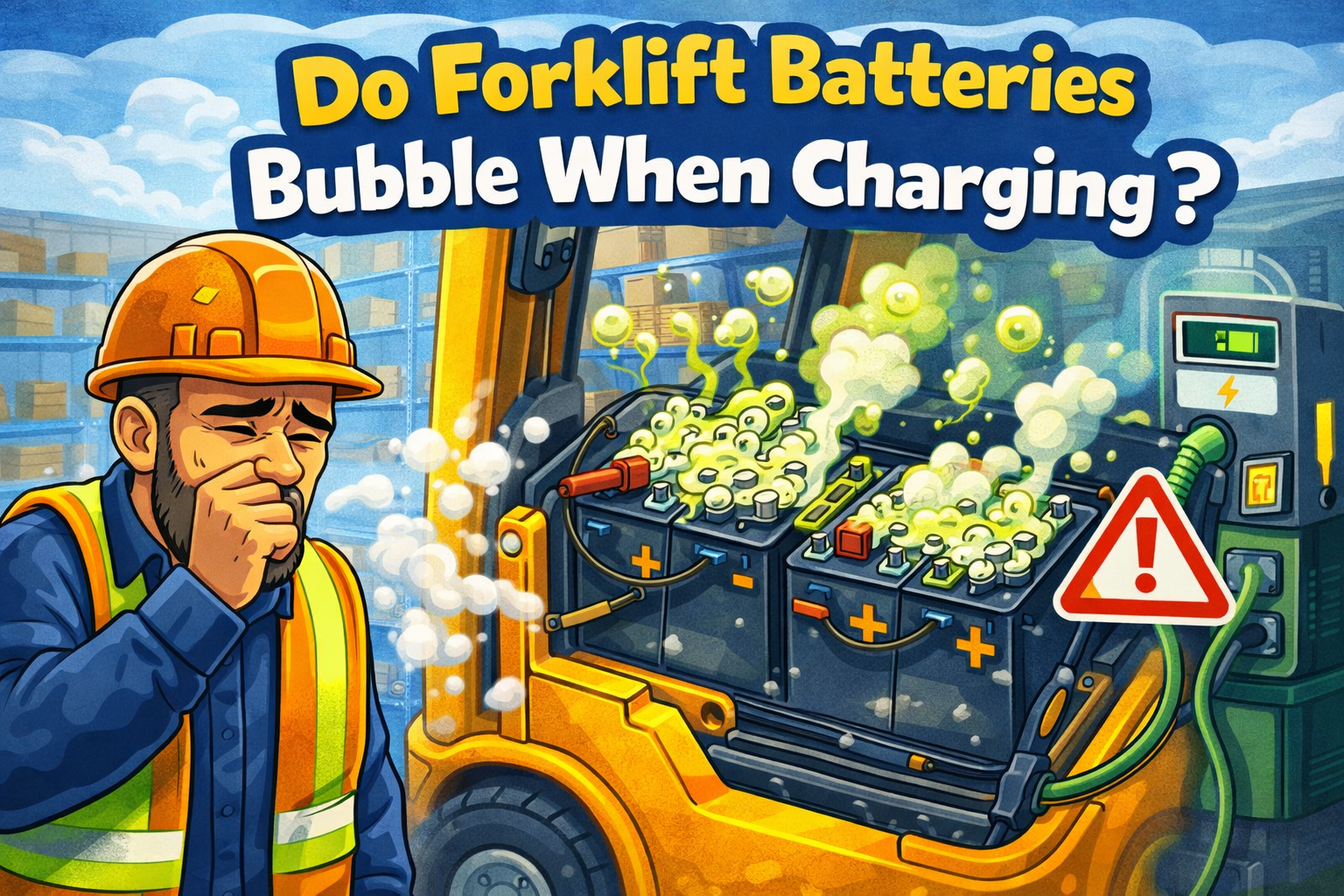
Yes, forklift batteries frequently bubble (or “gas”) while charging, particularly toward the end of the charging cycle when voltage exceeds 2.30 volts per cell. This is a natural, albeit hazardous, process where water is decomposed into hydrogen and oxygen. While mild bubbling is normal, excessive boiling indicates overcharging, potential overheating, or a faulty cell.
Why Forklift Batteries Bubble (Gassing Explained)
When a lead-acid forklift battery charges, the charging voltage eventually exceeds 2.30–2.35 volts per cell. At this point, electrolysis begins: water in the electrolyte breaks down into hydrogen gas at the negative plates and oxygen gas at the positive plates. This “gassing” is completely normal and expected near the end of the charge cycle. It helps stir the electrolyte, equalize the cells, and remove sulfate buildup from the plates. Mild bubbling that looks like gentle simmering is a healthy sign that the battery is reaching full charge.
Normal Gassing vs Excessive Boiling
Normal gassing produces small, steady bubbles and a light fizzing sound. Excessive boiling, violent bubbling, or steam-like vapor means the charger is overcharging the battery. Overcharging raises the temperature dramatically, accelerates water loss, and can damage plates permanently. Signs of overcharging include:
- Battery case feels hot to the touch
- Very strong rotten-egg smell (hydrogen sulfide)
- Electrolyte level drops rapidly
- Charger continues at high voltage long after full charge
Safety Hazards of Gassing
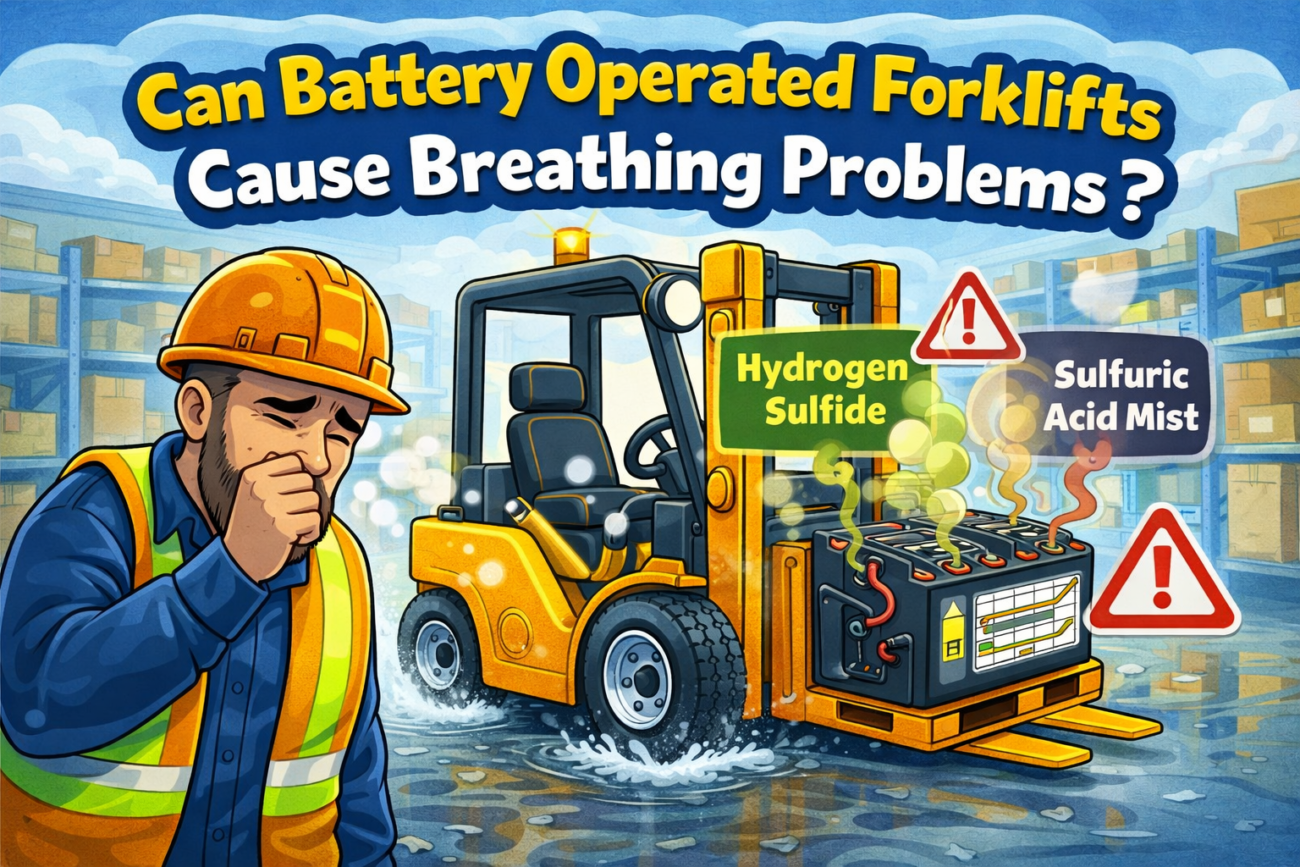
Hydrogen gas is highly flammable and can form explosive mixtures with air. Even small sparks from tools, switches, or static can ignite it. Acid mist carried by the bubbles can irritate eyes, throat, and lungs. In poorly ventilated charging areas, hydrogen can accumulate near the ceiling and create a serious explosion hazard.
Overheating and Its Dangers
When a battery bubbles too violently, internal heat builds rapidly. Temperatures above 125°F (52°C) damage the plates and separators, dramatically shortening battery life. Overheating also increases the rate of water loss, requiring more frequent topping up and raising the risk of exposing the plates, which causes permanent sulfation.
Water Levels and Gassing
Every time a lead-acid forklift battery gasses, it loses water. This is why manufacturers require checking and topping up distilled water after every charge cycle (or at least weekly). Never add water before charging — always after, when the battery has finished gassing. Keeping the electrolyte level correct is one of the most important factors in preventing excessive gassing and extending battery life.
What Gases Do Forklift Batteries Give Off When Charging?
Forklift batteries primarily release two gases during charging:
- Hydrogen (H₂) – produced at the negative plate, highly flammable and lighter than air
- Oxygen (O₂) – produced at the positive plate
In small amounts, hydrogen sulfide (H₂S) can also form if the battery is overcharged or has a faulty cell. All these gases are hazardous and must be removed by proper ventilation.
Conclusion
Bubbling during charging is normal for lead-acid forklift batteries, but excessive gassing is a warning sign of overcharging, overheating, or problems that must be corrected immediately. Proper charger settings, regular water checks, and excellent ventilation protect both the battery and the people working nearby. Switching to lithium-ion forklift batteries eliminates gassing entirely because they do not produce hydrogen or acid mist during normal charging.

Add a review
Your email address will not be published. Required fields are marked *