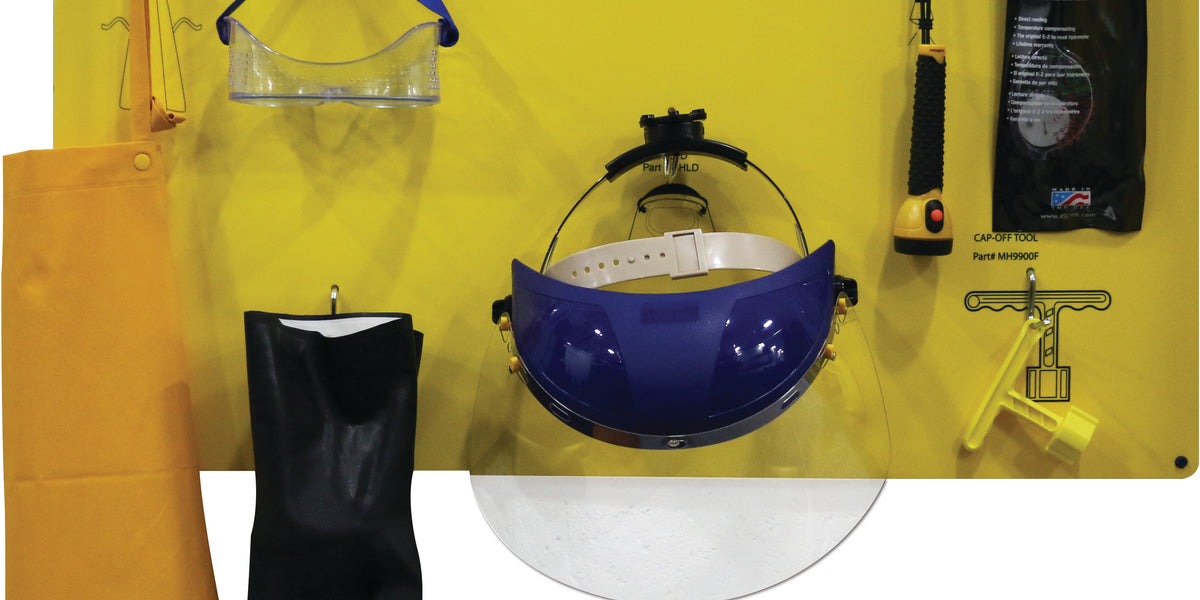
Essential PPE for charging a forklift battery includes acid-resistant face shields, safety goggles, neoprene or rubber gloves, and an acid-resistant apron to protect against sulfuric acid splashes and electrical hazards. Safety shoes and long sleeves are also required to prevent burns, as per OSHA standards.
Why Proper PPE Is Critical When Charging Forklift Batteries
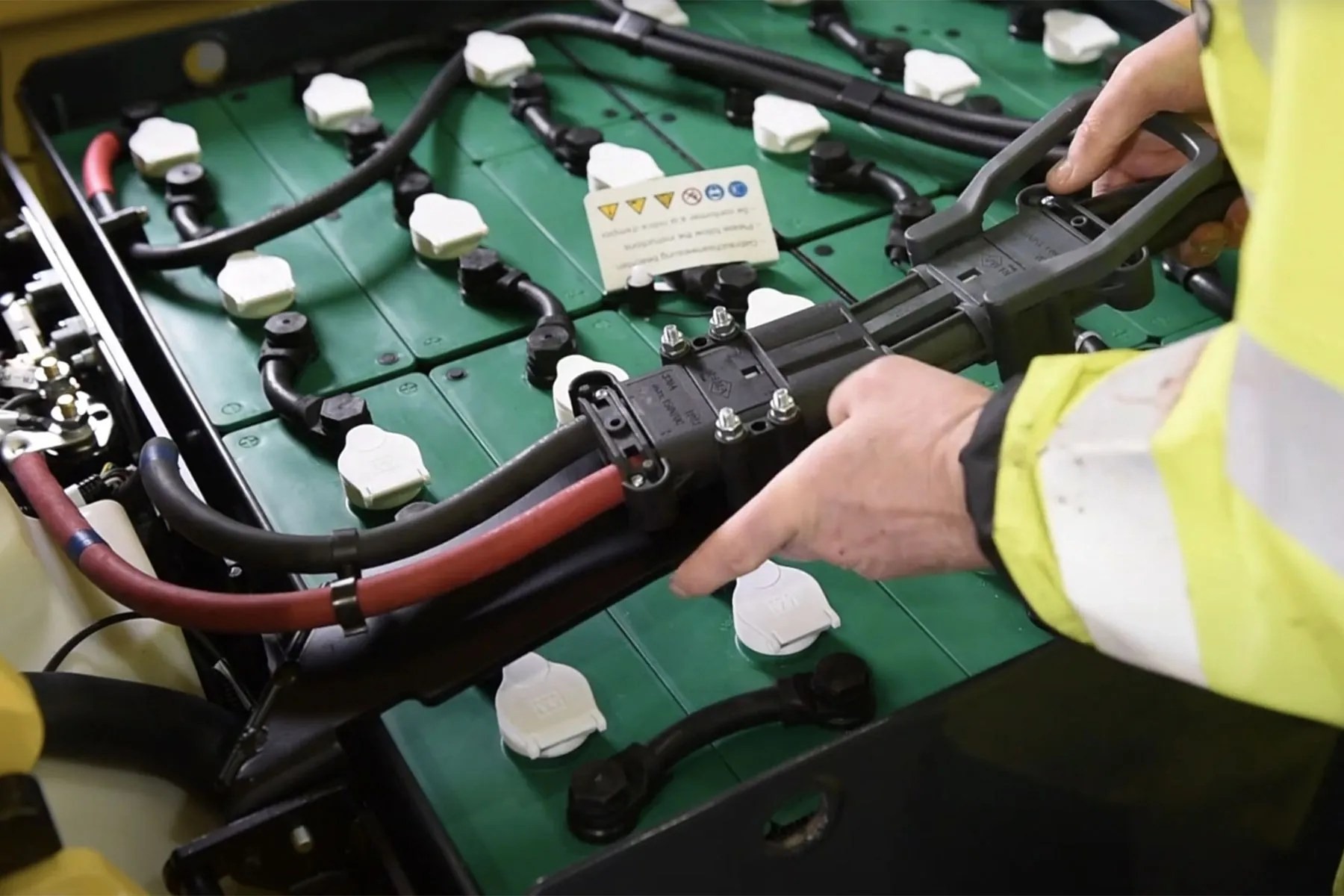
Charging a forklift battery involves handling sulfuric acid electrolyte, hydrogen gas, and high-voltage electrical connections. Even a small splash or short circuit can cause severe chemical burns, eye damage, or explosions. OSHA 1910.178 and NFPA 70E mandate specific personal protective equipment (PPE) to protect workers from these hazards. Using the correct gear is not optional — it is a legal requirement and the first line of defense against injury. Proper PPE also reduces liability for employers and prevents costly downtime from accidents.
Key PPE Components for Safe Charging
Eye & Face Protection
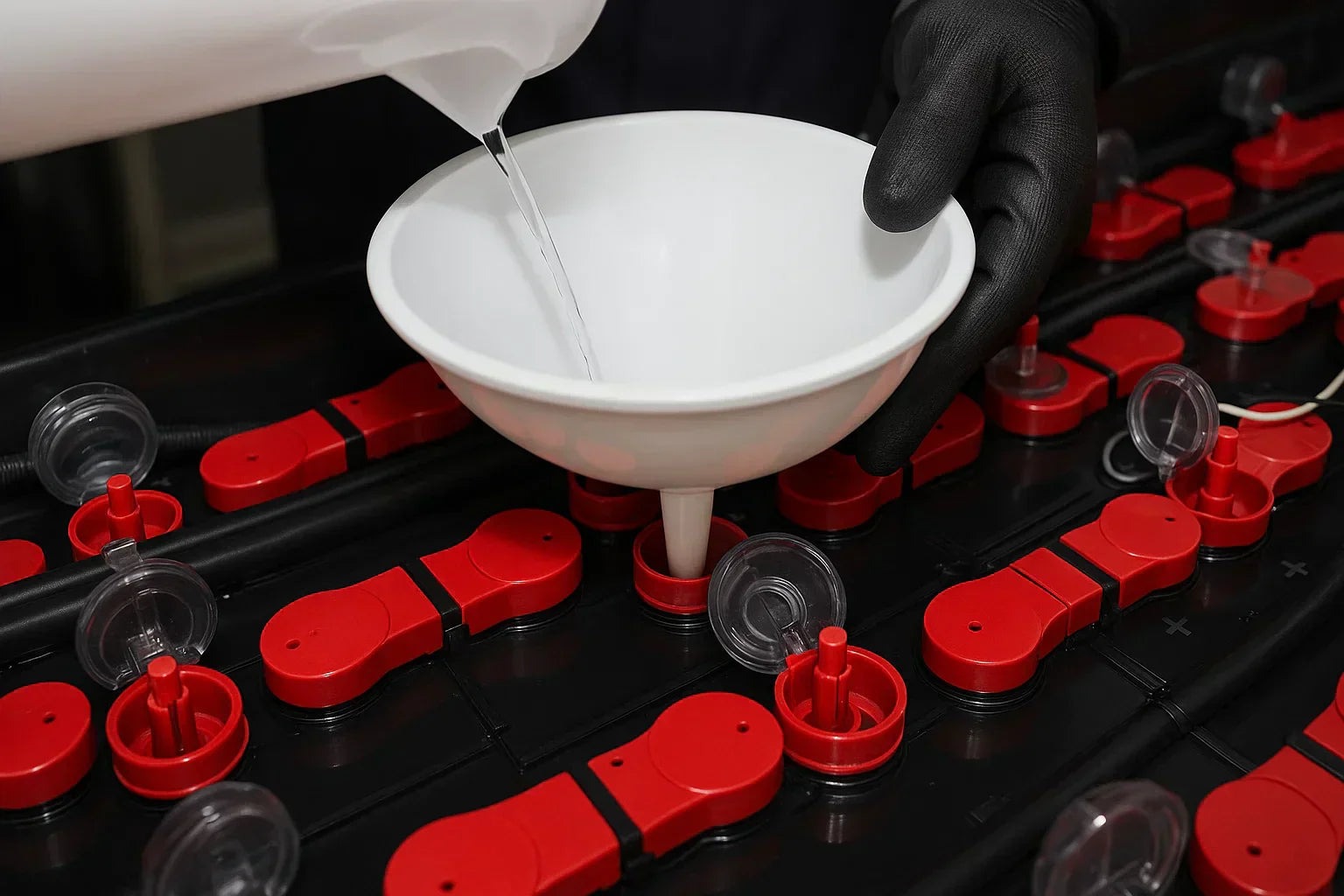
Chemical splash goggles and a full-face shield are mandatory. Standard safety glasses are not enough — the goggles must be rated for acid resistance (ANSI Z87.1) and sealed around the eyes. The face shield provides an extra layer of protection when filling cells or cleaning terminals. Both must be worn together whenever the battery is being charged, watered, or cleaned.
Hand Protection
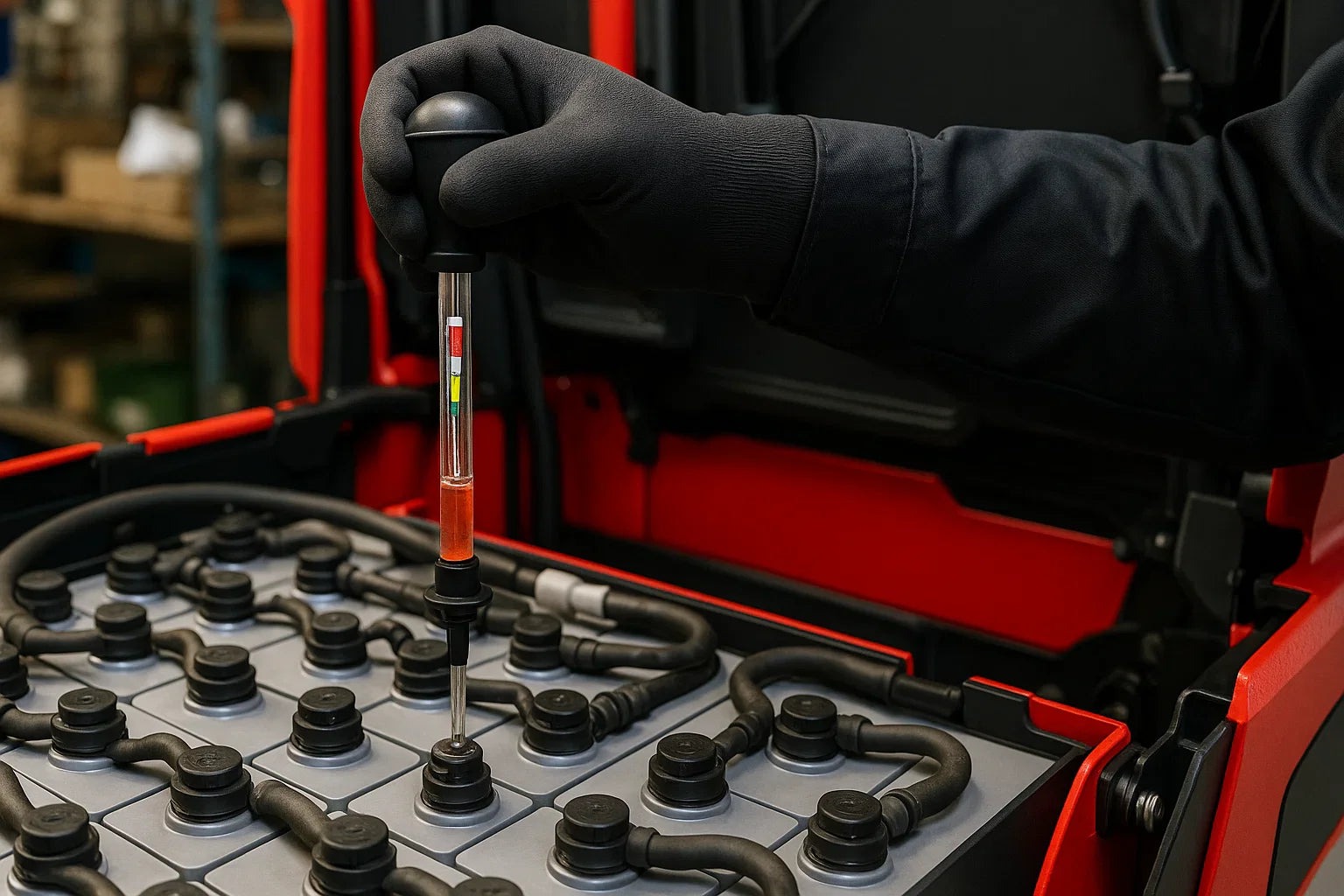
Acid-resistant gloves made of neoprene, rubber, or nitrile are essential. These gloves must be at least 12–18 inches long to protect the forearms and rated for sulfuric acid exposure. Never use leather or fabric gloves — they absorb acid and worsen burns. Inspect gloves before every use and replace them at the first sign of cracks or thinning.
Body Protection
An acid-resistant apron (rubber or PVC) is required to shield the torso and legs from splashes. The apron should extend below the knees and be worn over long sleeves. Long-sleeved shirts or coveralls made of non-melting fabric (cotton or flame-resistant materials) complete the body protection layer. Avoid synthetic fabrics that can melt onto skin in case of fire.
Foot Protection
Chemical-resistant safety boots or shoes with steel toes and non-slip soles are recommended. These boots must be rated for acid exposure and provide ankle support. Never wear open-toed shoes or sneakers when working with forklift batteries.
What Are the Hazards of Charging Forklift Batteries?
The primary hazards include:
- Sulfuric Acid Splashes: The electrolyte is highly corrosive and can cause severe chemical burns to skin and eyes within seconds.
- Hydrogen Gas Explosion: Charging produces flammable hydrogen gas that can accumulate and ignite from sparks or open flames.
- Electrical Shock: High-voltage connections and wet floors increase the risk of shock or arc flash.
- Thermal Burns: Overheating batteries or chargers can cause burns from hot surfaces.
- Slips and Falls: Acid spills create slippery floors and can damage footwear.
These hazards are why OSHA requires full PPE, ventilation, and no-smoking zones during charging. Proper PPE combined with good ventilation and spark-free tools dramatically reduces the risk of injury.
Best Practices for Charging with PPE
Always charge in a well-ventilated area, never leave the charger unattended, and keep an eyewash station and emergency shower within 10 seconds of the charging area. Remove jewelry, tie back long hair, and ensure the area is free of sparks or flames. After charging, rinse any exposed skin immediately and inspect PPE for damage before storing it. Document every charging session and PPE use as part of your safety program.
Conclusion
Charging a forklift battery safely requires a complete set of acid-resistant PPE: face shields, chemical goggles, neoprene gloves, aprons, long sleeves, and safety boots. These items protect against sulfuric acid burns, hydrogen explosions, and electrical hazards as required by OSHA standards. Skipping any piece of PPE can lead to serious injury or regulatory violations. By following proper procedures and wearing the right gear every time, you protect yourself, your team, and your equipment while maintaining compliance and productivity.